
ENG | हिंदी …
When filmmakers across continents rediscovered cinema as a personal artistic language
How New Wave cinema reshaped realism —
and how Indian parallel films found their voice
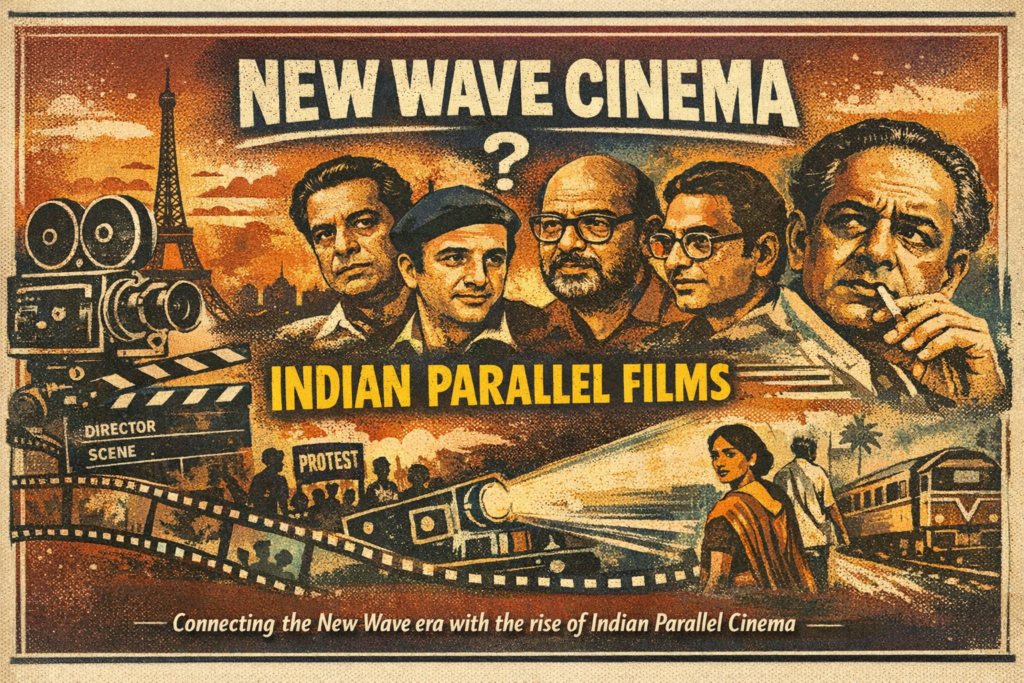
When global experimentation met India’s parallel cinematic voice
New Wave Cinema And Indian Parallel Cinema reshaped storytelling and realism at a time when filmmakers across continents rediscovered cinema as a deeply personal artistic language.
Cinema history often moves forward during moments of uncertainty. By the late 1950s and early 1960s, audiences were changing, television was entering homes, and traditional studio systems were beginning to lose their dominance. Across Europe, directors questioned established storytelling styles, while in India, filmmakers quietly explored new narratives rooted in social reality and regional culture. What emerged was not a single revolution but a shared transformation — one that connected global film movements with deeply local expressions of cinema.
–––– ✦ ✦ ✦ ––––
In This Post …
–––– ✦ ✦ ✦ ––––
🌍 The New Wave Spirit: A Global Shift in Film Language
The New Wave was not just a stylistic change; it was a philosophical one. Movements such as the French New Wave reshaped cinematic language across Europe.
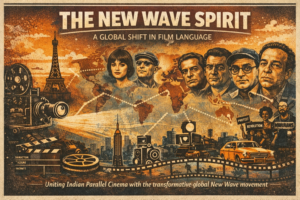
Cinema discovering a new language beyond studio conventions
Directors began experimenting with handheld cameras, natural lighting, and unconventional narratives that reflected personal vision rather than studio expectations. These filmmakers challenged the idea that cinema needed to follow rigid formulas, instead embracing ambiguity, realism, and emotional authenticity.
As discussed in the era of the Television Challenge & New Wave Cinema, this shift was partly a response to audiences discovering new forms of entertainment at home. Rather than competing directly with television, many filmmakers redefined cinema as an artistic medium capable of deeper expression. This transformation influenced how stories were told across the world, inspiring a generation of directors to seek new cinematic languages.
–– ✦ ✦ ––
📺 From Television’s Challenge to Creative Freedom
Television’s arrival forced filmmakers to reconsider what made cinema unique. Spectacle alone was no longer enough; audiences wanted meaning, intimacy, and cultural relevance. Around the same time, film movements across Europe emphasized auteur-driven storytelling, where the director’s personal voice became central to the filmmaking process.
This spirit of experimentation resonated beyond Europe. Filmmakers in India began to explore themes of social change, rural life, and individual identity — moving away from purely commercial narratives toward more reflective storytelling. Rather than copying Western styles, Indian directors interpreted the global shift through their own cultural lens, creating films that felt grounded in regional realities.
–– ✦ ✦ ––
🎥 Indian Parallel Cinema: Regional Voices and New Storytelling
Indian parallel cinema did not emerge in isolation. It grew alongside Indian regional film traditions that were already experimenting with narrative form and thematic depth.
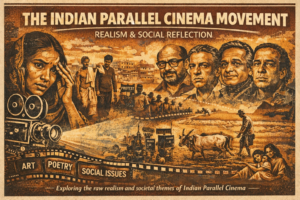
Stories rooted in everyday life and quiet cinematic realism
Directors explored stories that reflected everyday life, social conflict, and evolving cultural identities, often using minimalist aesthetics similar to New Wave filmmakers abroad.
Indian Regional cinema became an important space for this creative exploration. Malayalam, Bengali, and Hindi parallel films offered audiences an alternative perspective on storytelling — one that emphasized realism over spectacle. Many cinema GK discussions revisit these developments because they illustrate how regional industries contributed to larger global movements in film history.
These films did more than challenge commercial conventions; they demonstrated that cinema could be both deeply personal and socially aware. By focusing on human experiences rather than grand spectacle, Indian parallel cinema mirrored the broader transformation occurring in world cinema.
–– ✦ ✦ ––
🎞️ A Shared Journey: From Studio Systems to Personal Vision
Although New Wave cinema and Indian parallel cinema developed in different cultural contexts, they shared a common goal: to rediscover the emotional core of storytelling. The decline of rigid studio systems allowed filmmakers to experiment with structure, pacing, and visual language. Characters became more complex, narratives more open-ended, and audiences more involved in interpreting meaning.
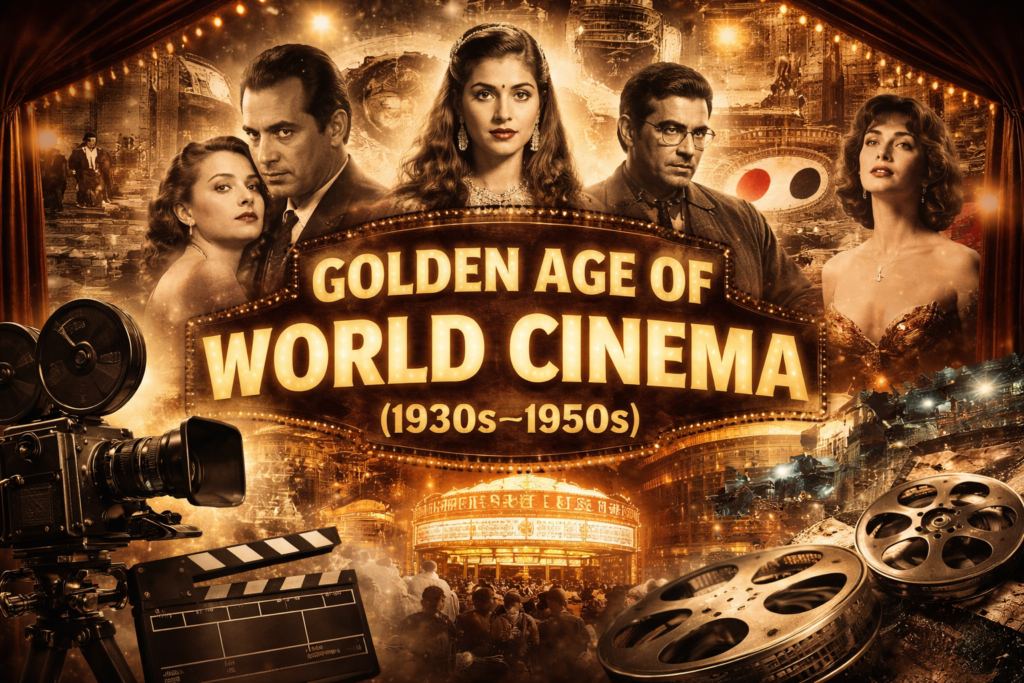
This shift can be better understood when viewed alongside earlier eras such as the Golden Age of Hollywood, where studio-driven filmmaking shaped cinematic identity for decades. The contrast between that stability and the later wave of experimentation highlights how cinema evolves through cycles of challenge and reinvention.
Across continents, filmmakers began to see cinema not just as entertainment but as a form of artistic dialogue. Whether through the streets of Paris or the landscapes of rural India, directors explored stories that reflected changing societies and personal experiences.
–– ✦ ✦ ––
🌏 Regional Cinema and the Global Conversation
The connection between global film movements and regional cinema was not always obvious, yet it played a significant role in shaping modern cinematic language. Local industries absorbed ideas from international trends while maintaining their cultural authenticity. This exchange created a dialogue between global experimentation and regional storytelling traditions.
As audiences encountered new forms of realism and introspection, cinema gradually became more diverse in style and subject matter. Regional filmmakers found inspiration in global movements, while international audiences discovered new perspectives through films emerging from India and other parts of the world.
–– ✦ ✦ ––
🌙 Closing Reflection: When Personal Cinema Became a Global Language
The rise of New Wave cinema and Indian parallel filmmaking marked a turning point in film history — a moment when creative freedom began to redefine what cinema could be. Rather than weakening the medium, the challenges of the era encouraged filmmakers to explore authenticity, individuality, and cultural identity. Across continents, directors discovered that cinema’s greatest strength lay not in spectacle alone but in its ability to reflect the human experience. This shared journey continues to influence how stories are told today, reminding us that moments of change often give birth to the most meaningful artistic revolutions.