
ENG | हिंदी …
When Indian cinema found its voice—turning sound, music, and dialogue into a mass cultural force.
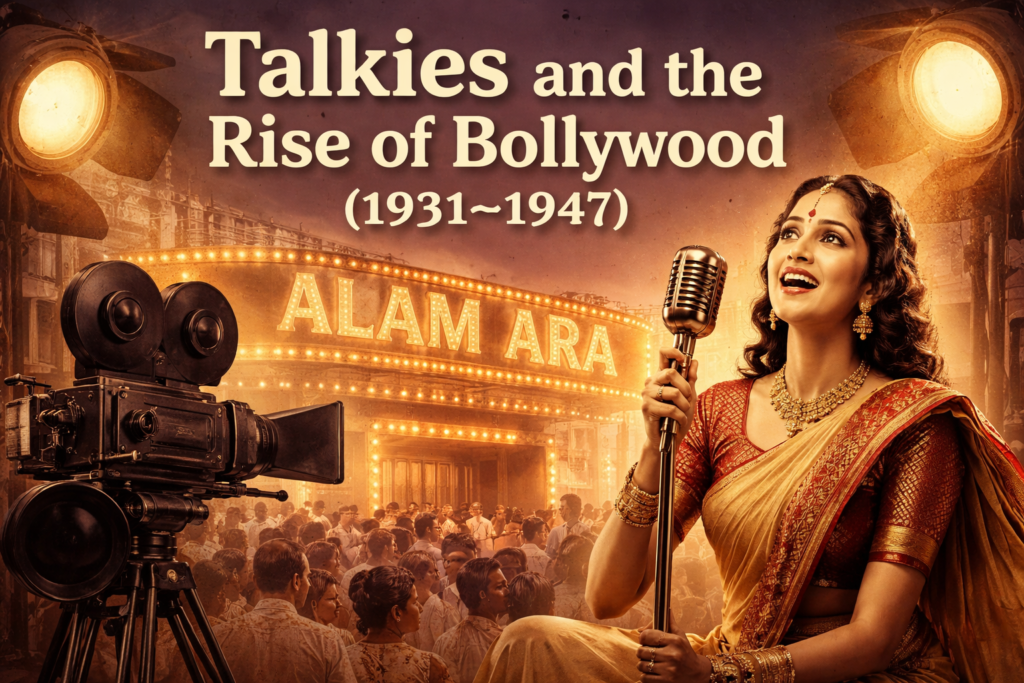
The release of Alam Ara in 1931 marked a turning point not just for Indian cinema, but for popular culture across the subcontinent. With the arrival of synchronized sound, films began to speak, sing, and emotionally connect with audiences in ways silent cinema never could.
This transformation followed the pioneering years of silent filmmaking, when visual storytelling defined early Indian cinema. The arrival of sound marked a decisive break from the silent era and reshaped how stories were told on screen.
This period—stretching from 1931 to India’s independence in 1947—was a formative phase when Indian cinema transitioned into what would later be recognized as Bollywood. It was an era of experimentation, growing popularity, and industrial consolidation rather than artistic perfection. Yet without this phase, the later Golden Era of Bollywood would not have been possible.
While Hollywood would later describe its most influential decades as a “Golden Age,” Indian cinema, during the talkies period, was still discovering its voice—experimenting, adapting, and laying the groundwork for what would eventually become Bollywood’s Golden Era.
–––– ✦ ✦ ✦ ––––
In This Post …
–––– ✦ ✦ ✦ ––––
💡 Quick FAQs: Talkies and the Rise of Bollywood
1. Question: What were “talkies” in Indian cinema?
Answer: Talkies were films with synchronized sound, dialogue, and music, marking the transition from silent films to sound cinema in India.
2. Question: Why is the talkies period considered a turning point in Indian cinema history?
Answer: The talkies period marked the moment Indian cinema moved from visual storytelling to sound-driven narratives. Dialogue, music, and songs transformed films into a mass cultural experience and laid the industrial foundation for what later became Bollywood.
3. Question: Why did music become central to Indian films during the talkies era?
Answer: Music helped overcome linguistic diversity, enhanced emotional storytelling, and attracted repeat audiences. During the talkies era, songs became a defining feature of Indian cinema, setting it apart from many global film traditions.
–– ✦ ✦ ––
🔊 The Arrival of Sound in Indian Cinema
The coming of sound transformed Indian cinema more radically than any technological change before it. With the release of Alam Ara (1931), films were no longer just visual spectacles—they began speaking, singing, and addressing audiences directly.
This shift reshaped storytelling, performance styles, and audience expectations, marking the true beginning of popular Indian cinema.
This transformative phase, later known as Talkies and the Rise of Bollywood, redefined the relationship between cinema and its audience. Dialogue and music brought films closer to everyday life, allowing emotions, language, and cultural identity to take centre stage. Indian cinema was no longer silent entertainment—it had found its voice.
🎙️ Did You Know? Alam Ara (1931), India’s first talkie, featured just seven songs—but their impact was so powerful that audiences queued up repeatedly, marking the beginning of music-driven storytelling in Bollywood.
Alam Ara (1931) and the Birth of Talkies
India’s first full-length talkie, Alam Ara, changed everything overnight. Dialogue, songs, and sound effects transformed cinema from a visual spectacle into a multisensory experience. The success of the film immediately pushed studios to abandon silent production.
The transition from silent films to sound in India is widely documented by film historians and archival institutions. Organizations such as the National Film Archive of India (NFAI) preserve early talkies and production records, offering valuable insight into how sound reshaped Indian cinema during the 1930s.
How Sound Changed Filmmaking
Actors now needed clear diction and musical ability. Writers gained importance, while music directors emerged as key creative forces. Sound also narrowed cinema’s reach linguistically—but paradoxically increased its emotional power.
Beyond Alam Ara, early talkies such as Devdas (1935) and Achhut Kanya (1936) demonstrated how sound could deepen character psychology and social themes. Dialogue delivery, poetic language, and musical motifs became tools for storytelling, pushing Indian cinema toward greater emotional complexity.
Sound also reshaped performance styles. Actors trained for silent expressiveness had to adapt to microphones, rehearsed dialogue, and musical timing—creating a new kind of screen presence that audiences quickly embraced.
–– ✦ ✦ ––
🎵 Language, Music, and Mass Appeal
Sound gave Indian films a powerful new connection with the masses through language and music. Dialogues in Hindustani, Urdu, Hindi, and regional dialects made stories instantly relatable, while songs became central to narrative expression. Cinema now reflected the rhythms, emotions, and cultural diversity of everyday Indian life.
🎧 From Silence to Sound: The arrival of talkies reshaped stardom—actors were now judged not only by screen presence but also by voice clarity, dialogue delivery, and musical ability.
Why Songs Became Central to Indian Films
Unlike Hollywood, where dialogue dominated early talkies, Indian cinema embraced music as a storytelling tool. Songs conveyed emotion, advanced plots, and helped films transcend literacy barriers.
Hindustani as a Unifying Film Language
A blended form of Hindi and Urdu—Hindustani—became the preferred language of popular cinema. This helped films travel across regions, laying the groundwork for a nationally consumed film industry.
–– ✦ ✦ ––
🎧 Cinema Halls, Audiences, and the Culture of Listening
With the arrival of sound, cinema-going in India became a shared auditory experience. Early talkies were often watched repeatedly—not for visuals alone, but to hear dialogues and songs that audiences memorized and discussed long after the screening ended. Cinema halls turned into spaces of collective listening, where music and dialogue resonated across social boundaries.
Single-screen theatres dominated the era, with seating often divided by class, yet film songs unified audiences beyond these divisions. Popular numbers from films circulated through gramophone records and radio broadcasts, allowing cinema music to enter homes, streets, and public gatherings. For many Indians, film songs became their first sustained exposure to modern popular music.
This culture of listening played a crucial role in shaping what would later become Bollywood’s defining trait—the centrality of music as emotional and narrative expression.
–– ✦ ✦ ––
🏛️ The Studio System Takes Shape
As talkies gained popularity, organized film production began to take root in India. Studios such as Bombay Talkies, Prabhat Studios, and New Theatres introduced structured filmmaking practices, nurturing writers, actors, musicians, and technicians. This era laid the industrial foundation of what would later become Bollywood.
Organized Production and Major Studios
Studios like Bombay Talkies, New Theatres (Calcutta), and Prabhat Studios (Pune) brought professionalism and stability. They introduced contracts, training systems, and consistent output.
From Individual Filmmakers to an Industry
Indian cinema began shifting from individual passion projects to an organized industry—though it never reached the rigid control of Hollywood’s studio system.
–– ✦ ✦ ––
⭐ Early Stars and Creative Personalities
The talkie era also gave rise to India’s first generation of film stars and influential creative figures. Actors, directors, lyricists, and composers became household names, shaping screen personas that audiences deeply connected with. Stardom, as a cultural phenomenon, began taking recognizable form during this period.
KL Saigal and the First Film Stars
KL Saigal became Indian cinema’s first true superstar—his voice and screen presence symbolized the new sound era. Stardom was now tied as much to music as to acting.
Directors, Writers, and Composers
Figures like Himanshu Rai, V. Shantaram, and music composers such as R.C. Boral shaped a collaborative filmmaking culture that defined the era.
–– ✦ ✦ ––
🕊️ Cinema During the Freedom Movement
Between 1931 and 1947, Indian cinema evolved alongside the country’s struggle for independence.
While overt political messaging was limited, themes of social reform, nationalism, sacrifice, and moral duty subtly echoed the spirit of the freedom movement. Films of this era often mirrored the hopes and tensions of a nation on the brink of change.
Social Themes and National Consciousness
Films subtly reflected social reform, poverty, and moral conflict. While direct political commentary was rare, cinema mirrored the anxieties and hopes of a nation under colonial rule.
British Censorship and Creative Expression
Strict censorship limited overt nationalism, forcing filmmakers to rely on symbolism, allegory, and mythological parallels.
While direct political commentary remained constrained, cinema absorbed the emotional climate of the time. Stories of personal sacrifice, moral duty, and social injustice echoed the broader struggle for independence. Sound allowed filmmakers to convey these ideas more subtly—through lyrics, dialogue, and tone—making cinema an increasingly influential cultural force by the 1940s.
–– ✦ ✦ ––
📽️ Legacy of the Talkies Era (1931–1947)
The talkies era was not yet the Golden Era of Bollywood—but it laid its essential foundation. By 1947, Indian cinema had found its voice, its audience, and its emotional language. Sound and music did more than transform filmmaking technology; they shaped a cinematic expression that connected deeply with popular culture. With studios, stars, and storytelling conventions firmly in place, Hindi cinema was now ready to enter the Golden Era of Bollywood (1950s–1970s), when creative confidence would fully blossom.
–––– ✦ ✦ ✦ ––––
📖 In-Depth FAQs: Talkies and the Rise of Bollywood
Question 1: What were the first talkies in Indian cinema?
Answer: The first Indian talkie was Alam Ara (1931), which introduced synchronized sound, songs, and spoken dialogue to audiences. Soon after, regional-language talkies such as Kalidas (1931) in Tamil–Telugu and Ayodhyecha Raja (1932) in Marathi followed, confirming that the talkies revolution was unfolding across Indian cinema. Together, these films marked the beginning of the era later remembered as Talkies and the Rise of Bollywood.
Question 2: How did the talkies change Hindi cinema?
Answer: Talkies transformed Hindi cinema by adding voice, music, and emotional expression. They allowed filmmakers to experiment with storytelling, performance, and song integration, laying the foundation for Bollywood’s Golden Era (1950s–1970s).
Question 3: Were there regional talkies in India during 1930–1940?
Answer: Yes. Several regional industries, including Bengali, Tamil, Telugu, and Marathi cinemas, began producing talkies. These films enriched Indian cinema’s diversity and influenced storytelling techniques in Bollywood.
Question 4: Why is 1931–1947 considered the Talkies Era?
Answer: This period marks the introduction of sound in Indian cinema, from Alam Ara in 1931 until India’s independence in 1947, when Hindi cinema and regional industries matured in style, music, and production.
📚 Further Reading: Explore the Talkies Era and Beyond
If you enjoyed learning about Talkies and the Rise of Bollywood, you may also like:
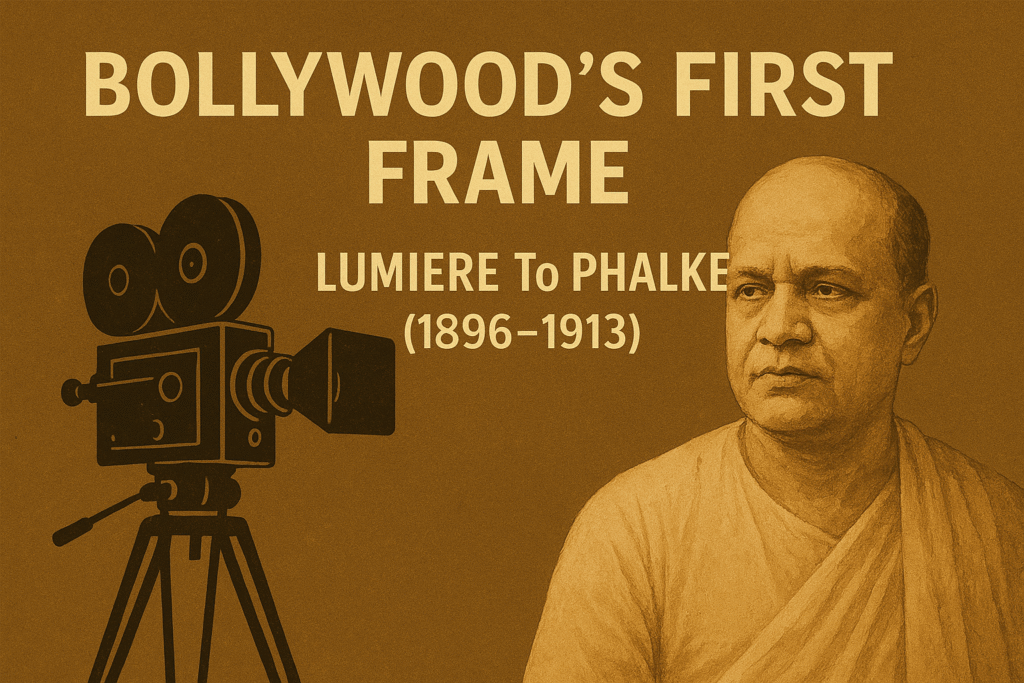
- Bollywood’s First Frame: Lumière to Phalke (1896–1913) – The beginnings of Indian cinema.
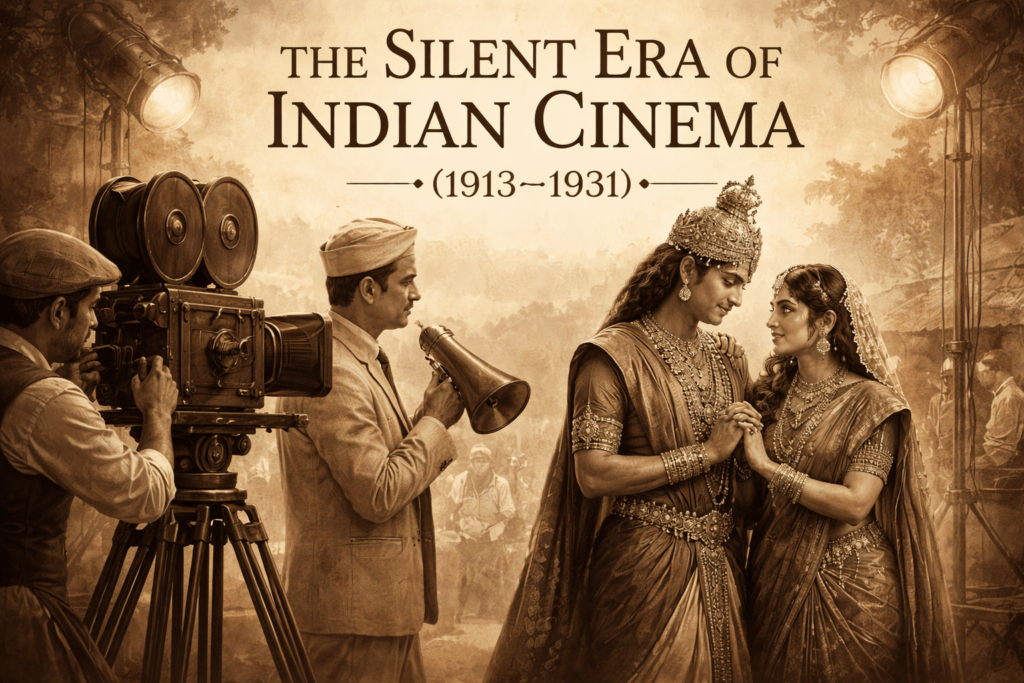
- The Silent Era of Indian Cinema (1913–1931) – How silent films set the stage for talkies.
- Golden Era of Bollywood (1950s–1970s) – When Hindi cinema reached creative and industrial maturity.
Explore these posts to see how Indian cinema evolved from silent images to the musical, narrative-rich world of Bollywood!
🔖 Attribution Note: The links to external resources in this post open in new tabs and are for reference only. All rights belong to their respective publishers and content owners.