

When Hollywood reached its creative peak and became the world’s cinematic powerhouse.
ENG | हिंदी
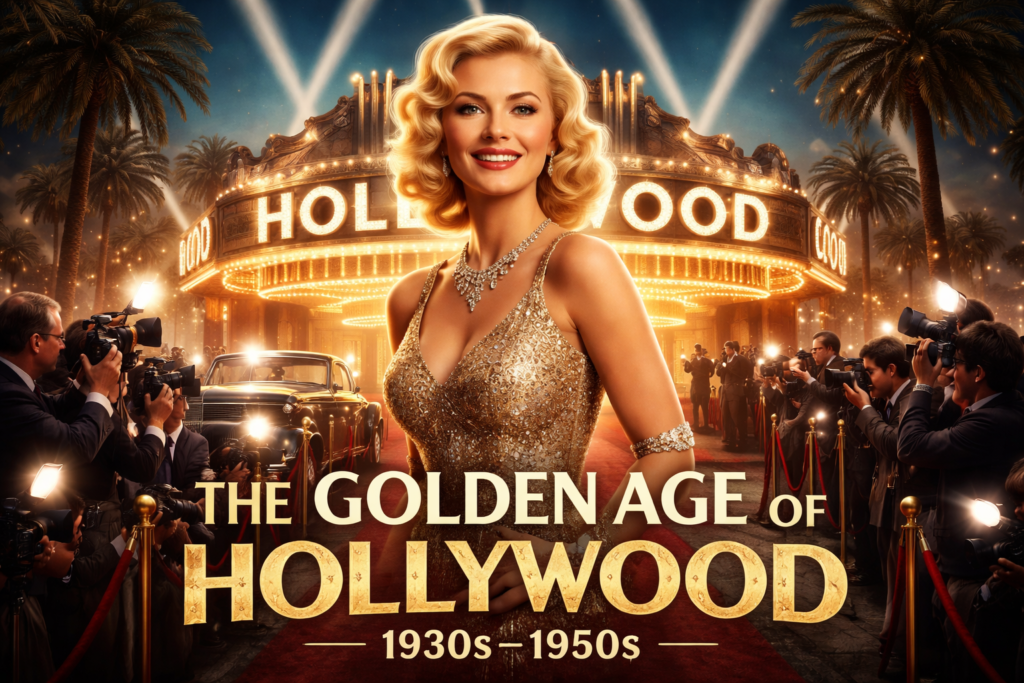
Legendary films, iconic stars, and timeless storytelling defined the era that transformed Hollywood into a global phenomenon.
The Golden Age of Hollywood (1930s–1950s) is widely celebrated as one of the greatest periods in film history—a transformative era when American cinema reached unparalleled artistic, industrial, and cultural influence.
By this time, sound cinema had become firmly established, the studio system had matured into a powerful filmmaking enterprise, and Hollywood had emerged as the world’s most influential centre of cinematic storytelling. It was an age that produced legendary stars, visionary directors, and enduring classics whose influence continues to shape filmmaking today.
Although cinema flourished creatively across many parts of the world, Hollywood remained at the heart of popular imagination, exporting dreams, stars, and spectacle to audiences across continents. This remarkable creative achievement was possible because cinema’s early journey from invention to narrative art had already laid the foundations for Hollywood’s golden decades.
📑 In This Article
🎙️ From Silence to Sound: The Rise of Talkies
The arrival of synchronized sound in the late 1920s reshaped Hollywood forever.
By the early 1930s, talkies had completely replaced silent films, transforming how stories were written, performed, and experienced. By the late 1930s, Hollywood films were also being formally recognized by institutions such as the Academy of Motion Picture Arts and Sciences, helping define new artistic and professional standards.
During this period, the Hays Code governed the content of Hollywood films, shaping everything from dialogue and romance to crime, morality, and the way stories were presented on screen. Explore our article on The Hays Code: How Censorship Shaped Classical Hollywood to learn how these rules influenced an entire era of filmmaking.
Sound brought:
- Dialogue-driven narratives
- Musical performances integrated into storytelling
- New acting styles focused on voice and expression
Studios quickly adapted, investing heavily in sound technology and retraining actors. While some silent-era stars faded, others successfully reinvented themselves, helping Hollywood move confidently into a new cinematic age.
–– ✦ ✦ ––
🏛️ The Hollywood Studio System Takes Control
At the heart of the classical Hollywood era was the powerful studio system.
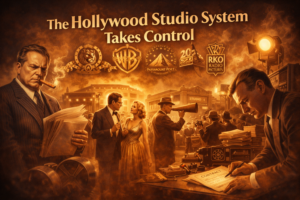
Hollywood’s dominance during this period was built on an industrial model that had been developing since the early decades of the twentieth century.
The studio system was dominated by the Big Five studios:
- MGM (Metro-Goldwyn-Mayer)
- Warner Bros.
- Paramount Pictures
- 20th Century Fox
- RKO Radio Pictures
These studios controlled:
- Film production
- Distribution networks
- Theatre chains
- Long-term contracts with actors and filmmakers
This vertically integrated system allowed Hollywood to produce films on an industrial scale, ensuring consistency, profitability, and global reach.
–– ✦ ✦ ––
🌈 Technicolor and Visual Spectacle
The Golden Age also marked Hollywood’s selective embrace of Technicolor, transforming high-profile productions into visual spectacles.
Colour films enhanced:
- Fantasy and adventure stories
- Historical epics
- Musicals and romantic dramas
While black-and-white films remained common throughout the era, Technicolor became a symbol of prestige and innovation, helping Hollywood distinguish itself as the home of cinematic grandeur.
–– ✦ ✦ ––
🎶 Musicals: Escapism in Difficult Times
During the Great Depression and World War II, Hollywood musicals offered audiences joy, rhythm, and escape.
These films featured:
- Lavish sets and choreography
- Optimistic themes
- Star performers who embodied glamour and hope
Musicals became important cultural touchstones, reinforcing Hollywood’s role as a major provider of emotional relief during periods of economic hardship and global uncertainty.
–– ✦ ✦ ––
🌑 Film Noir and the Dark Side of the Dream
In contrast to colourful musicals, the 1940s saw the rise of film noir, a style of filmmaking shaped by war, social anxiety, and moral ambiguity.
Film noir classics explored:
- Crime and corruption
- Psychological conflict
- Urban alienation
With moody lighting, sharp dialogue, and morally complex characters, noir reflected a changing America and demonstrated that Hollywood could tell darker, more introspective stories.
–– ✦ ✦ ––
🎖️ Hollywood During World War II
World War II deeply influenced Hollywood’s output, shaping both the themes and purposes of mainstream films.
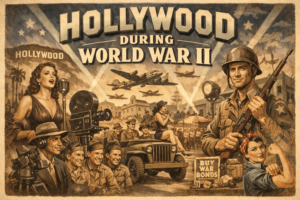
Films served multiple functions:
- Boosting morale
- Supporting wartime propaganda
- Exploring themes of sacrifice and patriotism
During this period, Hollywood often collaborated with U.S. government agencies, producing films that helped shape public perception while still maintaining strong entertainment value.
–– ✦ ✦ ––
⭐ The Birth of Movie Legends
The Golden Age of Hollywood created enduring stars whose influence still resonates today. The studio system carefully crafted public images, turning actors into:
- Cultural icons
- Fashion trendsetters
- Global celebrities
Audiences didn’t just watch films—they followed stars, collected magazines, and formed emotional connections that helped define modern celebrity culture.
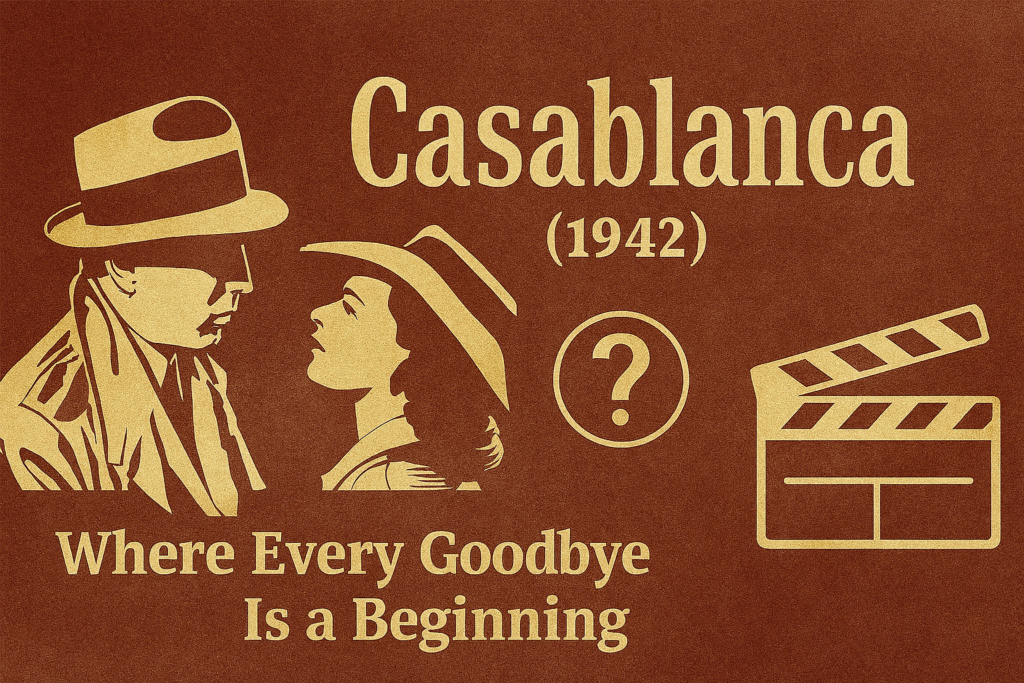
Few films capture the emotional restraint and narrative precision of the era as perfectly as Casablanca (1942).
–– ✦ ✦ ––
🌍 Hollywood’s Global Influence
By the mid-20th century, Hollywood films dominated international screens. American storytelling styles, genres, and production models influenced filmmakers and studios across the world, shaping how cinema was written, produced, and marketed beyond the United States.
This influence was especially visible in:
- European cinema, where Hollywood narrative clarity and visual conventions interacted with local artistic traditions
- Indian filmmaking, particularly in the development of musicals and studio-based production practices
- Japanese studio systems, which adapted Hollywood’s organizational models in the postwar era
Hollywood’s reach extended far beyond entertainment, shaping global ideas about narrative structure, visual language, and the concept of screen stardom itself.
Around the same time, Indian cinema was also consolidating its own identity—drawing from indigenous storytelling traditions while selectively adapting genres and studio practices influenced by Hollywood. This parallel evolution laid the foundation for what later came to be celebrated as the Golden Era of Bollywood (1950s–1970s), a period defined by artistic confidence, musical storytelling, and enduring screen icons.
–– ✦ ✦ ––
🎞️ Why the Golden Age of Hollywood Still Matters
Modern cinema continues to draw inspiration from this era. The foundations of:
- Genre storytelling
- Studio branding
- Star-driven marketing
- Cinematic grammar
were firmly established during Hollywood’s Golden Age. Much of what survives from this era today is preserved through national archives and dedicated film restoration efforts.
Understanding this period helps us appreciate how cinema evolved into both a refined art form and a globally influential industry.
–– ✦ ✦ ––
🎬 Final Cut
The Golden Age of Hollywood was more than a historical phase—it was the moment when movies became modern myths. Through sound, colour, studios, and stars, Hollywood transformed storytelling into a universal language.
–– ✦ ✦ ––
❓FAQs: Hollywood’s Golden Age
Q1. What was the Golden Age of Hollywood?
A. The Golden Age of Hollywood was a period from the early 1930s to the late 1950s when the American studio system dominated filmmaking. It established classic genres, the star system, and narrative techniques that shaped modern cinema worldwide.
Q2. Which studios dominated the Golden Age of Hollywood?
A. The Golden Age was led by the Big Five studios—MGM, Warner Bros., Paramount, 20th Century Fox, and RKO—along with Universal, Columbia, and United Artists, which played major supporting roles.
Q3. How did the transition from silent films to sound impact Hollywood?
A. The transition to sound films transformed Hollywood by changing acting styles, storytelling methods, and production practices. It also led to the rise of new genres like musicals while forcing many silent-era stars to adapt or disappear.
Q4. Why is film restoration important today?
A. Film restoration preserves classic films from physical decay and ensures that future generations can access, study, and appreciate cinema’s cultural and historical legacy.
🔗 Connecting the Bigger Picture
The Golden Age of Hollywood was part of a wider global transformation in cinema. While American studios reached their peak, filmmakers across the world were simultaneously redefining film language, style, and storytelling.
To understand how this era fit into a broader international context, you may also explore: 👉 Golden Age of World Cinema (1930s–1950s)
🎬 Up Next at The Reel Retro
At The Reel Retro, we continue tracing how Hollywood evolved beyond its golden peak—into an era shaped by television, artistic rebellion, and new cinematic voices that challenged the old studio order.
👉 The Television Challenge & the Decline of the Studio System (1950s–1970s)
When screens entered living rooms and Hollywood was forced to reinvent itself.
🌐 Prefer reading this article in Hindi?
👉 Read:
हॉलीवुड का स्वर्ण युग (1930s–1950s)
🔖 External resources above are referenced for educational and historical context. All rights belong to their respective publishers and content owners.

Thanks for your appreciation