
When bold filmmakers challenged convention and redefined the future of American cinema.
ENG | हिंदी

When directors reclaimed the language of American cinema.
A new generation of directors brought realism, experimentation, and fearless storytelling to the big screen.
New Hollywood & Counterculture Cinema reshaped American filmmaking at a time when the traditional studio system was struggling to reconnect with changing audiences. Emerging during the late 1960s, this influential movement transformed cinematic storytelling by embracing realism, artistic experimentation, and a new generation of visionary directors.
Against a backdrop of social unrest, political uncertainty, and cultural change, television had become a dominant form of entertainment, while younger audiences were seeking films that reflected their experiences and questioned established norms. Hollywood responded by giving filmmakers greater creative freedom than ever before.
This was far more than a stylistic shift—it was a creative revolution. For a brief but influential period, directors experimented with narrative structure, complex characters, and unconventional themes, producing films that redefined not only American cinema but also inspired filmmakers around the world.
📑 In This Article
🎬 Quick Facts: New Hollywood & Counterculture Cinema
- 📅 Period: Late 1960s to early 1980s
- 🎥 Key Directors: Coppola, Scorsese, Altman, Ashby
- 🎭 Themes: Anti-heroes, realism, moral ambiguity
- 📺 Context: Television dominance and cultural upheaval
- 🎞️ Influence: Global New Wave movements
–– ✦ ✦ ––
🎞️ From Studio Control to Creative Freedom
The classical studio era had long dominated American filmmaking, maintaining strict control over production, distribution, and creative decisions. However, by the 1960s, this system began to show signs of instability. Declining box office returns and shifting audience tastes weakened centralized authority.
Young filmmakers, many influenced by European art cinema, began advocating for greater autonomy. Unlike the predictable narratives of earlier decades, their stories embraced uncertainty, flawed protagonists, and open-ended conclusions.
This shift marked a clear departure from the Golden Age of Hollywood, when major studios exercised tight control over production, distribution, and storytelling.
As Hollywood entered this new era, another defining change was the decline of the Hays Code, which had shaped the content of American films for decades. With its influence fading, filmmakers gained greater freedom to explore mature themes, moral ambiguity, and more realistic storytelling. The story of this transition is explored in The Hays Code: How Censorship Shaped Classical Hollywood.
–– ✦ ✦ ––
📺 Television, Turbulence, and a Changing America
As discussed in the era of the Television Challenge & New Wave Cinema, television reshaped how audiences consumed visual storytelling. Hollywood could no longer rely on spectacle alone.
Simultaneously, the Vietnam War, civil rights movements, and youth rebellion transformed American society. Cinema responded by reflecting this turbulence. Films grew darker, more introspective, and more socially aware.
As discussed in the 👉 Television Challenge & New Wave Cinema era, the rise of television forced filmmakers to rethink cinema’s identity and artistic direction.
–– ✦ ✦ ––
🎥 The Rise of the Auteur Generation
New Hollywood And Counterculture Cinema placed directors at the center of creative authority.
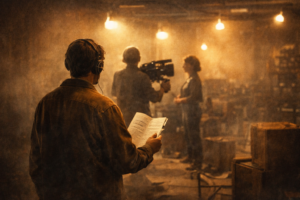
Personal vision replacing studio formula
Figures such as Francis Ford Coppola and Martin Scorsese crafted films that bore unmistakable personal signatures.
Like their European and Indian counterparts in global New Wave movements, American directors sought greater artistic autonomy. Handheld camerawork, natural lighting, and narrative experimentation became defining features.
Personal storytelling replaced rigid studio formulas.
Similar transformations were unfolding globally, particularly within 👉 New Wave Cinema And Indian Parallel Cinema, where directors sought greater artistic autonomy.
–– ✦ ✦ ––
🎞️ Style, Risk, and Moral Ambiguity
This era embraced complexity. Protagonists were often anti-heroes. Moral clarity gave way to ambiguity. Urban realism replaced glossy artificial sets.
Across continents, filmmakers were redefining cinematic language in similar ways — privileging authenticity over spectacle.
For audiences, these films felt immediate and honest. For studios, they represented both opportunity and risk.
–– ✦ ✦ ––
💰 The Blockbuster Shift and the End of an Era
By the late 1970s, large-scale commercial successes signaled another transition. High-concept films and mass appeal spectacles regained prominence.
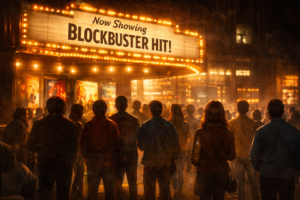
When spectacle began to reshape the industry
Financial consolidation gradually limited the experimental freedom that had characterized the movement. The rise of the blockbuster era marked the end of New Hollywood’s most daring phase.
–– ✦ ✦ ––
🌙 Closing Reflection
New Hollywood did not simply replace the studio system; it transformed the relationship between filmmakers, studios, and audiences. For a generation, American cinema was shaped by directors who challenged conventions, embraced realism, and explored themes that had rarely appeared in mainstream Hollywood films.
Its influence extended far beyond the 1960s and 1970s. New Hollywood demonstrated that artistic vision and commercial success could coexist, inspiring future generations of filmmakers around the world. Even as the industry evolved toward blockbuster franchises, digital technologies, and global production networks, the creative spirit of New Hollywood continued to shape modern cinema.
The creative freedom championed by New Hollywood filmmakers ultimately contributed to broader changes in the film industry. In the decades that followed, studios increasingly adopted new production methods, technologies, and international filming locations. One of the most significant outcomes was the rise of Canada’s production industry, now widely known as Hollywood North. Explore this evolution in:
👉 Hollywood North: How Canada Became Hollywood’s Second Home
–– ✦ ✦ ––
🔱 Quick FAQs — New Hollywood And Counterculture Cinema
What was New Hollywood?
New Hollywood was a director-driven movement in American cinema that emphasized realism, creative freedom, and socially reflective storytelling during the late 1960s and 1970s.
How did counterculture influence American films?
Counterculture encouraged filmmakers to explore anti-establishment themes, youth rebellion, political uncertainty, and moral complexity.
How was New Hollywood different from the Golden Age?
Unlike the studio-controlled Golden Age, New Hollywood allowed directors greater autonomy over narrative style and thematic choices.
Why did the movement decline?
The commercial success of blockbuster films gradually shifted control back toward studios and large-scale productions.
–– ✦ ✦ ––
❓ Detailed FAQs — New Hollywood & Counterculture Cinema
Why did New Hollywood emerge in the late 1960s?
New Hollywood emerged as traditional studio systems weakened and younger audiences demanded more realistic and socially aware films. Television competition, cultural unrest, and global cinematic experimentation all contributed to this shift. Directors were given more freedom to experiment because studios were searching for new ways to reconnect with viewers.
Was New Hollywood influenced by European cinema?
Yes, many American filmmakers were inspired by European New Wave movements. Techniques such as handheld camerawork, natural lighting, and unconventional storytelling structures influenced the aesthetic direction of New Hollywood films. This global exchange helped redefine cinematic language during the period.
How did blockbuster films change Hollywood in the late 1970s?
The success of large-scale commercial films in the late 1970s signaled a shift toward spectacle-driven productions. Studios regained stronger financial control, focusing on high-concept films with broad audience appeal. This transition gradually marked the end of the more experimental New Hollywood phase.
🎬 What Next:
What came after this era of creative freedom?
👉 Explore how this transition led to the rise of blockbuster cinema.
🌐 Prefer reading this article in Hindi?
👉 Read:
न्यू हॉलीवुड और काउंटरकल्चर सिनेमा: निर्देशक का दौर (1960s–1980s)