
How the first film screenings and pioneering filmmakers laid the foundation of Indian cinema
ENG | हिंदी
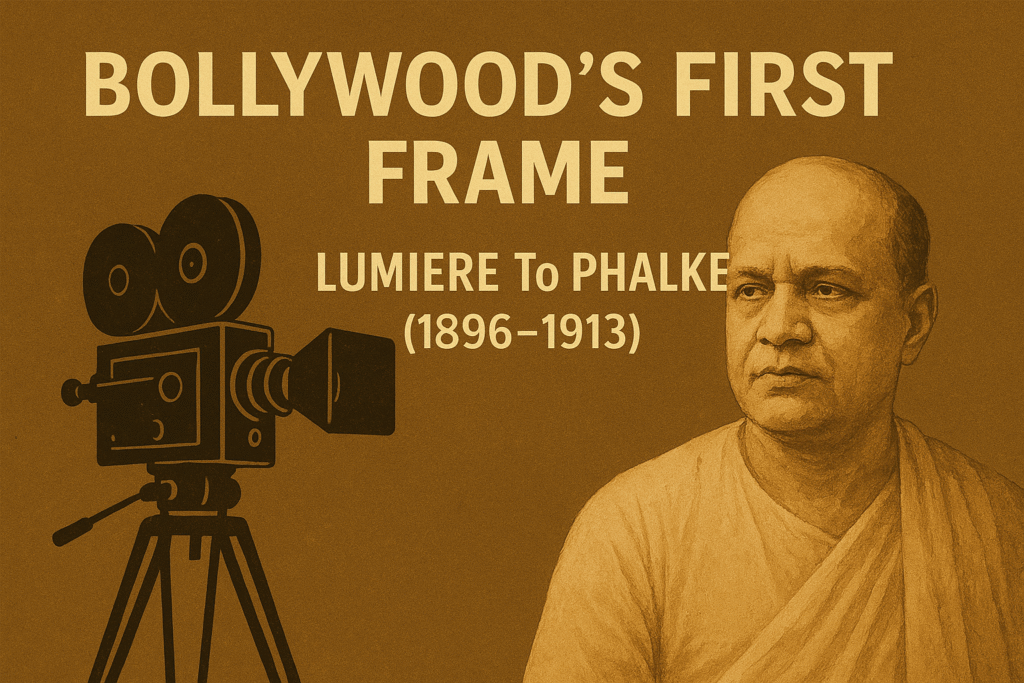
History of Bollywood 1896 to 1913 – Lumière Brothers to Dadasaheb Phalke
Discover how India’s cinematic journey began with the Lumière Brothers and reached its first milestone through Dadasaheb Phalke’s pioneering vision.
In tracing the history of Bollywood 1896 to 1913, we step into an era when moving images first flickered before Indian eyes.
The story of Bollywood — India’s vibrant and globally renowned film industry — begins much earlier than many realize.
It all started with a simple yet magical event: the first film screening by the Lumière Brothers at the Watson Hotel in Bombay, now Mumbai, in 1896.
This moment sparked curiosity and wonder, planting the seed for a cinematic revolution in India.
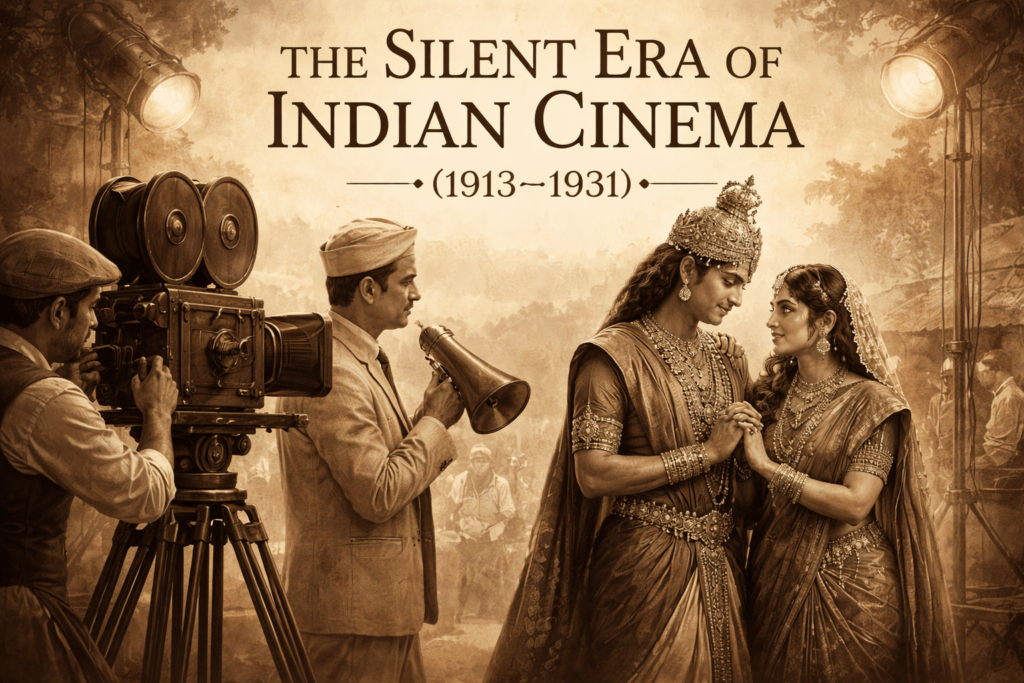
But it was Dadasaheb Phalke, often called the “Father of Indian Cinema,” who truly gave birth to Bollywood with his pioneering silent film Raja Harishchandra in 1913.
This post explores the fascinating journey from those earliest moving images to the dawn of Indian filmmaking.
🎞️ Editor’s Note: The term “Bollywood” was not in use during this early period of Indian cinema. It became popular only decades later, around the 1970s, as a nickname for the Hindi-language film industry centred in Mumbai. In this post, the word is used merely as a convenient way to describe the origins of Indian cinema.
📑 In This Article
A Brief History of Bollywood 1896 to 1913
Although the word “Bollywood” was coined decades later, this period represents the earliest chapter in the history of Bollywood — long before the term came into popular use.
The history of Bollywood from 1896 to 1913 marks a fascinating journey from the arrival of the Lumière Brothers’ moving pictures to the pioneering works of Dadasaheb Phalke.
This formative era laid the foundation for what would later become one of the largest film industries in the world.
💡 The Lumière Brothers’ First Show in India (1896)
In July 1896, just a year after the Lumière Brothers had introduced their cinematograph in Paris, their traveling projectionists brought their films to Bombay (now Mumbai). The venue was the Watson Hotel, one of the city’s premier establishments at the time.
The films were short, simple glimpses of everyday life — a train arriving at a station, workers leaving a factory, children playing — but to the Indian audience, these moving pictures were nothing short of a miracle.
The response was enthusiastic yet mixed. Some people were mesmerized, while others were skeptical or even frightened by the novelty of moving images projected on a screen.
This event is widely considered the birth of cinema in India and marks the beginning of a cultural and technological journey that would soon captivate millions.
💡 Early Influence on Indian Audiences and Entrepreneurs
The Lumière screenings ignited the imagination of artists, entrepreneurs, and the general public.
The wonder of capturing real life on film was compelling, and soon, Indian exhibitors began organizing film shows in major cities like Calcutta, Madras, and Bombay.
However, the films shown were almost exclusively foreign imports — French, British, or American.
The first Indian attempts at filmmaking were modest, often short documentaries or travelogues made by non-professionals or foreign filmmakers residing in India.
The demand, however, grew steadily, and it became clear that Indian audiences wanted stories that reflected their own culture, traditions, and mythology.
Before exploring Phalke’s pioneering work, it’s worth noting that the origin of the term Bollywood has no direct link to this early silent era — it emerged much later as a nickname for Hindi cinema inspired by Hollywood.
💡 Enter Dadasaheb Phalke: The Father of Indian Cinema
One of the earliest Indian visionaries who recognized cinema’s potential was Dhundiraj Govind Phalke, popularly known as Dadasaheb Phalke.
Born in 1870 in Maharashtra, Phalke was a trained artist and photographer with a keen interest in technology and storytelling.
Inspired by a screening of the English film The Life of Christ and eager to create Indian stories on screen, Phalke traveled to England and Germany to study filmmaking techniques and the latest equipment.
After returning to India, he set up his own production unit and started experimenting with film production, even building his own camera.
💡 Raja Harishchandra (1913): India’s First Full-Length Feature Film
After years of effort and overcoming numerous challenges, Phalke completed Raja Harishchandra in 1913. This silent mythological film was based on the story of King Harishchandra, a legendary figure celebrated for his unwavering commitment to truth and sacrifice.
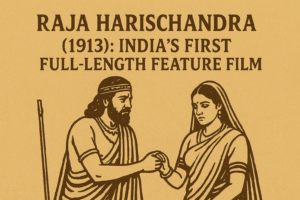
Despite limited resources, Raja Harishchandra was a groundbreaking achievement — approximately 40 minutes long, it was India’s first full-length feature film.
The film featured amateur actors (including men playing female roles, since women were hesitant to act on screen), simple sets, and basic special effects.
The film’s release was a success, garnering enthusiastic response from audiences and exhibitors alike.
It proved that Indian stories could be told through cinema and set the foundation for the country’s film industry.
–– ✦ ✦ ––
Challenges Faced by Early Filmmakers
Phalke’s journey was not without hardships. Financial struggles plagued the production process, forcing him to seek loans and assistance.
The social stigma against acting was strong, particularly for women, which limited casting options. Technical limitations of early cameras, film stock, and editing equipment also posed significant obstacles.
Despite these challenges, Phalke’s persistence and vision inspired others. Soon, more Indian filmmakers entered the scene, and studios began to form in Bombay and other cities.
–– ✦ ✦ ––
The Broader Impact on Indian Cinema
The Lumière Brothers’ screenings and Phalke’s pioneering work together laid the groundwork for an industry that would grow rapidly over the next century.
Indian cinema evolved into a cultural powerhouse with its own language, music, dance, and storytelling traditions. Bollywood today is not just a film industry but a global phenomenon reaching audiences worldwide.
By the time the term “Bollywood” came into existence, India’s film industry had already built a strong foundation. Understanding when Bollywood started helps connect this silent era to the sound and colour age that followed.
–– ✦ ✦ ––
Conclusion
This chapter in the history of Bollywood 1896 to 1913 is more than a timeline—it’s the story of a nation discovering the power of moving pictures.
From the Lumière Brothers’ short films projected at the Watson Hotel to Dadasaheb Phalke’s silent epic Raja Harishchandra, the first frame of Bollywood was written during these formative years.
This story is a testament to creativity, perseverance, and cultural pride. Understanding this history enriches our appreciation of Bollywood’s present and future.
–– ✦ ✦ ––
FAQs
Q1: Why is Dadasaheb Phalke called the Father of Indian Cinema?
A: Phalke was the first Indian to make a full-length feature film with Indian stories, overcoming many technical and social challenges. His 1913 film Raja Harishchandra is considered India’s first full-length movie, earning him this title.
Q2: What was the significance of the Lumière Brothers’ first screening in India?
A: It introduced the Indian public to moving pictures and sparked interest in filmmaking, which eventually led to the growth of India’s own cinema industry.
Q3: Why were women hesitant to act in early Indian films?
A: Social and cultural norms at the time discouraged women from public acting, so male actors often played female roles in early cinema.
Q4: How did early Indian filmmakers learn about filmmaking techniques?
A: Many, like Phalke, travelled abroad to study filmmaking or learned through experimentation and observation of foreign films.
–– ✦ ✦ ––
FAQs About Bollywood
Here are some quick answers to common questions about the origin and meaning of the term “Bollywood.”
Q1. When did Bollywood start?
A. Bollywood’s origins trace back to the silent film era of India, beginning in 1913 with Dadasaheb Phalke’s Raja Harishchandra. However, the word “Bollywood” itself came into use much later, around the 1970s, when Hindi cinema in Mumbai gained global recognition.
Q2. What does Bollywood mean?
A. The term “Bollywood” refers to the Hindi-language film industry based in Mumbai. It is inspired by “Hollywood” and represents the commercial Hindi cinema that became globally famous after India’s independence.
Q3. Where did the term Bollywood originate?
A. The term “Bollywood” originated as a blend of “Bombay” (the old name for Mumbai) and “Hollywood.” It first appeared in Indian film magazines in the 1970s to describe the flourishing Hindi film industry.
🔑 Want to know when and how cinema originated?
In the late 1800s, people were already enamoured with stories—whether through theatre, books, or photography. But moving pictures? That was science fiction. And then some visionaries dreamed up the idea of moving images… Read the full story here! 👉 How Cinema Began: The Journey from Shadows to Screens.
🌐 Prefer reading this article in Hindi?
👉 Read:
बॉलीवुड का पहला फ्रेम: लुमिएर से फाल्के तक (1896–1913)