
ENG | हिंदी
From the moment the first flickering images danced across a screen in 1895, cinema became a universal language — one that needed no spoken words to captivate audiences. The Silent Era Cinema History (1895–1927) remains one of the most innovative and transformative periods in the history of cinema, laying the foundation for how stories are told on screen even today.
📑 In This Article
The Dawn of a New Art Form (1895–1905)
Cinema began humbly, with short reels and documentary-style shots of daily life. In December 1895, the Lumière brothers held what is now regarded as the first public screening in Paris, showing films such as Arrival of a Train and Workers Leaving the Factory. These moving pictures, though simple, stunned audiences worldwide.
🎞️ To explore how the Lumière brothers’ pioneering experiments in motion pictures laid the foundation for modern cinema, you can revisit our detailed post: From Shadows to Screens: The Birth of Cinema (1890s).
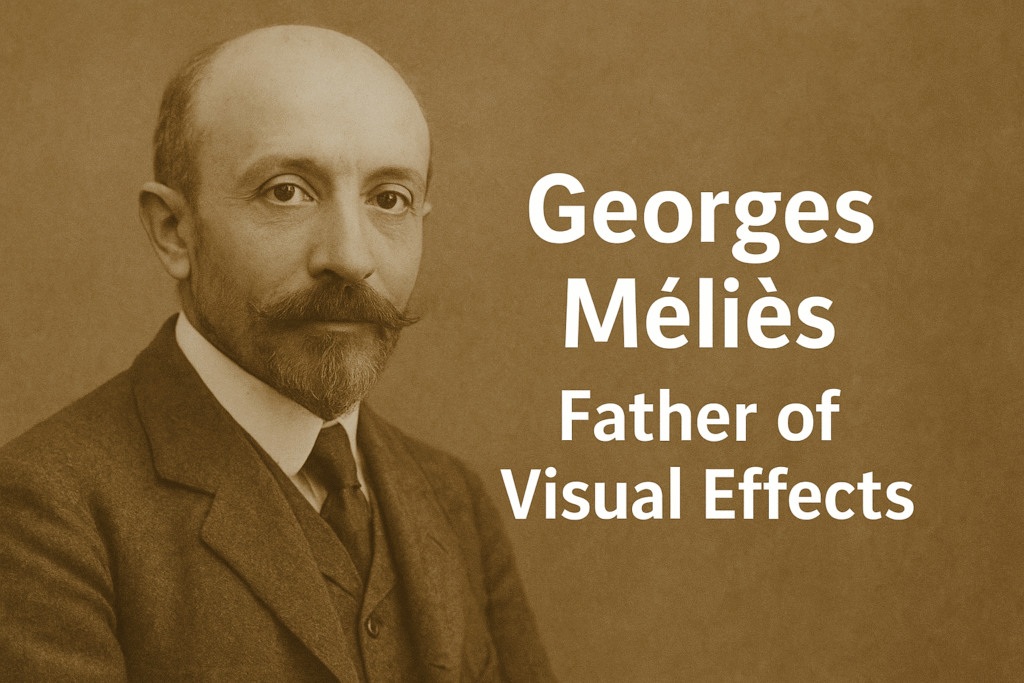
But it was Georges Méliès, a magician turned filmmaker, who unlocked cinema’s potential as a storytelling medium. His 1902 masterpiece A Trip to the Moon (Le Voyage dans la Lune) combined trick photography and imaginative narratives, proving that cinema could transport viewers beyond reality.
–– ✦ ✦ ––
The Rise of Storytelling (1905–1910)
As audiences craved more than moving images, filmmakers experimented with narrative techniques.
- In the United States, Edwin S. Porter’s The Great Train Robbery (1903) introduced continuity editing and multi-scene storytelling, inspiring countless filmmakers.
- In Europe, directors in countries like France, Italy, and Russia began to explore drama, comedy, and literature-based adaptations.
- Japan’s burgeoning cinema also began developing its own unique styles during this period.
By 1910, cinema was no longer just a curiosity — it was becoming a global art form.
–– ✦ ✦ ––
The Golden Age of Silent Films (1910–1927)
The 1910s and 1920s marked the Golden Age of Silent Cinema, when the industry matured and expanded rapidly.
Hollywood’s Rise
The West Coast of the United States became the hub of filmmaking, thanks to favourable weather and space for expansive studios. The studio system was born, and with it, some of the first movie stars.
Master Storytellers
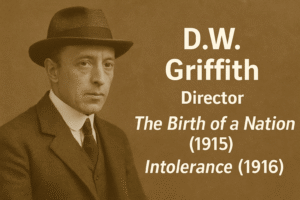
- D.W. Griffith elevated cinematic language with films like The Birth of a Nation (1915) and Intolerance (1916), pioneering techniques such as close-ups, cross-cutting, and large-scale epics.
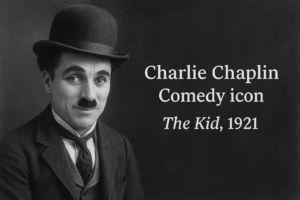
- Charlie Chaplin brought humanity and humor to silent cinema, creating timeless characters like The Tramp.
- Buster Keaton, known as “The Great Stone Face,” dazzled with innovative stunts and deadpan comedy in films like The General (1926).
–– ✦ ✦ ––
The Indian Connection in the Silent Era
India embraced cinema soon after the Lumière brothers’ screening in Bombay (now Mumbai) in July 1896. By 1913, Dadasaheb Phalke released Raja Harishchandra, India’s first full-length feature film.
Though most Indian silent films are lost, their influence remains. These early productions reflected mythological and cultural themes, setting the stage for the rise of Bollywood and regional industries in the sound era.
–– ✦ ✦ ––
Innovations and Techniques of the Silent Era
The absence of sound led filmmakers to innovate in other ways:
- Title cards provided dialogue and narrative guidance.
- Expressive acting compensated for the lack of spoken words.
- Live orchestras or small bands accompanied screenings, adding emotional depth.
- Experimentation with lighting, camera angles, and special effects laid the groundwork for future visual storytelling.
–– ✦ ✦ ––
The End of an Era (1927)
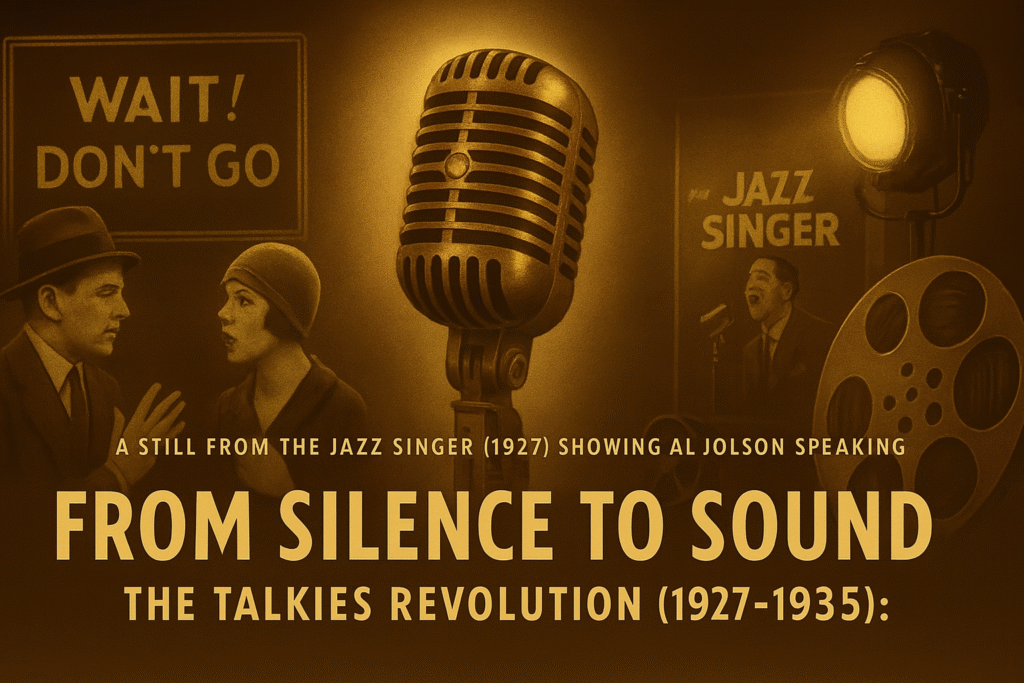
The release of The Jazz Singer in 1927 marked a seismic shift. Audiences were mesmerized by synchronized sound, and the silent film era quickly faded. By the early 1930s, most studios had fully transitioned to talkies.
–– ✦ ✦ ––
Legacy of the Silent Era
Even today, the Silent Era’s legacy is undeniable. Its pioneering techniques — from visual storytelling to editing — remain fundamental to modern filmmaking. Restored silent classics, from Chaplin’s comedies to Méliès’ magical journeys, continue to inspire filmmakers and historians worldwide.
–– ✦ ✦ ––
Frequently Asked Questions (FAQs)
Q1: What was the first silent film ever made?
Ans: The earliest films by the Lumière brothers, such as Workers Leaving the Factory (1895), are considered the first motion pictures.
Q2: How long did the silent film era last?
Ans: The era spanned roughly from 1895 to 1927, ending with the advent of synchronized sound in cinema.
Q3: Are silent films still available today?
Ans: Yes! Many silent films have been restored and are available on streaming platforms, archives, and film festivals.
💡Want to explore the regional evolution of cinema?
- Dive into Bollywood’s First Frame for the Indian story.
- Visit Reel Hollywood for more on Hollywood’s rise.
🌐 Prefer reading this article in Hindi?
👉 Read:
मूक युग: परदे पर कहानी कहने की शुरुआत
🔖 External sources are referenced for educational and historical context. All content rights and credits belong to their respective owners.