
When spectacle, technology, and mass appeal reshaped American cinema
How the Hollywood Blockbuster Era transformed film into global entertainment franchises
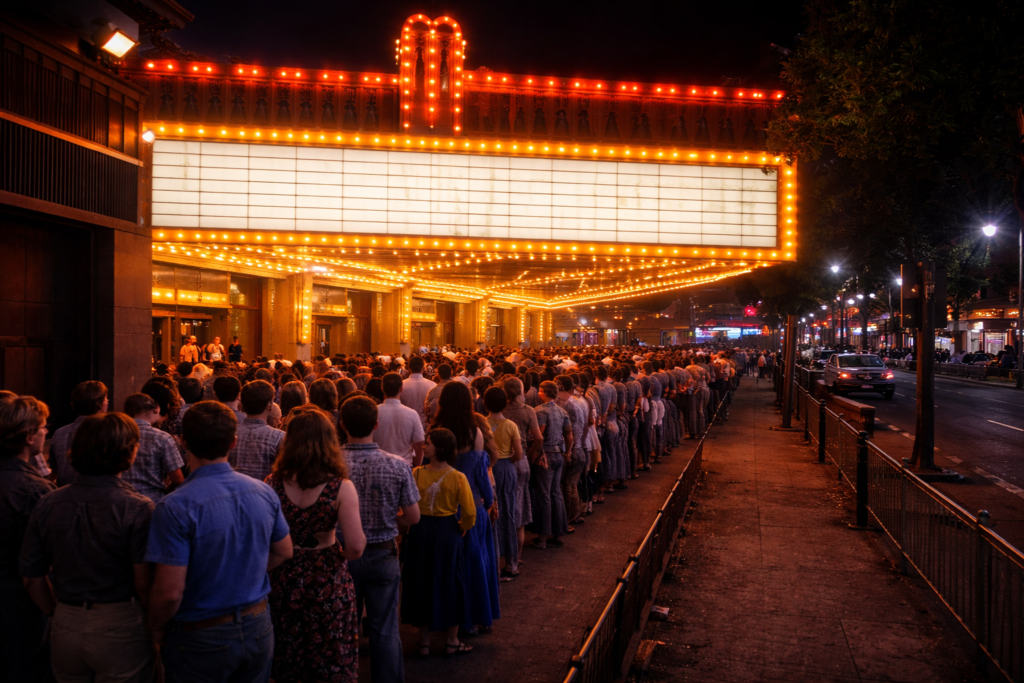
When cinema became an event
By the mid-1970s, Hollywood stood at a crossroads. The creative experimentation of the New Hollywood period had revitalized American cinema, but financial uncertainty remained. Out of this moment of transition emerged what historians often describe as the Hollywood’s Blockbuster Era, when spectacle, marketing power, and franchise storytelling reshaped the global film industry.
For major studios, the lesson of the early 1970s was clear: ambitious filmmaking alone could not guarantee stability. Corporate owners increasingly favoured films that could attract large audiences quickly and generate reliable profits.
Wide theatrical releases, large-scale production values, and coordinated marketing campaigns began to redefine how films were produced and promoted.
What followed was a transformation of Hollywood’s industrial model. Event-style releases, global distribution strategies, and the growing importance of merchandise and sequels turned certain films into cultural phenomena.
Over time, this approach reshaped the economic foundations of modern filmmaking and firmly established the blockbuster as the dominant form of mainstream cinema.
–––– ✦ ✦ ✦ ––––
In This Post …
–––– ✦ ✦ ✦ ––––
Quick Facts: Rise of Hollywood’s Blockbuster Era
- Time Period: 1975–1990s
- Key Shift: From director-driven cinema to studio-controlled spectacle
- Defining Features: Wide releases, summer blockbusters, franchise model
- Economic Impact: Rise of global box office and corporate consolidation
- Legacy: Foundation for digital-era franchises
–– ✦ ✦ ––
After New Hollywood: A Shift in Control
The late 1960s and early 1970s had empowered filmmakers. Directors enjoyed unusual creative authority, and films explored ambiguity, anti-heroes, and moral complexity.
But many ambitious projects underperformed financially. Studios, often owned by corporate conglomerates by this time, demanded predictability.
This blockbuster-driven shift marked a movement away from auteur-led filmmaking and back toward studio-centred power — this time amplified by marketing strategy and global distribution networks.
The blockbuster model did not appear suddenly. It followed the creative experimentation of 👉 New Hollywood & Counterculture Cinema, when directors briefly held unprecedented artistic control in the late 1960s and early 1970s.
–– ✦ ✦ ––
The Summer That Changed Everything
In 1975, Hollywood discovered the power of the summer blockbuster.

High-concept cinema and large-scale production
The release of Jaws demonstrated that a film could open simultaneously across hundreds of theatres, supported by national television advertising and coordinated marketing campaigns.
Two years later, Star Wars expanded the model further:
- Event-style marketing
- Merchandise integration
- Repeat-viewing appeal
- Mythic storytelling with cutting-edge effects
Many film historians view the release strategy of Jaws (1975) as a turning point in modern exhibition, marking the beginning of the blockbuster model as described in film history analyses such as those on 👉 Wikipedia’s Blockbuster era.
The Rise of the Hollywood Blockbuster Era was no longer experimental — it had become a strategy.
Studios discovered that spectacle, when paired with mass marketing, could produce cultural phenomena.
–– ✦ ✦ ––
High-Concept Cinema and Franchise Thinking
Blockbuster films were built on simple, easily marketable premises — often summarized in a single sentence.
This “high-concept” approach emphasized:
- Clear heroes
- Memorable villains
- Visual spectacle
- Emotional accessibility
This new studio-driven model encouraged franchises over standalone films. Sequels became expected rather than exceptional.
Studios invested in:
- Action-adventure epics
- Science fiction sagas
- Fantasy worlds
Intellectual properties evolved into long-term assets.
–– ✦ ✦ ––
Technology, Special Effects, and Escalating Budgets
Technological innovation accelerated during this period. Advances in practical effects, animatronics, and early computer graphics reshaped what audiences expected.
The emerging blockbuster model relied heavily on spectacle:
- Elaborate action sequences
- Expansive world-building
- Immersive sound design
Budgets grew significantly, but so did box office returns.
Risk increased — but so did reward.
–– ✦ ✦ ––
Corporate Ownership and Studio Consolidation
By the 1980s, many major studios were owned by multinational corporations. Film divisions became part of broader entertainment conglomerates.
The Rise of the Hollywood Blockbuster Era aligned perfectly with corporate strategy:
- Cross-media synergy
- Television tie-ins
- Merchandise partnerships
- International expansion
Cinema became not only storytelling — but brand architecture.
The blockbuster was no longer just a film. It was a product ecosystem.
Unlike the vertically integrated dominance of the 👉 Golden Age of Hollywood, the blockbuster system operated under corporate conglomerates and global distribution models.
–– ✦ ✦ ––
Global Box Office Expansion
During this period, international markets gained increasing importance. Studios began designing films for cross-cultural accessibility.

From local success to global phenomenon
Action, fantasy, and visual spectacle travelled more easily across linguistic boundaries than dialogue-heavy dramas.
This blockbuster model also accelerated the globalization of cinema:
- Simultaneous worldwide releases
- Global marketing campaigns
- Transnational fan cultures
Hollywood’s reach expanded dramatically.
–– ✦ ✦ ––
Criticism and Cultural Debate
Not everyone celebrated the blockbuster shift.
Critics argued that:
- Spectacle overshadowed subtle storytelling
- Financial risk reduced mid-budget films
- Franchises dominated theatrical space
Yet audiences embraced the scale and excitement.
This transformation did not eliminate artistic cinema — but it reshaped the mainstream.
–– ✦ ✦ ––
Legacy and Impact of the Hollywood Blockbuster Era
By the early 1990s, the blockbuster model had become the industry standard. Large-scale productions defined studio identity.
The period laid groundwork for:
- Franchise universes
- CGI-driven spectacles
- Global box office prioritization
- Studio risk management strategies
The Rise of the Hollywood Blockbuster Era bridged New Hollywood and the digital age. It proved that commercial cinema could command cultural attention on a global scale.
The next transformation would come through digital effects and the internet-driven economy — reshaping spectacle once again.
–– ✦ ✦ ––
Conclusion
This period marked a return to studio dominance — though in a modernized form. Corporate strategy, technological innovation, and event-style marketing combined to create films that were not just stories, but global entertainment experiences.
From 1975 through the 1990s, Hollywood rediscovered the power of scale. Spectacle became currency, franchises became strategy, and the blockbuster became the defining symbol of late twentieth-century cinema.
By the early 1990s, the blockbuster formula had become the dominant industrial strategy. The next transformation would arrive with digital technology, explored in 👉 Digital Hollywood: CGI, Franchises, and the Streaming Era.