
Read In English | हिंदी में पढ़ें
–––– ✦ ✦ ✦ ––––

Have you wondered how cinema began? Let us explore the evolution of cinema, from shadow plays to silent films and the art of storytelling that captivates audiences today.
Cinema has always been more than just entertainment for me. It’s a world where stories come to life, and emotions are painted on the screen for all to witness.
Growing up, I was captivated by how films could transport you to a different world, and that fascination led me to explore the roots of cinema itself.
In this post, we’ll look at the very first flickers of the cinematic magic — the pioneers who made it possible. Now, let us dive-in to explore the origin of cinema.
Have you ever wondered how the magic of movies first came alive? Before the flashing billboards, Oscar red carpets, and fanfare, cinema was just a flicker of light in a dark room — a marvel no one had imagined.
Let’s rewind the reel to the very first frame and discover how cinema began. It’s a fascinating story that shaped the world of entertainment we know today.
–––– ✦ ✦ ✦ ––––
In This Post …
–––– ✦ ✦ ✦ ––––
Life Before the Big Screen
In the late 1800s, people were already captivated by storytelling — through theatre, books, and photography. But moving pictures? That was science fiction. Until a few visionaries decided to make images move.
One of the earliest inventions was the Zoetrope, a spinning cylinder with drawings inside. When spun, it gave the illusion of motion. This laid the foundation for what would eventually become film as we know it.
–– ✦ ✦ ––
Enter the Lumière Brothers
In 1895, Auguste and Louis Lumière unveiled something extraordinary: the Cinématographe. Unlike earlier motion devices, it could record, develop, and project film — all in one compact machine.
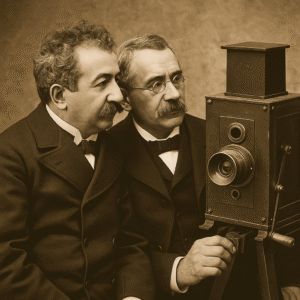
That same year, in a small Parisian theatre, they screened a short film called “Workers Leaving the Lumière Factory.” Audiences were stunned. People reportedly jumped out of their seats when a train came toward the camera in another film. The era of cinema had officially begun.
“As I reflect on the Lumière Brothers’ groundbreaking invention, I can’t help but imagine the thrill of that first audience seeing moving images for the first time. It’s amazing to think how far we’ve come since then.
From those simple black-and-white frames to the vibrant, CGI-filled movies we watch today, the magic of cinema has never lost its charm.”
–– ✦ ✦ ––
How the World Responded
Cinema spread like wildfire. From Europe to America, and soon to India, filmmakers began experimenting with this new visual language. In India, Dadasaheb Phalke watched a silent film and was inspired to make Raja Harishchandra in 1913 — India’s first full-length feature film.
Across the Atlantic, the U.S. saw a golden opportunity. Silent movies exploded in popularity, leading to the creation of Hollywood as the world’s cinematic capital.
–– ✦ ✦ ––
More Than Just Entertainment
In its early days, cinema wasn’t just entertainment — it was a technological wonder, a cultural disruptor, and a global language. It showed people worlds they’d never seen, emotions they’d never expressed, and stories they’d never imagined.
–– ✦ ✦ ––
Why It Still Matters
Understanding how cinema began gives us a deeper appreciation of what it has become today. Every frame, every cut, every visual spectacle we see on-screen is rooted in a history of experiments, dreams, and passion — a legacy carried forward by every filmmaker who dares to tell a story.
When I think about Hollywood’s influence on world cinema, one film always comes to mind — The Godfather. Its storytelling, character depth, and unforgettable performances remain timeless.
In Bollywood, films like Sholay and Mughal-e-Azam hold that same enduring magic — they’ve woven themselves into the cultural fabric of India. Just like the pioneers of early cinema, these masterpieces continue to shape how we see, feel, and understand the art of storytelling.
🎞️ At The Reel Retro, we’ll keep exploring how this art form grew, evolved, and transformed both Hollywood and Bollywood — tracing how two cinematic worlds developed their own identities yet shared a common passion for storytelling. Continue the journey below to see how each took shape in its own unique way.
👉 Next, read how Hollywood was born from orange groves into a movie capital in our post: Hollywood Is Born: From Orange Groves to Movie Capital
🎖️ And discover how India’s film journey began with pioneers like Dadasaheb Phalke in: Bollywood’s First Frame: Lumière to Phalke (1896–1913)
–– ✦ ✦ ––
Final Cut
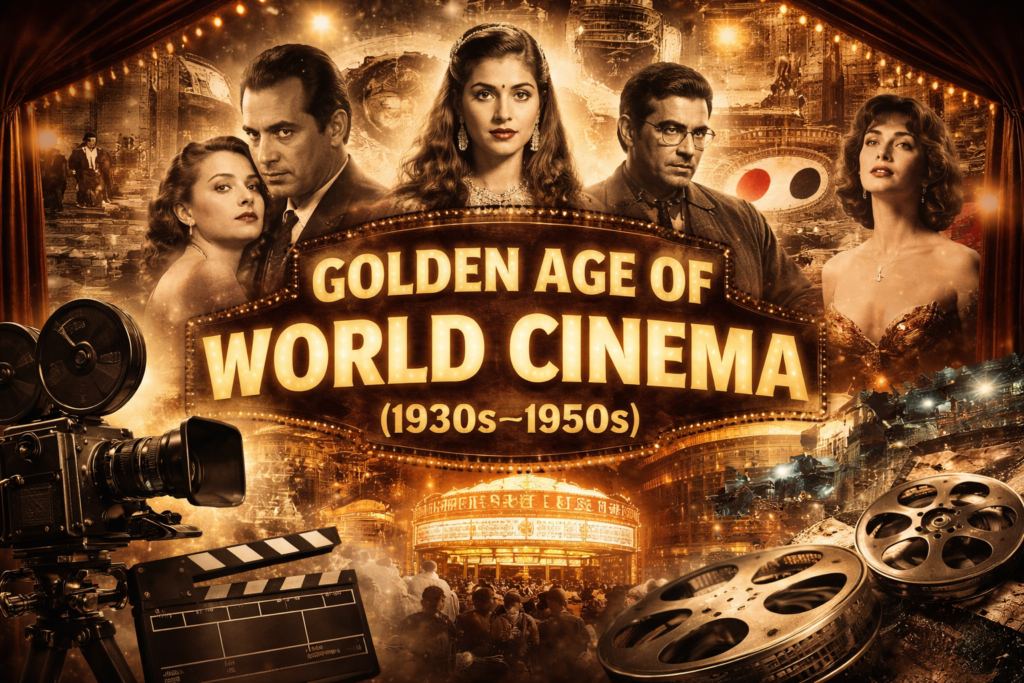
By the time cinema matured into a full-fledged storytelling medium, the groundwork was already laid for an era of unprecedented creative and industrial growth. These early experiments in narrative, technology, and audience engagement eventually culminated in what is widely regarded as the most influential period, The Golden Age of Hollywood (1930s–1950s), in American film history.
So next time you’re lost in a film’s story or blown away by a performance, remember it all started with shadows on a wall. And those shadows still dance today.
Stay tuned as we journey through decades of cinematic legends, lost gems, and cultural milestones — right here at The Reel Retro.
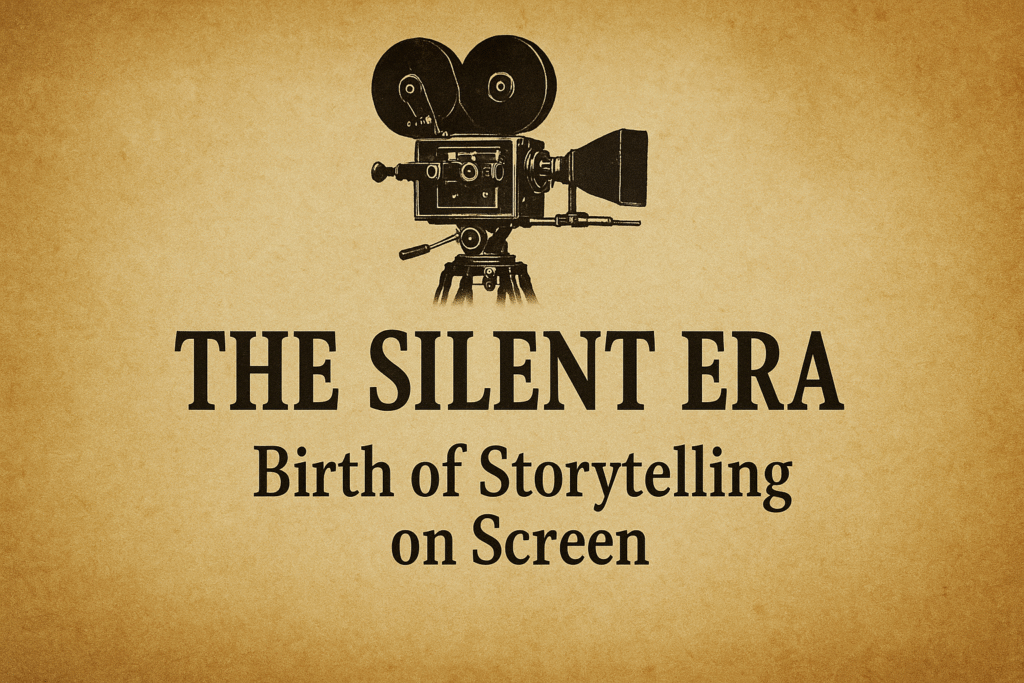
The early flickers of light and shadow soon gave rise to a new era of creativity — where stories were told without sound but with extraordinary emotion.
🎥Next: Continue the journey with our next post – The Silent Era: Birth of Storytelling on Screen!
–––– ✦ ✦ ✦ ––––