
ENG | हिंदी …
Stories of cinema — devotion, history, and myth on screen.
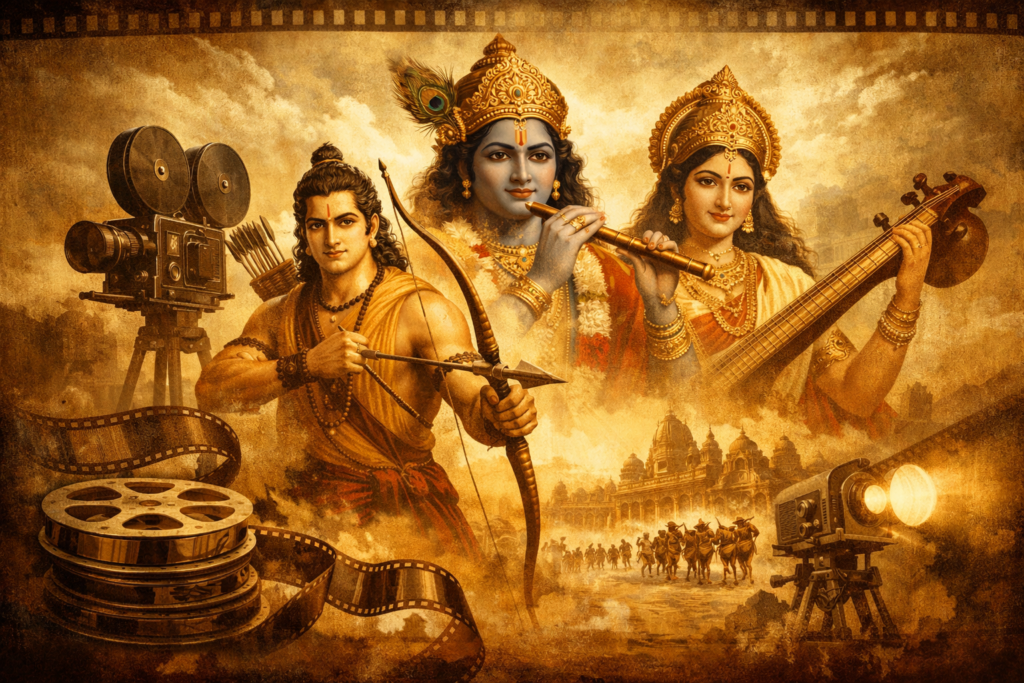
Indian mythological cinema occupies a unique and foundational place in the history of Indian films. Long before cinema became a medium for romance, realism, or spectacle, mythological narratives drawn from epics, Puranas, and folklore shaped the earliest cinematic imagination and visual language of India.
For decades, mythological films were not merely a genre but a cultural bridge — connecting oral traditions, theatre, devotional practices, and the emerging grammar of cinematic storytelling across regions.
To understand how mythological cinema evolved across India, it helps to trace its journey through the silent era, the rise of talkies, the golden age of studio filmmaking, and the diverse regional traditions that followed.
–––– ✦ ✦ ✦ ––––
In This Post …
–––– ✦ ✦ ✦ ––––
🔍 Quick Facts: Indian Mythological Cinema
A brief look at a few key moments helps trace the journey of Indian mythological cinema across its many phases.
In the early phases of Indian cinema, mythological films played a central role — from the religious narratives of the silent era and the grand studio productions of the 1950s–60s to the diverse interpretations that evolved simultaneously across regional film industries, shaping the style and audience culture of Hindi, Telugu, Tamil, Marathi, Bengali, Kannada, and Malayalam cinema.
- Mythological films became one of the earliest culturally accepted and widely popular genres in Indian cinema.
- Religious epics and mythic characters shaped the emerging visual language of the silent era.
- The studio period of the 1950s–60s introduced grand mythological productions, especially in Hindi, Telugu, and Tamil cinema.
- Parallel regional interpretations gave mythological storytelling distinct cultural identities across India.
- In modern Indian films, mythic symbolism, heroic archetypes, and moral conflicts continue to evolve in new forms.
These brief insights suggest that mythological cinema was not merely a genre, but a continuously evolving cultural current within the history of Indian films.
With these key historical insights in place, let us now turn to a few quick questions that help clarify the foundations of Indian mythological cinema.
–– ✦ ✦ ––
🔱 Quick FAQs — Indian Mythological Cinema
The quick questions below highlight some core ideas that shaped Indian mythological cinema.
Question 1: What role did mythological storytelling play in early Indian cinema?
Answer:
During the silent era, mythological narratives offered culturally familiar themes for audiences. Stories inspired by the epics and Puranas helped shape early visual storytelling, moral conflicts, and heroic archetypes within Indian films.
Question 2: How did mythological films evolve during the studio era of the 1950s–60s?
Answer:
Advances in studio production and set design gave mythological cinema a grand visual scale. Hindi, Telugu, and Tamil films of this period presented religious narratives through elaborate cinematic spectacle, strengthening their cultural appeal.
Question 3: Do mythological influences still appear in modern Indian cinema?
Answer:
Yes. Even when direct mythological narratives declined, symbolic imagery, archetypal heroes, and moral dilemmas continued to shape contemporary storytelling and cinematic language.
–– ✦ ✦ ––
🪔 Origins of Mythological Storytelling Across Regions
Mythological narratives entered Indian cinema at its very birth. Early filmmakers drew upon epics like the Ramayana and Mahabharata, temple theatre traditions, and folk storytelling.
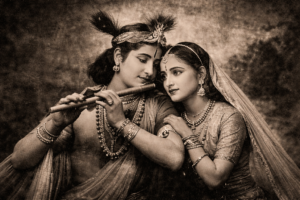
Divine legends entered the silent silver screen.
Early mythological films did more than narrate sacred stories — they helped establish a visual grammar that Indian cinema would continue to evolve for decades.
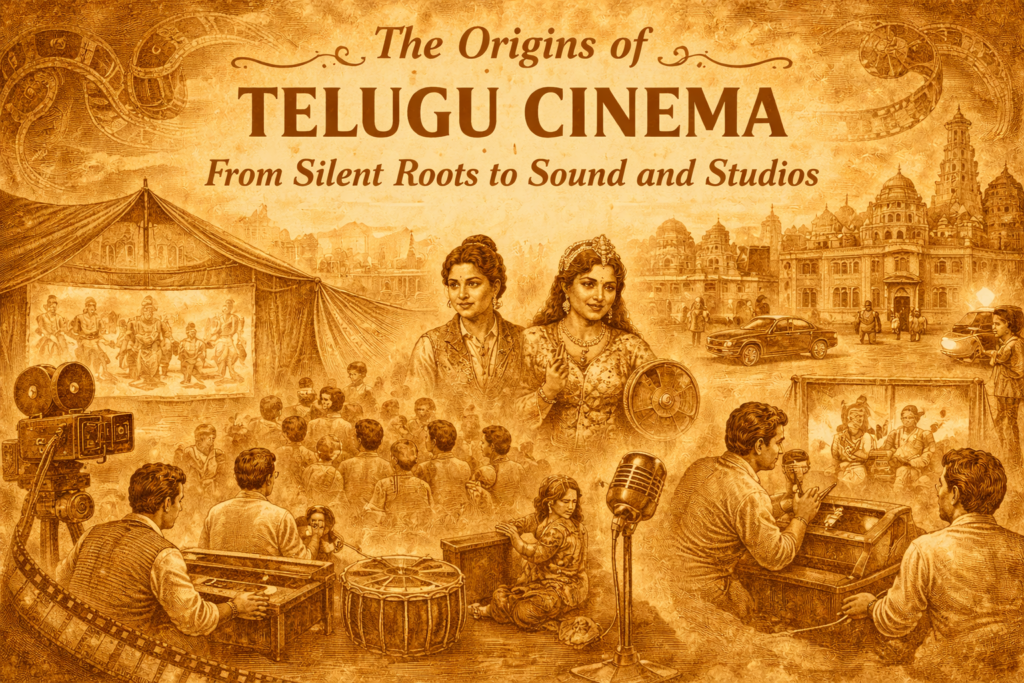
The technological beginnings and early studio experiments that shaped this phase are explored in our detailed post on Telugu Cinema Origins.
In western India, pioneers like Dadasaheb Phalke established the mythological template with films such as Raja Harishchandra (1913). Around the same period, stage traditions in Maharashtra and Bengal influenced visual storytelling, while South Indian theatrical cultures prepared the ground for later Telugu and Tamil mythological cinema.
Rather than belonging to a single region, mythological cinema began as a shared cultural language that later diversified across India’s emerging film industries.
–– ✦ ✦ ––
🎞️ Silent Era Mythological Cinema (1910s–1920s)
During the silent period, mythological films dominated production because they required minimal dialogue and relied heavily on visual symbolism.
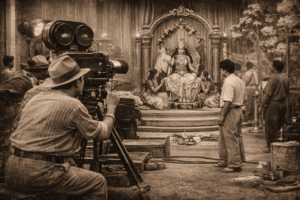
When theatre, devotion, and technology shaped cinematic myth.
In this era, mythology offered filmmakers a universal narrative language that could cross linguistic boundaries through imagery alone.
- Hindi/Marathi: Lanka Dahan (1917), Kaliya Mardan (1919)
- Bengali stage influence shaped devotional imagery and costume aesthetics
- South Indian early studios experimented with mythological themes even before strong regional industries formed
The silent era established recurring cinematic devices:
- Divine entrances through visual tricks
- Static theatrical framing
- Iconic poses inspired by temple sculpture
These conventions later influenced Telugu mythological classics of the studio era.
–– ✦ ✦ ––
🎤 Talkies and the Rise of Regional Mythological Cinema (1930s–1940s)
The arrival of sound transformed mythological cinema into a distinctly regional experience shaped by language, music, and devotional traditions.
With the arrival of sound, regional identities began shaping mythological storytelling.
These early talkie experiments would later influence the grand mythological productions of the Telugu cinema golden era.
Telugu Cinema
Films like Bhakta Prahlada (1932) marked a turning point, combining devotional themes with musical storytelling.
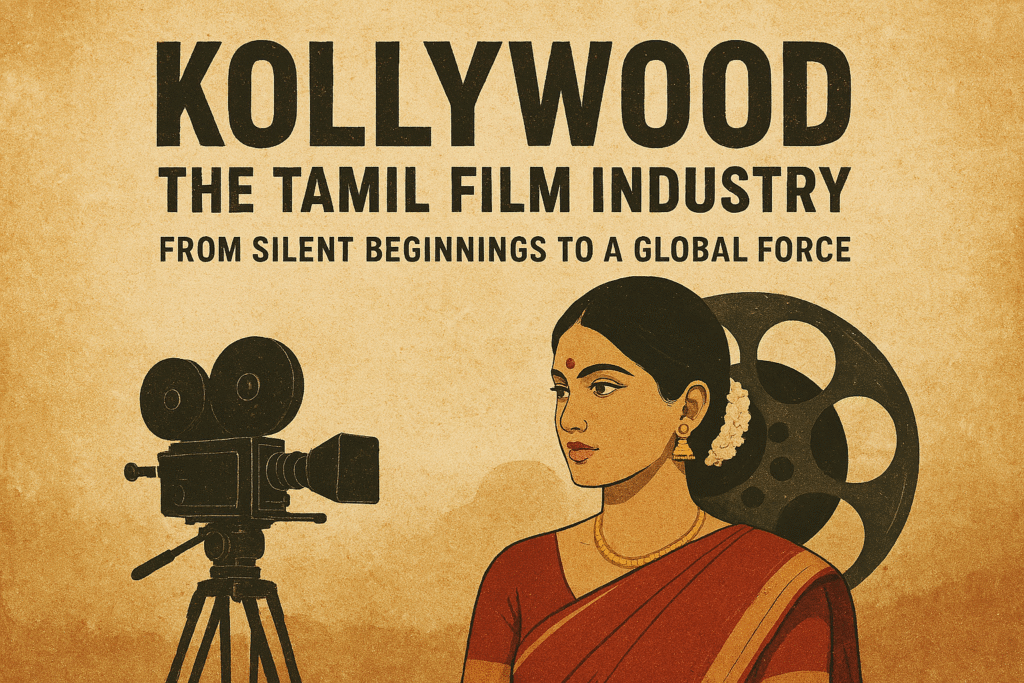
Tamil Cinema
Early talkies such as Haridas (1944) blended mythology and social drama, reflecting evolving audience tastes.
Hindi Cinema
Studios like Bombay Talkies produced devotional films that balanced spectacle with moral storytelling.
Sound allowed:
- Sanskritized dialogues
- Classical music traditions
- Regional linguistic identity
This phase transformed mythological cinema from purely visual narratives into culturally rooted regional expressions.
–– ✦ ✦ ––
🌟 The Golden Era of Mythological Cinema (1950s–1960s)
The post-Independence studio era elevated mythological films into grand cinematic spectacles.
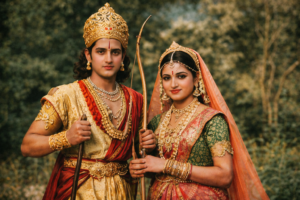
Myth and modernity defined cinema’s golden age.
This period elevated mythological films from devotional narratives into grand cinematic spectacles backed by powerful studio systems.
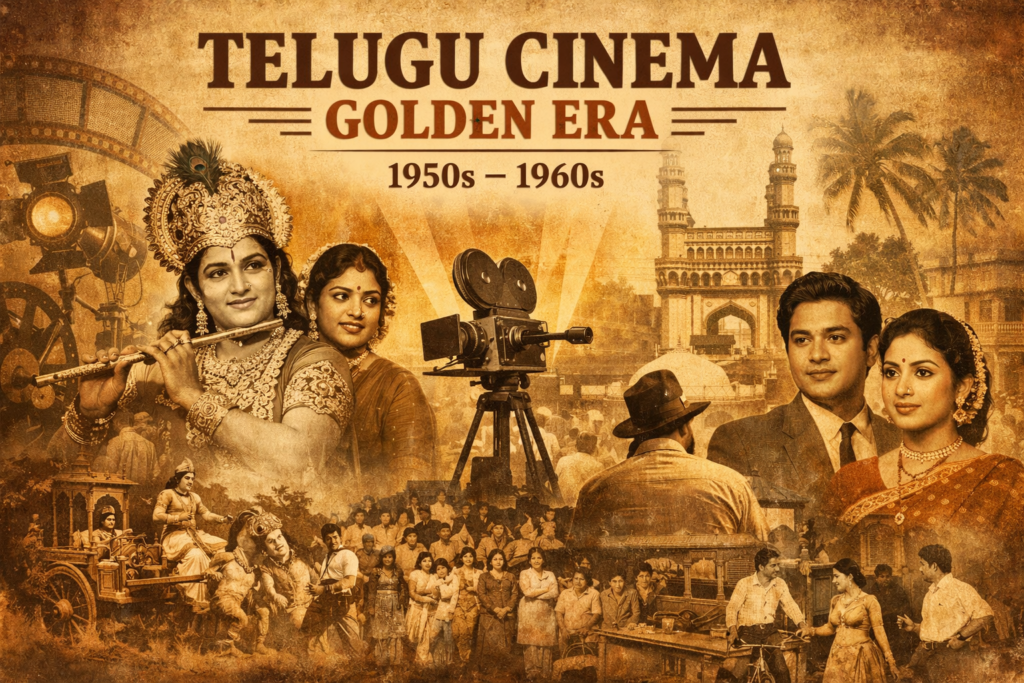
We explore this transformative period in greater detail in our dedicated feature on the Telugu Cinema Golden Era.
Telugu Mythological Golden Phase
Actors like N. T. Rama Rao and Akkineni Nageswara Rao redefined divine screen personas through films such as:
- Maya Bazaar (1957)
- Sri Venkateswara Mahatyam (1960)
Tamil Mythological Cinema
Large productions explored epic narratives with elaborate sets and music-driven storytelling.
Hindi Mythological and Devotional Films
Films like Jai Santoshi Maa (1975 — slightly later but stylistically linked) carried forward the devotional tradition to mass audiences.
Golden era characteristics:
- Studio systems
- Star-driven mythology
- Integration of classical dance and music
–––– ✦ ✦ ✦ ––––
🏛️ Regional Expansion and Diversification (1960s–1980s)
As Indian cinema diversified, mythological storytelling adapted differently across regions.
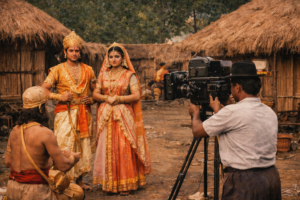
Language, culture, and myth merged on screen.
With this diversification, mythology adapted to local cultural identities rather than remaining a single unified genre.
Many regional traditions developed their own mythological styles, a theme we continue to explore across our regional cinema features.
- Kannada mythological cinema (future)
- Tamil mythological cinema (future)
- Indian Mythological Cinema pillar (self-reference allowed)
Kannada Cinema
Films like Bhakta Kanakadasa explored regional devotional legends.
Malayalam Cinema
Mythology appeared selectively, often blending with historical narratives.
Marathi and Bengali Traditions
Mythological elements survived within devotional and literary adaptations rather than large-scale spectacles.
Punjabi and Bhojpuri Traditions
Devotional cinema influenced narrative structures, though full mythological epics were less frequent.
This phase shows how mythological cinema evolved into a regional storytelling framework rather than a single dominant genre.
–– ✦ ✦ ––
🔄 Decline and Transformation (1980s–1990s)
Television mythological serials and changing audience tastes reduced theatrical mythological productions.
However, cinematic techniques developed during earlier mythological films continued influencing:
- Costume design
- Character archetypes
- Visual storytelling patterns
Even as theatrical mythological films declined, their storytelling techniques quietly migrated into television and mainstream cinema.
–– ✦ ✦ ––
🎞️ Legacy of Mythological Cinema in Modern Indian Films
Modern filmmakers reinterpret mythology through historical fantasy, folklore adaptations, and epic storytelling aesthetics.
Across Indian cinema, mythological narratives remain visible in:
- Visual grandeur
- Moral symbolism
- Larger-than-life character arcs
Regional industries continue revisiting mythological themes through new cinematic technologies while preserving the devotional spirit of earlier decades.
Understanding this legacy also helps contextualize cinema history timelines discussed across our Cinema Origins series.
–––– ✦ ✦ ✦ ––––
❓ Detailed FAQs — Indian Mythological Cinema
Question 1: In what ways has the legacy of mythological cinema influenced storytelling in modern Indian films?
Answer:
Mythological cinema introduced enduring narrative elements such as heroic archetypes, moral dilemmas, and symbolic visual language. Even when contemporary films move away from direct mythological plots, character construction, emotional conflict, and narrative structure often echo these earlier traditions, keeping the legacy alive within modern storytelling.
Question 2: How did regional film industries reinterpret mythological traditions in their own cinematic languages?
Answer:
Regional cinemas such as Telugu, Tamil, Marathi, Kannada, and Malayalam adapted mythological narratives through local cultural perspectives and artistic experimentation. By reshaping familiar stories within distinct linguistic and social contexts, these films transformed mythological cinema into a space for regional identity as well as creative expression.
Taken together, these reflections show that mythological cinema is not confined to the past but continues to shape the evolving narratives and visual language of Indian films.
In this way, the journey of Indian mythological cinema can be seen not merely as a memory of the past, but as a living creative tradition — continuing to shape the evolving language and cultural imagination of Indian films.