
ENG | हिंदी …
An era when cinema confronted new screens, shifting audiences, and a changing creative identity
How Television Challenge And New Wave Cinema reshaped storytelling, style, and the evolving language of global film
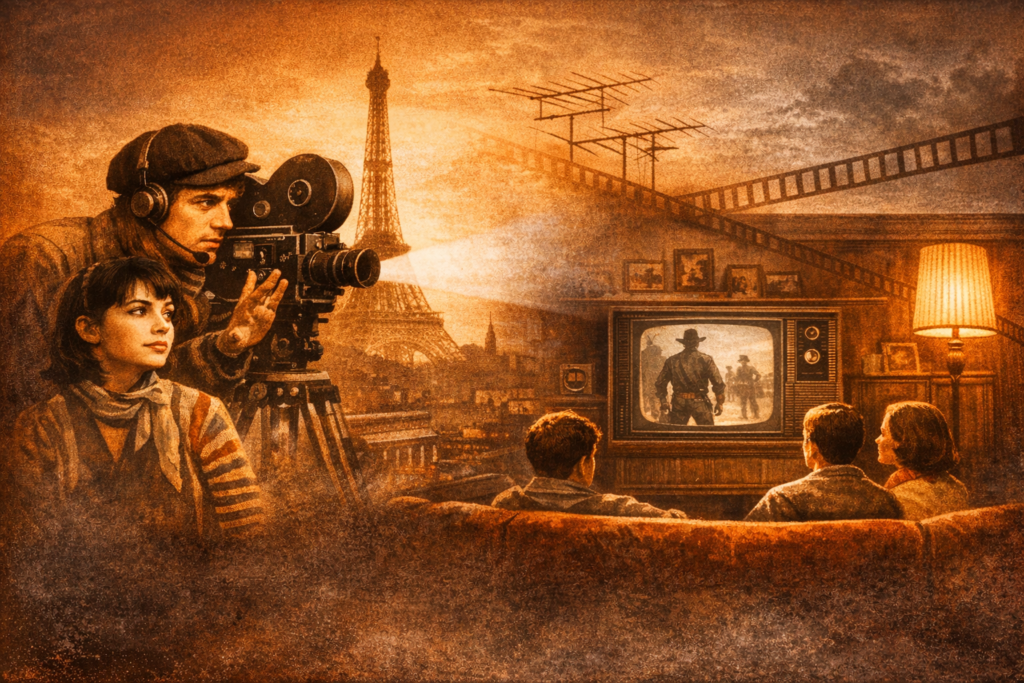
When cinema met a new screen, filmmakers began exploring new visual voices and narrative freedom.
When a new screen entered the home, cinema did not fade — it transformed into a more personal and experimental art.
Television’s rapid rise during the mid-twentieth century reshaped how audiences consumed visual storytelling. As viewers began to engage with moving images inside their homes, cinema faced a quiet yet decisive turning point. Rather than disappearing, films gradually moved toward new forms of expression, redefining their narrative language and creative identity.
During this period, global cinema entered a subtle phase of transformation. The spread of television altered audience expectations, encouraging filmmakers to rethink storytelling, visual style, and the very purpose of theatrical filmmaking.
–––– ✦ ✦ ✦ ––––
In This Post …
–––– ✦ ✦ ✦ ––––
🔍 Quick Facts — Television Challenge & New Wave Cinemas
- 📺 Television expansion reshaped viewing habits in the 1950s–60s.
- 🎬 Director-driven cinema began replacing rigid studio control.
- 🌍 European New Wave movements introduced experimentation and personal storytelling.
- 🇮🇳 Indian cinema witnessed parallel changes through social realism and regional narratives.
- 🎥 The era marked a transition from classical structure to modern cinematic expression.
These shifts did not signal the decline of cinema; instead, they opened the path toward a more diverse and individualistic film culture.
–– ✦ ✦ ––
🔱 Quick FAQs — Television Challenge & New Wave Cinemas
Why was television seen as a threat to cinema?
Because it offered audiences easy access to entertainment at home, forcing film industries to reconsider their creative and economic models.
What changed in filmmaking during this era?
Directors began experimenting with narrative structure, camera movement, and personal storytelling styles.
Did cinema decline because of television?
No — the challenge encouraged innovation, ultimately reshaping film language rather than ending it.
–– ✦ ✦ ––
📺 Television Challenge And New Wave Cinema: When Screens Began to Compete
As television sets entered living rooms across the world, cinema faced a defining moment of transition.
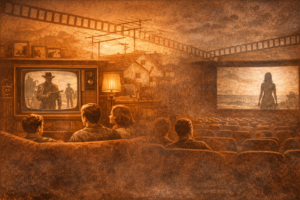
Television quietly changed how audiences watched stories — and cinema had to evolve.
The television challenge and new wave cinema emerged almost simultaneously, reflecting an industry searching for fresh ways to engage audiences and redefine its artistic identity.
Filmmakers began moving away from rigid studio formulas toward experimentation, realism, and personal storytelling. What first appeared as a period of uncertainty gradually evolved into a creative awakening, setting the stage for new cinematic voices that would influence film culture for decades.
The arrival of television fundamentally changed how audiences engaged with moving images. This period is often described as an era of cinematic uncertainty, yet it also became a catalyst for experimentation and creative reinvention. Unlike the stability of earlier studio-driven filmmaking, the industry began exploring new ways to reconnect with audiences.
This transformation differed greatly from the structured environment of the Golden Age of Hollywood, where studio systems defined production norms. The disruption created space for new voices and perspectives — developments that would later shape director-driven cinema and countercultural movements.
In this sense, television did not weaken cinema; it compelled filmmakers to rediscover its artistic potential.
–– ✦ ✦ ––
🎬 From Studio Control to Director Freedom
As traditional studio systems weakened, filmmakers gained increasing creative autonomy. Directors began shaping films through personal vision rather than predetermined formulas, laying the groundwork for several global cinematic movements.
This growing independence gradually shifted storytelling toward individual expression — a transformation clearly reflected in the rise of New Hollywood in later years.
To understand how creative control evolved over time, it is useful to revisit 👉 How Cinema Began: From Shadows to Screens, where early filmmaking developed within technological limits before moving toward artistic freedom.
From this moment onward, cinema’s identity slowly moved from industrial production toward personal authorship.
–– ✦ ✦ ––
🌍 Global New Wave Movements and Experimental Cinema
Across France and Europe, emerging New Wave movements challenged traditional narrative structures and introduced a new cinematic language.
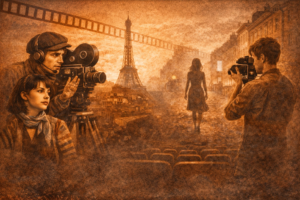
Across Europe, filmmakers reimagined cinema as a personal and experimental art form.
Lightweight cameras, location shooting, and fragmented storytelling allowed filmmakers to break away from established conventions, transforming cinema into a medium of personal expression.
Here, cinema decisively stepped beyond classical frameworks and embraced a more individual artistic vision.
To explore the defining characteristics of this era, readers can learn more about 👉 French New Wave cinema, where filmmakers like Jean-Luc Godard and François Truffaut reshaped cinematic storytelling.
These experiments did not merely redefine film style — they reshaped how audiences understood the relationship between reality, art, and narrative.
–– ✦ ✦ ––
🎥 Audience, Technology, and New Storytelling Relationships
Advancements in technology and evolving audience expectations encouraged filmmakers to adopt more intimate and experimental approaches. Mobile cameras, natural lighting, and unconventional editing techniques gradually shifted cinema away from rigid visual traditions.
As audiences embraced these new cinematic voices, the boundaries between art, commerce, and counterculture began to blur — laying the foundation for major creative transformations in the decades that followed.
Cinema was no longer only spectacle; it became a dialogue between creator and viewer.
–– ✦ ✦ ––
🇮🇳 Parallel Transformations in Indian Cinema
During this same period, Indian cinema also began moving toward socially grounded narratives.
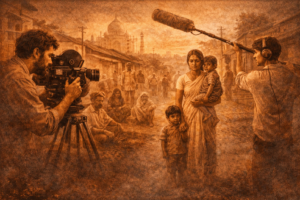
As global cinema evolved, Indian filmmakers explored realism, regional voices, and new storytelling paths.
Regional filmmaking traditions and emerging realism expanded cinematic language beyond mythological and studio-centric storytelling — developments connected to earlier phases explored in 👉 Indian Mythological Cinema: From Silent Films to Regional Traditions.
Many of these shifts were rooted in earlier cinematic foundations, including the balance between tradition and social themes established during the 👉 Telugu Cinema Golden Era.
While experimental cinema grew globally, mainstream Indian cinema simultaneously evolved toward new popular styles that would define the cultural energy of the 1970s.
In this way, global cinematic changes found a unique resonance within India’s own storytelling traditions.
–––– ✦ ✦ ✦ ––––
❓ Detailed FAQs — Television Challenge & New Wave Cinemas
How did New Wave cinema influence global filmmaking?
It introduced personal storytelling, unconventional editing, and realistic visuals that inspired filmmakers worldwide.
Was this era only about European cinema?
No — while Europe played a major role, similar transformations occurred across Hollywood, Asian cinemas, and India.
Why is this period called a transitional era?
Because it bridged classical studio filmmaking and the modern, director-driven cinema that followed.
🌙 Closing Reflection:
Television Challenge and New Wave Cinema marked a decisive turning point in film history. Rather than weakening cinema, the rise of television pushed filmmakers toward bold experimentation and renewed creative freedom.
Across continents, New Wave movements reshaped film language, proving that periods of disruption often lead to artistic renewal and a deeper, more personal connection between filmmakers and audiences.
🎬 What Came Next: The Rise of Blockbuster Cinema
The transformations of this era did not end with artistic experimentation alone. As studios adapted to changing audience habits, cinema gradually moved toward spectacle, scale, and mass appeal.
By the late 1970s and beyond, this shift gave rise to a new phase—one defined by high-concept storytelling, franchise filmmaking, and global box office success.
🎬 Curious about what came after this era?
Discover how this transition led to the rise of blockbuster cinema and transformed films into global spectacle.