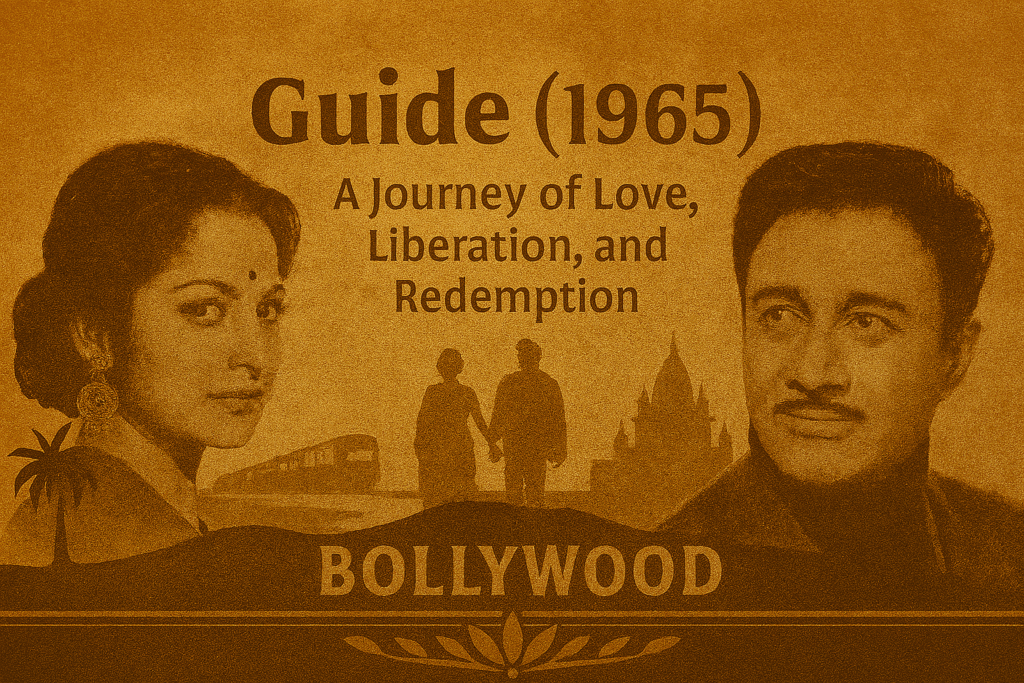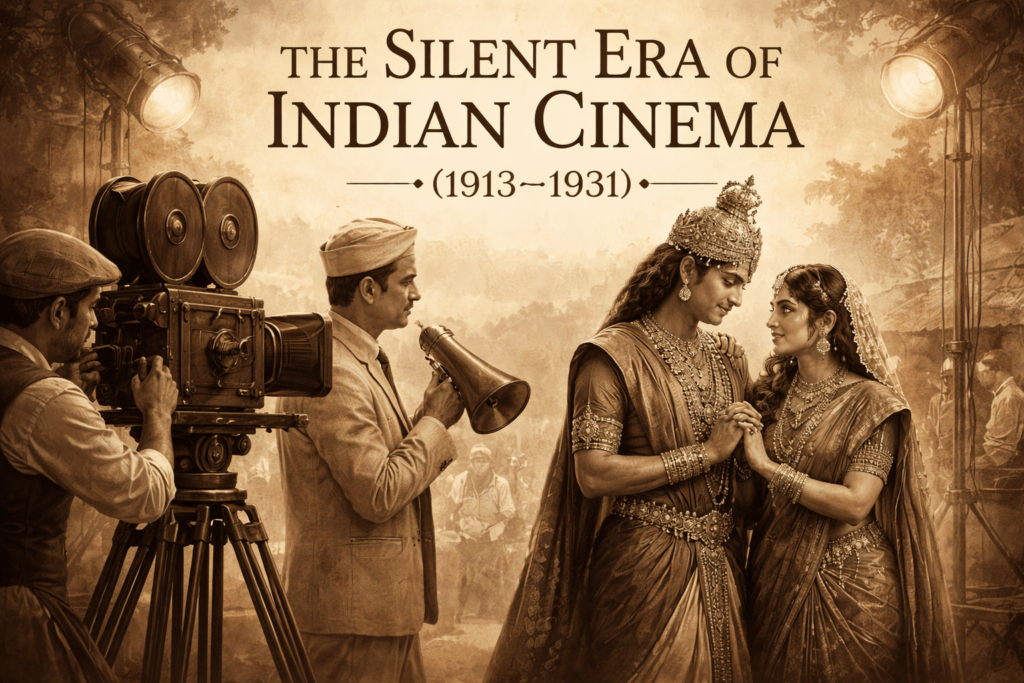

An unforgettable period when timeless stories, unforgettable melodies, and legendary performers shaped the identity of Indian cinema.
ENG | हिंदी
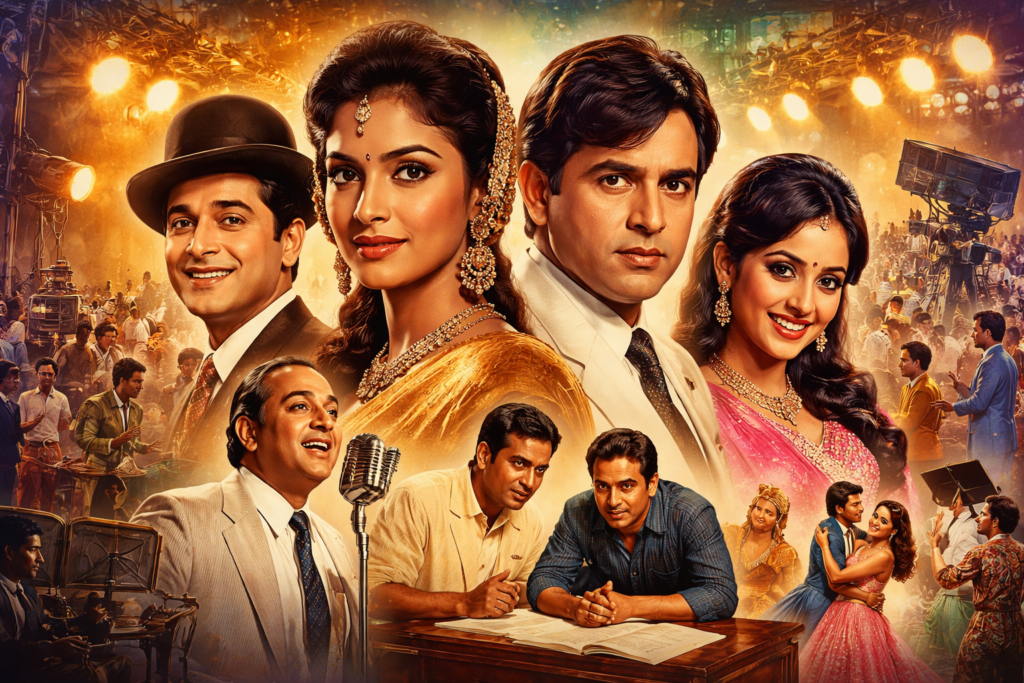
Often regarded as Bollywood’s finest chapter, the Golden Era produced films that entertained audiences while reflecting the dreams, struggles, and changing aspirations of a newly independent India.
If the talkies era gave Indian cinema its voice, the decades following independence gave Bollywood its soul. The period from the 1950s to the 1970s is widely regarded as the Golden Era of Bollywood—a time when storytelling, music, and performance reached a rare harmony.
During these decades, Bollywood produced some of its most celebrated films, unforgettable songs, and iconic stars, creating a cinematic legacy that continues to inspire audiences around the world.
In film history, Hollywood often refers to its most influential decades as the Golden Age, when studio dominance and industrial control shaped filmmaking. In contrast, Bollywood’s celebrated period is known as the Golden Era—defined by creative freedom, emotional depth, and music that resonated with everyday life.
Unlike Hollywood’s Golden Age, Bollywood’s Golden Era was shaped by artistic expression, powerful social themes, and a deep emotional connection with Indian society.
📑 In This Article
🌟 Quick Facts & Insights — Bollywood’s Golden Era
- 1950–1970 is considered the Golden Era of Bollywood, marked by harmony of storytelling, music, and performance.
- Playback singing became central; Lata Mangeshkar, Mohammed Rafi, Mukesh rose to iconic status.
- Directors like Raj Kapoor, Mehboob Khan, Guru Dutt shaped cinematic style combining social realism and entertainment.
- Genres diversified: romantic dramas, social films, historical epics, tragedies, blending realism with mass appeal.
- Bollywood’s Golden Era continues to influence modern Indian cinema and remains a benchmark for artistic excellence.
–– ✦ ✦ ––
❗ Boost FAQs — Golden Era of Bollywood
This section presents concise facts and clarifications about Bollywood’s Golden Era, offering quick insights alongside the main narrative. Readers can explore key elements such as social themes, music, star power, and genre trends that shaped the era.
Q1. What is the Golden Era of Bollywood?
The Golden Era of Bollywood (1950s–1970s) refers to a period when storytelling, music, and acting achieved a rare harmony, emphasizing creative freedom, emotional depth, and societal engagement.
Q2. Who were the key directors during this period?
Iconic directors included Raj Kapoor, Mehboob Khan, and Guru Dutt, whose films balanced social realism with entertainment.
Q3. Why was music so important in this era?
Songs were central to narrative and emotion, with playback singers like Lata Mangeshkar, Mohammed Rafi, and Mukesh defining the sound of the era.
Q4. Which genres were popular during Bollywood’s Golden Era?
Popular genres included romantic dramas, social films, historical epics, and tragedies, often blending realism with romance and mass appeal.
Q5. How did this era differ from Hollywood’s Golden Age?
Unlike Hollywood’s Golden Age, defined by studio dominance, Bollywood’s Golden Era was shaped by creative freedom, emotional storytelling, and deep cultural engagement.
–– ✦ ✦ ––
🇮🇳 Post-Independence India and New Cinematic Aspirations
After India’s independence, Hindi cinema began reflecting the hopes, conflicts, and moral questions of a newly free nation.
Films of this period explored social reform, identity, and personal struggle, setting the thematic tone of Bollywood’s Golden Era.
A Nation Reimagining Itself
After 1947, cinema became a medium to explore identity, morality, inequality, and hope. Audiences sought stories that reflected real struggles while offering emotional catharsis.
Cinema as Social Commentary
Films addressed themes like unemployment, class divide, women’s roles, and urbanization—often through deeply personal narratives.
–– ✦ ✦ ––
🎬 The Creative Pillars of the Golden Era
The artistic confidence of Bollywood’s Golden Era did not emerge overnight. It was built during the earlier talkies period (1931–1947), when Indian cinema learned to balance sound, music, and mass appeal—preparing audiences for richer narratives and iconic performances.
Bollywood’s Golden Era was shaped by close collaboration between directors, writers, actors, composers, lyricists, and cinematographers. Together, they developed a cinematic style that balanced artistic realism with popular storytelling.
Raj Kapoor: The Showman of Indian Cinema
Raj Kapoor blended social realism with entertainment. Films like Awaara and Shree 420 used humor and music to critique inequality.
Mehboob Khan and Epic Storytelling
Mother India (1957) redefined scale and symbolism in Indian cinema, earning international recognition and national reverence.
Guru Dutt and Poetic Tragedy
Guru Dutt’s films explored loneliness, failure, and artistic despair, bringing emotional sophistication rarely seen before.
–– ✦ ✦ ––
🎶 Music as the Heart of Bollywood
Did You Know?
Lata Mangeshkar recorded over 25,000 songs in her career, many of which became iconic hits during Bollywood’s Golden Era.
Music played a central role in Golden Era cinema, functioning as both emotional expression and narrative device. Songs conveyed inner conflict, romance, and social themes, making music inseparable from Bollywood storytelling.
Playback Singing and Musical Legends
The Golden Era saw the rise of playback singers like Lata Mangeshkar, Mohammed Rafi, and Mukesh, whose voices became inseparable from on-screen stars.
Songs as Narrative Devices
Music was not decorative—it carried emotions, themes, and sometimes entire character arcs, making Bollywood distinct from global cinema traditions.
To explore the evolution of Bollywood music, legendary playback singers, and the changing sound of Hindi cinema across generations, read:
👉 Music in Bollywood: From Playback Singing to Modern Music
–– ✦ ✦ ––
⭐ Stardom and Screen Icons
Trivia from the Golden Era
Raj Kapoor’s Awara (1951) was so popular internationally that it was screened in over 40 countries, influencing global perceptions of Indian cinema.
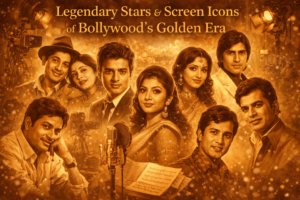
The Golden Era established the modern concept of Bollywood stardom. Actors became cultural icons through emotionally nuanced performances that connected deeply with audiences and defined screen acting in Hindi cinema.
The Trifecta of Male Stardom
Dilip Kumar’s intensity, Dev Anand’s charm, and Raj Kapoor’s vulnerability defined masculine screen identities for generations.
Female Icons and Cultural Influence
Actresses like Nargis, Madhubala, and Meena Kumari portrayed complex, emotionally rich characters, shaping ideals of strength and sensitivity.
–– ✦ ✦ ––
🎭 Genres That Defined the Era
Hindi cinema during the Golden Era embraced diverse genres, including romantic dramas, social films, historical epics, and tragedies. These genres allowed filmmakers to address complex themes while maintaining mass appeal.
Social Dramas and Romantic Classics
Films balanced realism with romance, often ending on hopeful—even idealistic—notes.
Early Roots of the Masala Film
Elements of action, romance, comedy, and drama began blending, setting the stage for the commercial cinema of later decades.
–– ✦ ✦ ––
📽️ Legacy of Bollywood’s Golden Era
The creative traditions of Bollywood’s Golden Era continue to influence Indian cinema today.
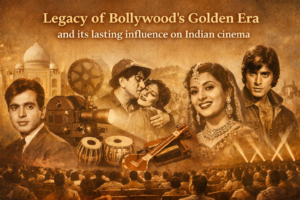
The Golden Era (1950s–1970s) remains Bollywood’s artistic benchmark. Its films continue to be restored, studied, and celebrated—not just as entertainment, but as cultural history. Much like Hollywood’s Golden Age, this period defined an industry’s identity—but Bollywood did so through music, emotion, and moral storytelling.
The cultural and artistic significance of Bollywood’s Golden Era has also been recognized internationally. Film history references such as Encyclopaedia Britannica discuss how post-independence Indian cinema developed a distinct identity through music, social themes, and star-driven narratives.
The artistic ambitions of Bollywood’s Golden Era developed alongside other important cinematic traditions in India. Bengali filmmakers were also redefining Indian cinema through realism, literary adaptations, and internationally acclaimed storytelling.
Explore this parallel artistic movement in:
👉 Bengali Cinema Legacy: Realism, Literature, and Artistic Revolution
The emotional storytelling and musical traditions established during Bollywood’s Golden Era continued influencing Hindi cinema even as globalization and digital technology reshaped the industry in later decades.
Discover that transformation in:
👉 Modern Bollywood Era: Global Cinema, Multiplex Culture, and Streaming Revolution
–– ✦ ✦ ––
❓ Frequently Asked Questions About Early Bollywood Cinema
This section answers common questions about the origins, themes, and significance of early Bollywood cinema, particularly during the Golden Era of the 1950s–1970s.
Q1. What made Bollywood’s Golden Era unique?
The Golden Era of Bollywood was characterized by rich storytelling, innovative music, socially relevant themes, and a strong connection with audiences. Films combined artistic depth with mass appeal.
Q2. Who were the leading stars of the Golden Era?
Male stars like Dilip Kumar, Dev Anand, Raj Kapoor and female icons like Nargis, Madhubala, Meena Kumari defined acting styles, creating lasting cultural influence.
Q3. How did Bollywood handle social themes?
Films addressed unemployment, class divides, urbanization, and women’s roles, often within personal narratives, blending social commentary with entertainment.
Q4. Why is music so central to this period?
Songs and playback singing conveyed inner conflict, romance, and societal themes. Music was inseparable from storytelling, unlike in many global cinemas.
Q5. How did the Golden Era influence later Indian cinema?
Its cinematic traditions, including music-driven narratives, star culture, and socially conscious storytelling, continue to inspire filmmakers, shape genres, and define Bollywood’s identity.
🔗 Connecting the Bigger Picture
Bollywood’s Golden Era did not develop in isolation. While Hindi cinema was finding its emotional and musical voice after independence, film industries across the world were also undergoing profound creative shifts.
From Hollywood’s studio-controlled peak to the rise of new cinematic movements elsewhere, the mid-20th century marked a defining phase in global film history.
To place Bollywood’s Golden Era within this wider context, you may also explore —
👉 Golden Age of World Cinema (1930s–1950s)
🏆 Up Next at The Reel Retro
At The Reel Retro, we continue tracing how Indian cinema evolved beyond its golden phase—
towards changing audience tastes, new narrative styles, and the gradual rise of more commercial, hybrid storytelling forms.
👉 From Golden Era to Masala Cinema: The Changing Face of Bollywood (1970s–1980s) —
When tradition met transition and Hindi cinema began redefining itself.
🌐 Prefer reading this article in Hindi?
👉 Read:
बॉलीवुड का स्वर्णिम युग (1950–1970): संगीत, संवेदना और सितारे
🔖 In this article, external sources are cited for educational and historical purposes. All trademarks, copyrights, and other intellectual property belong to their respective owners.