From motion experiments to silent films, exploring early cinema history and the evolution of storytelling on screen.
ENG | हिंदी
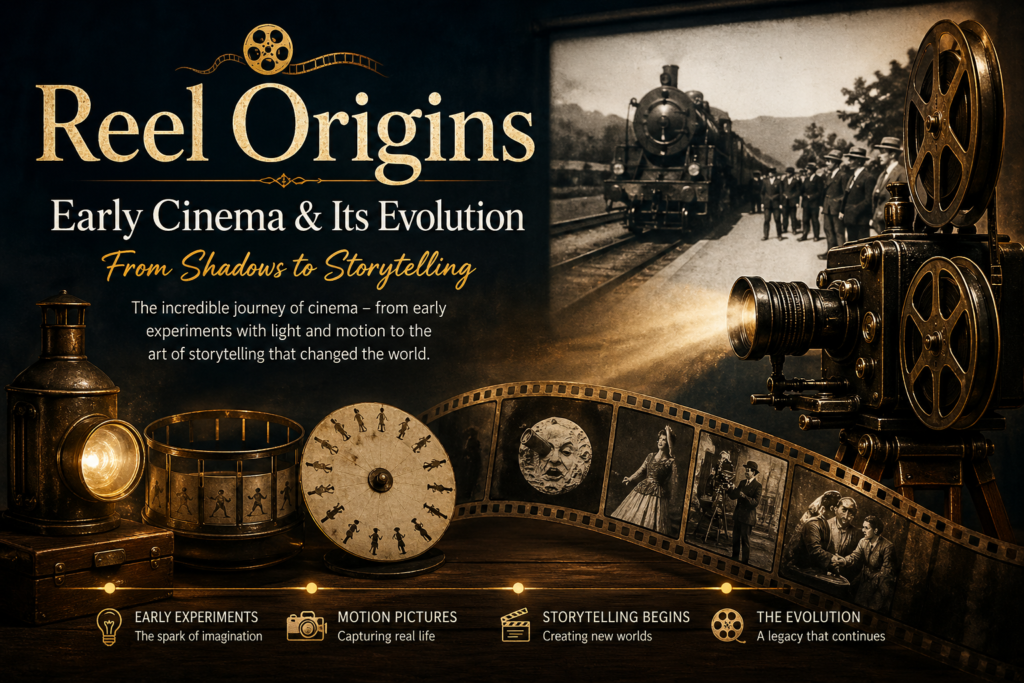
From early optical illusions to silent films, the journey of early cinema shaped the art of storytelling.
Cinema did not begin as an industry—it began as an idea.
What we now experience as films was once a series of experiments with light, motion, and perception. The journey from simple visual illusions to structured storytelling defines what we call early cinema history.
This page explores that journey—how moving images evolved into one of the most powerful storytelling mediums in the world.
Before Cinema — The Age of Visual Illusions
Before cameras could capture motion, inventors were already fascinated by the idea of moving images.
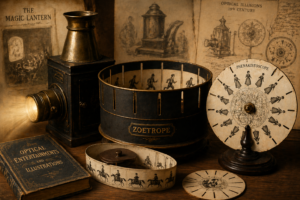
Early cinema history visual showing optical illusion devices like the zoetrope and magic lantern used before motion pictures.
Devices such as the magic lantern, zoetrope, and phenakistoscope created the illusion of movement using sequential visuals. Though simple, these inventions introduced a key concept:
👉 Movement could be simulated through images.
These early innovations laid the conceptual foundation for cinema—long before films existed.
The Birth of Motion Pictures
The late 19th century marked a turning point.
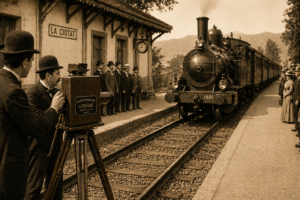
The late 19th century introduced motion pictures—capturing real life on screen for the first time.
With the invention of motion picture cameras and projection systems, real-life events could now be recorded and displayed. Early films captured everyday moments—workers leaving a factory, a train arriving at a station.
These short clips may seem simple today, but they proved something revolutionary:
👉 Reality could be captured, preserved, and replayed.
This moment marks a key milestone in early cinema history.
From Recording Reality to Telling Stories
Cinema soon evolved beyond recording reality—it began to create new worlds.
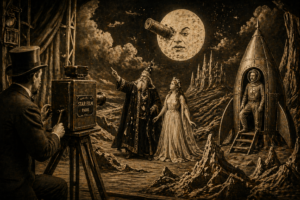
Early filmmakers like Georges Méliès transformed cinema from recording reality into storytelling.
Filmmakers started experimenting with:
- Editing techniques
- Camera positioning
- Visual effects
Pioneers like Georges Méliès demonstrated that cinema could tell imaginative stories, not just document life.
👉 This shift—from documentation to storytelling—is what truly defined cinema as an art form.
The Evolution of Early Cinema
As cinema developed, it began spreading across the world, adapting to different cultures and audiences.
What started as technical experimentation soon became:
- A medium of storytelling
- A form of cultural expression
- A global industry
👉 The foundations built during early cinema history shaped everything that followed.
Continue Exploring
To understand how early cinema evolved into global industries:
- 👉 Explore the rise of American filmmaking in Reel Hollywood
- 👉 Discover the journey of Hindi cinema in Reel Bollywood
- 👉 Dive into regional diversity in Reel Regional Cinema
- 👉 Test your knowledge with Reel GK
Explore Early Cinema Topics
Dive deeper into early cinema history through these key topics:
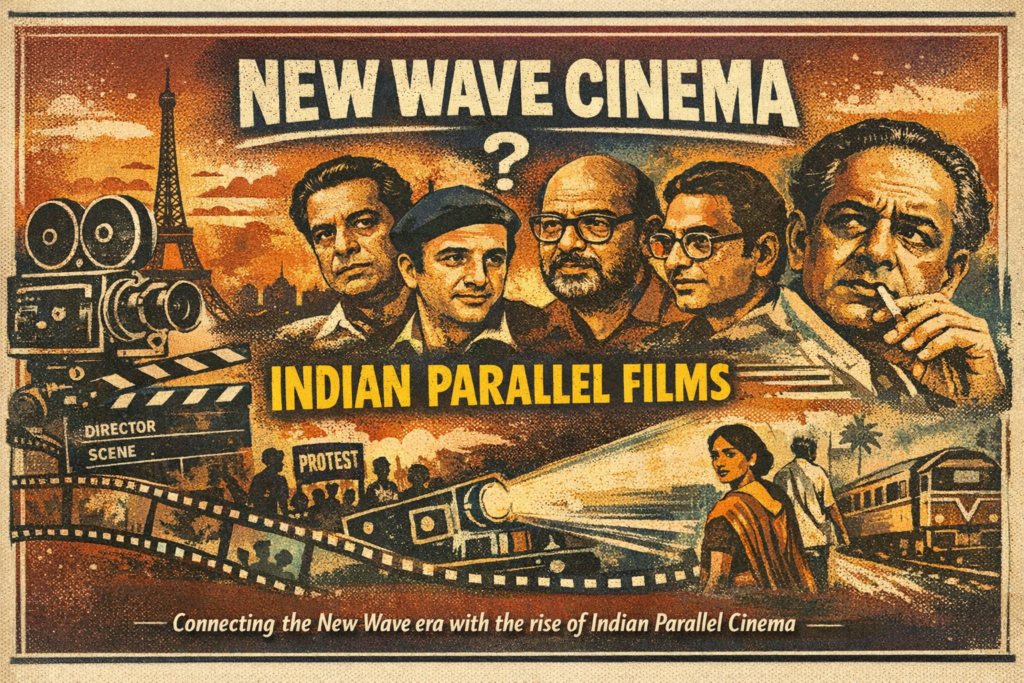
When the World Changed: New Wave Cinema and the Rise of Indian Parallel Films
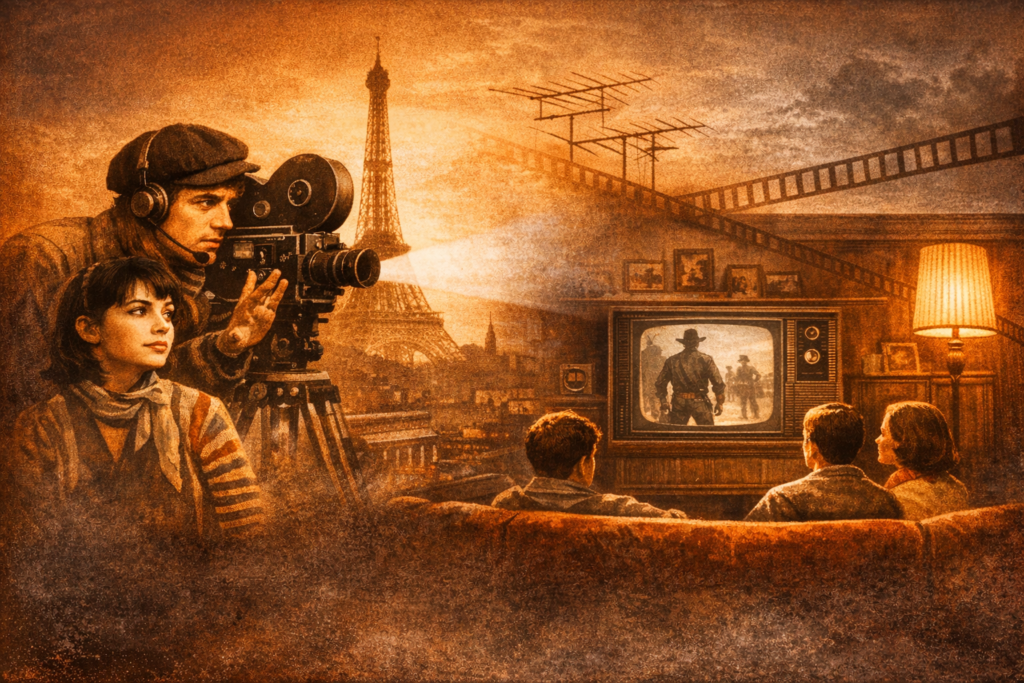
Television Challenge and New Wave Cinema: The Transitional Era (1950s–1970s)
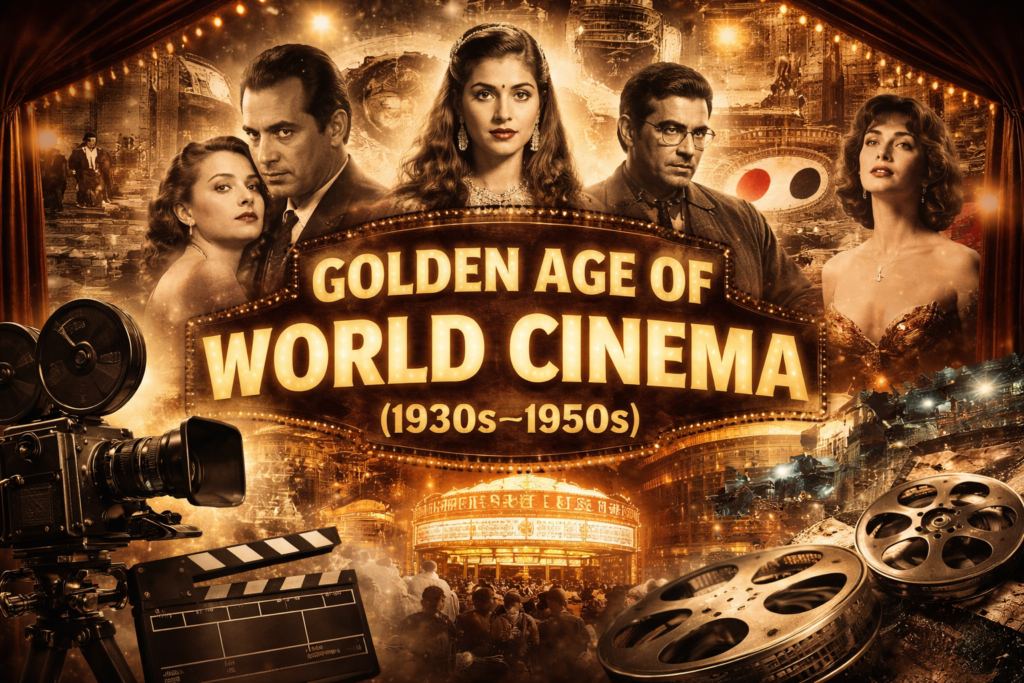
Golden Age of World Cinema (1930s–1950s)
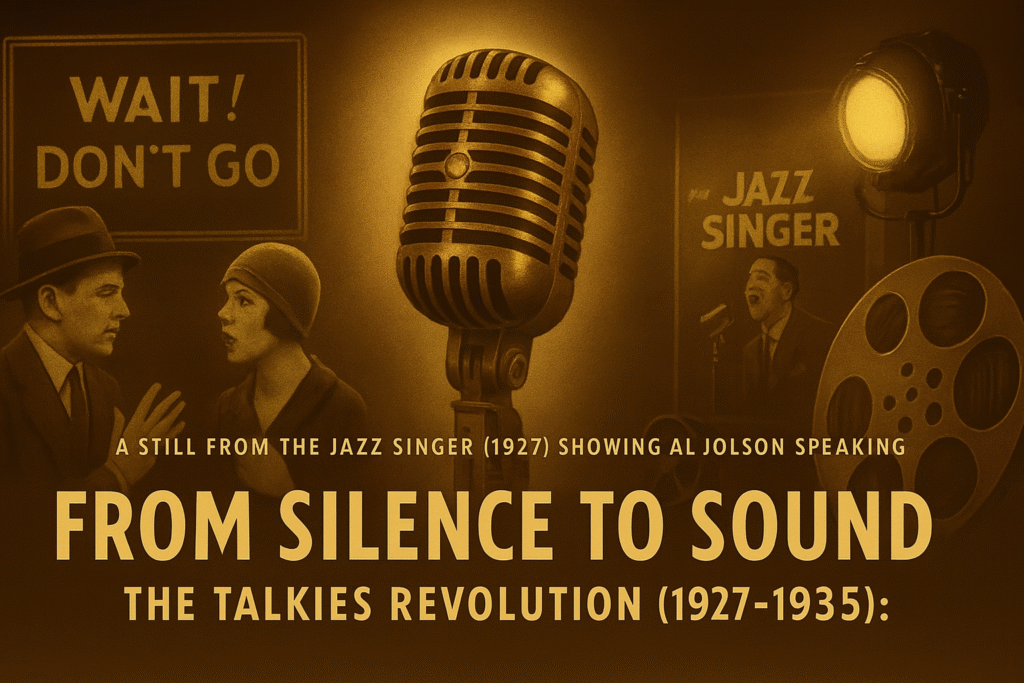
From Silence to Sound (1927–1935): The Talkies Revolution
The Silent Era: Birth of Storytelling on Screen

How Cinema Began: The Journey from Shadows to Screens
Each of these topics explores a different phase in the evolution of cinema—from its earliest experiments to the rise of storytelling.
Conclusion
From shadows and illusions to structured storytelling, the journey of early cinema is a story of curiosity, creativity, and continuous evolution.
Understanding these beginnings helps us appreciate how cinema became the powerful medium it is today.
🌐 Read in Hindi
Prefer Hindi? Explore this story in a more familiar language, with the same depth and perspective.