
Exploring how globalization, technology, and changing audiences transformed Bollywood into a modern cinematic powerhouse.
ENG | हिंदी
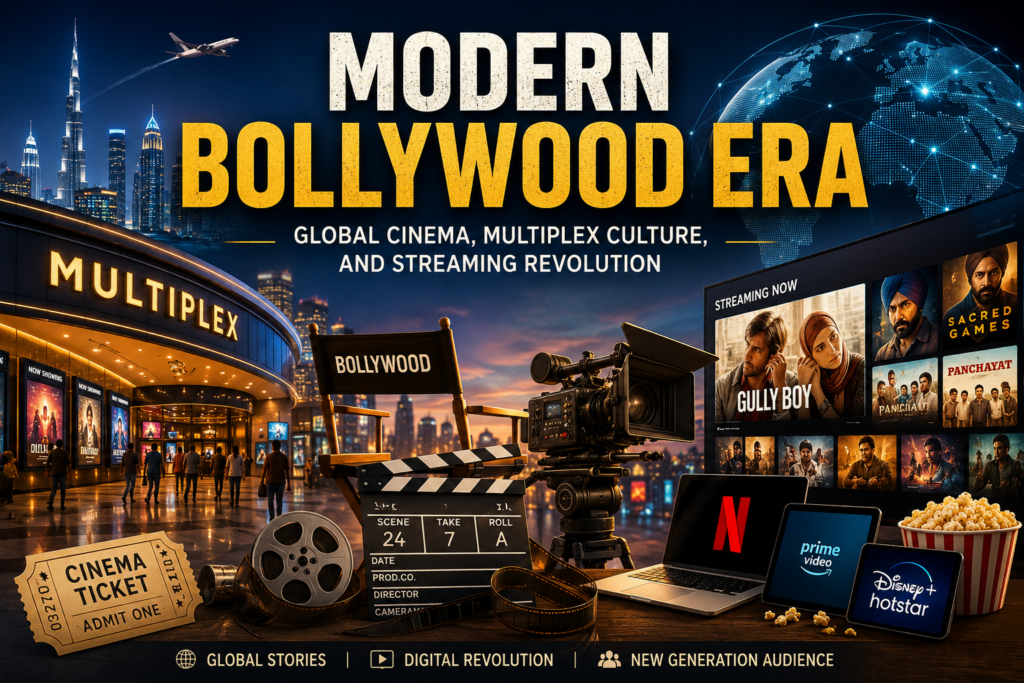
The modern Bollywood era transformed Hindi cinema through globalization, multiplex culture, digital filmmaking, and streaming platforms.
The modern Bollywood era redefined how Hindi films were made, marketed, and experienced. From the rise of multiplexes and digital filmmaking to the global reach of streaming platforms, Bollywood embraced new ideas, audiences, and technologies while continuing to balance its rich cinematic traditions with the demands of a rapidly changing world.
The modern Bollywood era transformed Hindi cinema more dramatically than any period before it.
After decades dominated by melodrama, masala entertainers, and traditional storytelling, Bollywood entered a new phase shaped by globalization, multiplex culture, digital technology, and streaming platforms. The industry began adapting not only to changing Indian audiences but also to international viewers and rapidly evolving media habits.
This transformation started in the 1990s, accelerated during the multiplex boom of the 2000s, and completely reshaped film consumption in the streaming age.
The modern Bollywood era introduced:
- Globalized storytelling
- Urban middle-class narratives
- International filming locations
- Digital filmmaking technology
- OTT platforms and streaming culture
At the same time, Bollywood had to balance commercial entertainment with changing audience expectations in an increasingly competitive entertainment landscape.
In this post, we explore how the modern Bollywood era evolved, how globalization and multiplex culture changed Hindi cinema, and how streaming platforms continue reshaping Bollywood today.
📑 In This Article
🌟 Quick Facts & Insights — Modern Bollywood Era
The modern Bollywood era represents a major transition from traditional mass-market cinema to globally connected and digitally driven storytelling.
- 🌍 Bollywood expanded its global audience after the 1990s
- 🎥 Multiplex culture changed filmmaking and audience targeting
- 💻 Digital technology transformed film production and marketing
- 📺 OTT platforms reshaped film distribution and viewing habits
- ✈️ International locations became common in Bollywood films
- 🎶 Music promotion shifted from television to streaming platforms
- ⭐ Actors increasingly became global celebrities and brands
Together, these changes redefined how Bollywood films are made, marketed, and consumed worldwide.
–– ✦ ✦ ––
❗ Boost FAQs — Modern Bollywood
What is the modern Bollywood era?
The period from the 1990s onward when Bollywood became more globalized, digitally driven, and influenced by multiplex and streaming culture.
How did multiplex culture change Bollywood?
Multiplexes encouraged filmmakers to target urban middle-class audiences with more diverse storytelling styles.
What impact did streaming platforms have on Bollywood?
Streaming platforms changed film distribution, audience behavior, and content experimentation in Hindi cinema.
–– ✦ ✦ ––
🌍 Globalization and Bollywood’s International Expansion
The economic liberalization of India in the 1990s had a major impact on Bollywood.
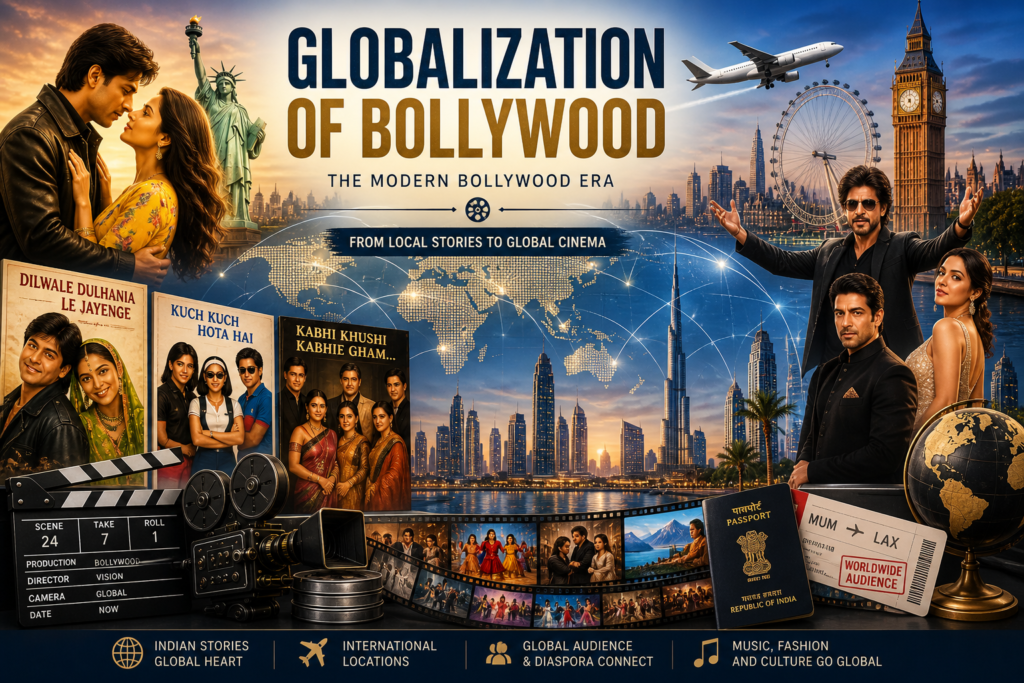
Globalization transformed Bollywood into an internationally recognized entertainment industry.
As India opened its markets and global media exposure increased, Hindi cinema began targeting not only domestic audiences but also the Indian diaspora abroad.
This shift changed Bollywood in several ways:
- International filming locations became common
- NRI (Non-Resident Indian) stories gained popularity
- Fashion and lifestyle became more globalized
- Western music and cinematic styles influenced storytelling
Films such as:
- Dilwale Dulhania Le Jayenge
- Kuch Kuch Hota Hai
- Kabhi Khushi Kabhie Gham
helped establish Bollywood’s global identity during this period.
The globalization of Bollywood not only expanded the reach of Hindi cinema but also increased the worldwide popularity of Bollywood music, dance, and celebrity culture.
During the 1990s and 2000s, actors such as Shah Rukh Khan became internationally recognized cultural icons closely associated with Bollywood’s growing global identity.
–– ✦ ✦ ––
🎥 The Rise of Multiplex Culture in India
One of the defining features of the modern Bollywood era was the rise of multiplex cinema.
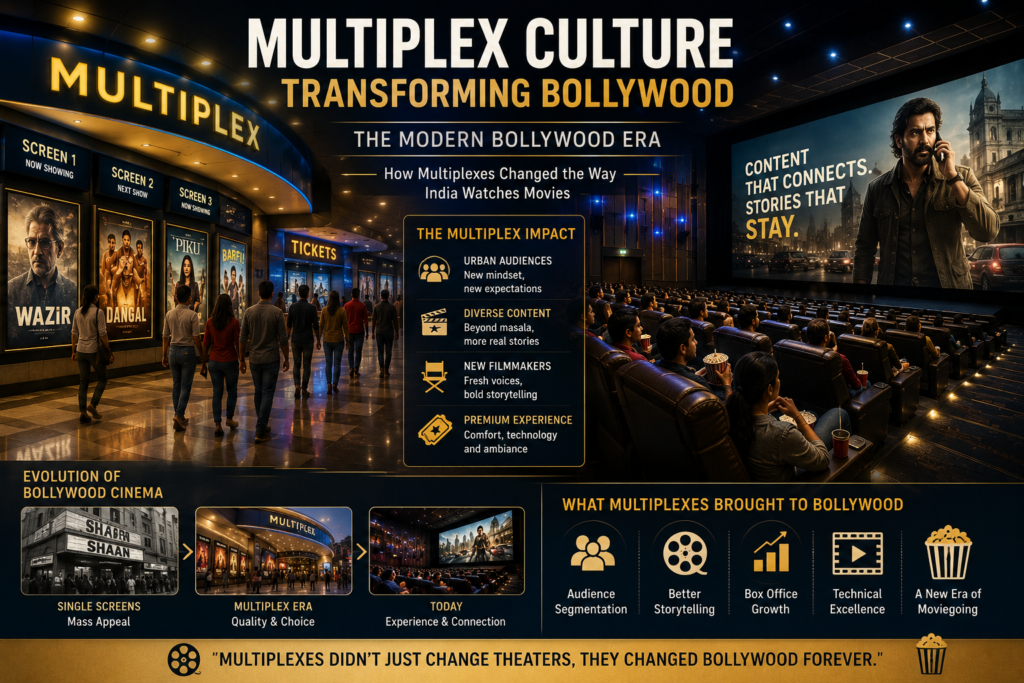
Multiplex culture reshaped Bollywood storytelling for urban and middle-class audiences.
Before multiplexes became widespread, Bollywood films were largely designed for single-screen mass audiences. However, urban multiplexes introduced a different audience demographic:
- Younger viewers
- Urban middle class
- English-speaking professionals
- Niche film audiences
As a result, filmmakers gained greater freedom to experiment with:
- Smaller-budget films
- Urban relationship dramas
- Realistic storytelling
- Independent-style cinema
This period saw the rise of directors and production houses willing to explore more diverse themes beyond traditional masala formulas.
–– ✦ ✦ ––
💻 Digital Revolution and Modern Filmmaking
The digital revolution transformed nearly every aspect of Bollywood filmmaking.
Traditional film cameras gradually gave way to:
- Digital cinematography
- CGI and visual effects
- Advanced editing technology
- Digital sound design
Production and marketing also changed dramatically through:
- Social media promotion
- YouTube trailers
- Digital music releases
- Online fan engagement
Technology allowed Bollywood films to achieve higher production values and compete more effectively in the global entertainment market.
–– ✦ ✦ ––
🎶 Music and Promotion in the Streaming Age
Music remained central to Bollywood, but the way audiences consumed songs changed completely.
Earlier generations relied on:
- Radio
- Television countdown shows
- CDs and cassette tapes
Today, audiences primarily discover Bollywood songs through:
- Spotify
- YouTube
- JioSaavn
- Instagram reels
- Streaming playlists
Songs increasingly became marketing tools used to generate excitement before film releases.
The streaming era also exposed audiences to a much wider range of Indian cinema, increasing the popularity of regional films beyond their traditional linguistic markets.
The growing influence of Telugu, Tamil, Kannada, and Malayalam films also reshaped audience expectations across India during the streaming era, encouraging wider acceptance of regional storytelling styles and pan-India cinema. Discover how this transformation evolved in:
👉 Regional Cinema Revolution: How South Indian Films Reshaped Indian Cinema
The digital transformation of Bollywood music was part of a much longer journey that began during the playback singing era and evolved through changing technology, audience tastes, and global influences. To explore this musical evolution in detail, read:
👉 Music in Bollywood: From Playback Singing to Modern Music
–– ✦ ✦ ––
📺 OTT Platforms and the Streaming Revolution
Streaming platforms reshaped Bollywood more dramatically than any previous technological shift.
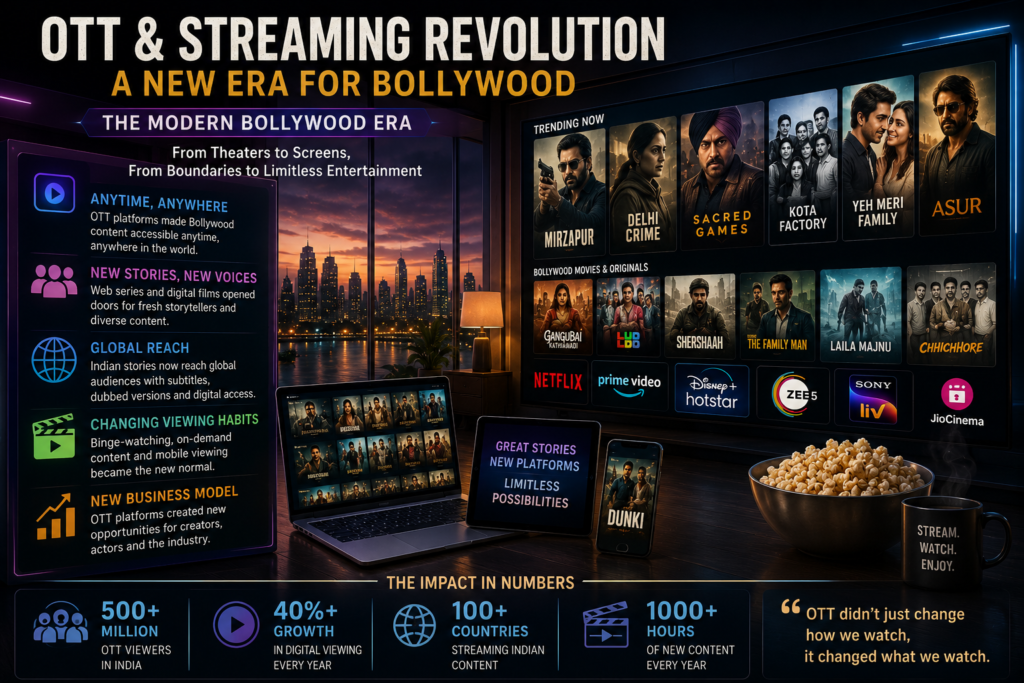
Streaming platforms transformed how audiences discover and consume Bollywood content.
OTT services such as:
- Netflix
- Amazon Prime Video
- Disney+ Hotstar
changed how audiences consume Hindi cinema.
The streaming revolution created opportunities for:
- Direct-to-digital releases
- Experimental storytelling
- Web series culture
- Regional and independent creators
It also challenged traditional theatrical distribution models.
Audiences became more willing to explore:
- realistic dramas
- crime thrillers
- character-driven stories
- socially relevant cinema
This diversification significantly expanded the creative possibilities of modern Hindi cinema, while streaming platforms such as Netflix and Amazon Prime Video transformed how audiences around the world consume Bollywood films and web series.
–– ✦ ✦ ––
⭐ Stardom in the Modern Bollywood Era
Bollywood stars in the modern era became more than actors.
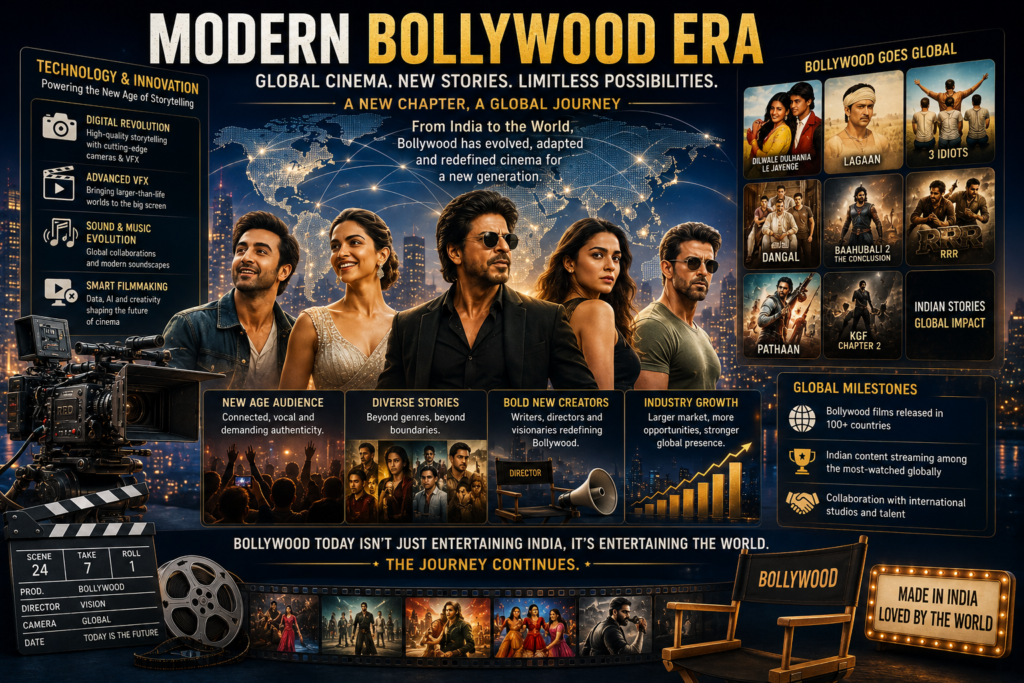
The modern Bollywood era combined global influence, digital filmmaking, and evolving audience expectations.
They evolved into:
- Global celebrities
- Brand ambassadors
- Social media personalities
- International cultural icons
Actors such as:
- Shah Rukh Khan
- Aamir Khan
- Priyanka Chopra
- Deepika Padukone
helped Bollywood gain international recognition far beyond traditional Indian audiences.
Social media also transformed celebrity culture, creating direct interaction between stars and fans.
–– ✦ ✦ ––
🎭 Changing Storytelling and Audience Expectations
Modern audiences increasingly demanded:
- Realistic characters
- Stronger screenwriting
- Diverse genres
- Better production quality
As a result, Bollywood storytelling evolved beyond traditional formulas.
Today’s Hindi cinema includes:
- biographical dramas
- socially conscious films
- female-led narratives
- psychological thrillers
- experimental indie cinema
At the same time, large-scale commercial entertainers continue to remain highly popular.
This changing character of contemporary Hindi cinema is also reflected in its recognition across major national award categories. At the 72nd National Film Awards, Article 370 won Best Feature Film, Yami Gautam received the Best Actress award for the film, and Kartik Aaryan shared the Best Actor honour for Chandu Champion.
Before multiplex culture and streaming platforms reshaped Hindi cinema, Bollywood was dominated by the larger-than-life storytelling of the masala era and the rise of the Angry Young Man. Explore that transformative period here:
👉 Masala Era of Bollywood: Rise of the Angry Young Man
–– ✦ ✦ ––
📽️ Legacy of the Modern Bollywood Era
The modern Bollywood era represents a continuous process of reinvention.
Globalization, multiplex culture, and streaming platforms fundamentally changed how Bollywood:
- creates stories
- reaches audiences
- markets films
- builds stars
Yet despite technological and cultural transformations, Bollywood continues preserving its emotional storytelling traditions and musical identity.
The modern era did not replace Bollywood’s past.
👉 It expanded and redefined it for a new generation.
Alongside the rise of global blockbusters and streaming platforms, many filmmakers continued drawing inspiration from India’s rich artistic film traditions. The literary storytelling, realism, and emotional depth associated with Bengali cinema remain influential in contemporary filmmaking. Explore that legacy in:
👉 Bengali Cinema Legacy: Realism, Literature, and Artistic Revolution
Even as Bollywood embraced globalization and digital technology, many filmmakers continued drawing inspiration from the emotional storytelling, music, and cinematic artistry of Hindi cinema’s classic decades. Read more in:
👉 Golden Era of Bollywood (1950s–1970s): Music, Drama, and Stardom
–– ✦ ✦ ––
❓ Frequently Asked Questions (FAQs)
When did the modern Bollywood era begin?
Most historians and critics associate it with the economic liberalization period of the 1990s.
What is multiplex culture in Bollywood?
A shift toward urban multi-screen cinemas that encouraged diverse storytelling and niche filmmaking.
How did OTT platforms affect Bollywood?
They changed film distribution, increased experimentation, and expanded digital audiences.
🔗 Connecting the Bigger Picture
If the Golden Era gave Bollywood emotional depth…
and the Masala Era gave it mass appeal…
👉 the modern Bollywood era gave Hindi cinema global reach and digital reinvention.
🏆 Up Next at The Reel Retro
🎬 Regional Cinema Revolution: How South Indian Films Reshaped Indian Cinema
🌐 Prefer reading this article in Hindi?
👉 Read:
आधुनिक बॉलीवुड का दौर: वैश्विक सिनेमा, मल्टीप्लेक्स संस्कृति और स्ट्रीमिंग क्रांति
🔖 In this article, external sources are cited for educational and historical purposes. All trademarks, copyrights, and other intellectual property belong to their respective owners.