
How a Travelling Awards Ceremony Became a Global Platform for Indian Cinema, Music, and Cultural Exchange.
An artistic representation of the IIFA Awards’ journey from their London debut in 2000 to a travelling international celebration of Indian cinema.
The history of the IIFA Awards traces the evolution of a Hindi film awards ceremony launched in London in 2000 into an international platform celebrating Indian cinema. Through its travelling ceremonies, star-studded performances, and growing global reach, IIFA has helped showcase Hindi cinema to audiences worldwide while expanding its recognition to regional films and digital entertainment.
The International Indian Film Academy Awards, popularly known as the IIFA Awards, hold a distinctive place in the history of Indian film recognition. Unlike traditional film awards ceremonies associated with a fixed location, IIFA was conceived as a travelling international event designed to bring Hindi cinema closer to audiences around the world.
The journey began in 2000 at London’s Millennium Dome, where the inaugural ceremony brought Indian filmmakers, actors, musicians, and international audiences together. Over the following decades, IIFA evolved beyond a conventional awards presentation into a major entertainment event combining cinematic recognition, live performances, industry networking, and cultural exchange.
Beyond the glamour of its ceremonies, however, IIFA’s historical significance lies in its contribution to the international visibility of Hindi cinema. Its evolution reflects the growing influence of Indian popular culture, the strengthening connections between filmmakers and overseas audiences, and the industry’s gradual expansion into regional cinema and digital entertainment.
📑 In This Article
🎬 IIFA Awards at a Glance
| Key Fact | Details |
|---|---|
| Official name | International Indian Film Academy Awards |
| Commonly known as | IIFA Awards |
| Established | 2000 |
| Inaugural ceremony | 24 June 2000 |
| First venue | Millennium Dome, London, United Kingdom |
| Conceived and produced by | Wizcraft International Entertainment |
| Original focus | Excellence in Hindi cinema |
| Distinctive feature | Travelling international awards ceremonies |
| Main award categories | Popular, technical, and special awards |
| Regional cinema initiative | IIFA Utsavam |
| Digital entertainment initiative | IIFA Digital Awards |
| Silver-jubilee celebration | 8–9 March 2025, Jaipur, Rajasthan, India |
| Announced 2027 edition | 22–23 January 2027, Etihad Arena, Yas Island, Abu Dhabi, UAE |
–– ✦ ✦ ––
🌟 The Birth of the IIFA Awards: A Global Vision in 2000
The origins of the IIFA Awards lie in a period when Hindi cinema was strengthening its international presence. The growing importance of overseas audiences helped create the conditions for a new kind of film awards celebration.
Indian Cinema Beyond Its Domestic Audience
By the late 1990s, Hindi cinema had developed a substantial international following, particularly among Indian communities in Britain, North America, the Middle East, Africa, and Southeast Asia. For overseas audiences, Hindi films offered not only entertainment but also a continuing connection to Indian languages, music, traditions, and cultural identity.
Popular films such as Dilwale Dulhania Le Jayenge (1995), Kuch Kuch Hota Hai (1998), and Hum Dil De Chuke Sanam (1999) emerged during a period when Hindi cinema was gaining greater international visibility. Their success reflected the growing importance of overseas audiences, even as filmmakers increasingly explored international settings, family relationships, and changing cultural identities.
Against this backdrop, the idea of staging an Indian film awards ceremony outside India offered an opportunity to celebrate cinematic achievements while strengthening the industry’s connections with audiences worldwide.
Wizcraft International Entertainment conceived and produced the International Indian Film Academy (IIFA) Awards with a distinctive international vision: to take the celebration of Hindi cinema to different destinations rather than establish a permanent host city.
This travelling format set IIFA apart from traditional Indian film awards ceremonies and laid the foundation for an event that would combine cinematic recognition, international entertainment, and cultural exchange.
The First IIFA Awards: London, 24 June 2000
The inaugural IIFA Awards took place on 24 June 2000 at the Millennium Dome in London, marking the beginning of a new international awards platform for Hindi cinema.
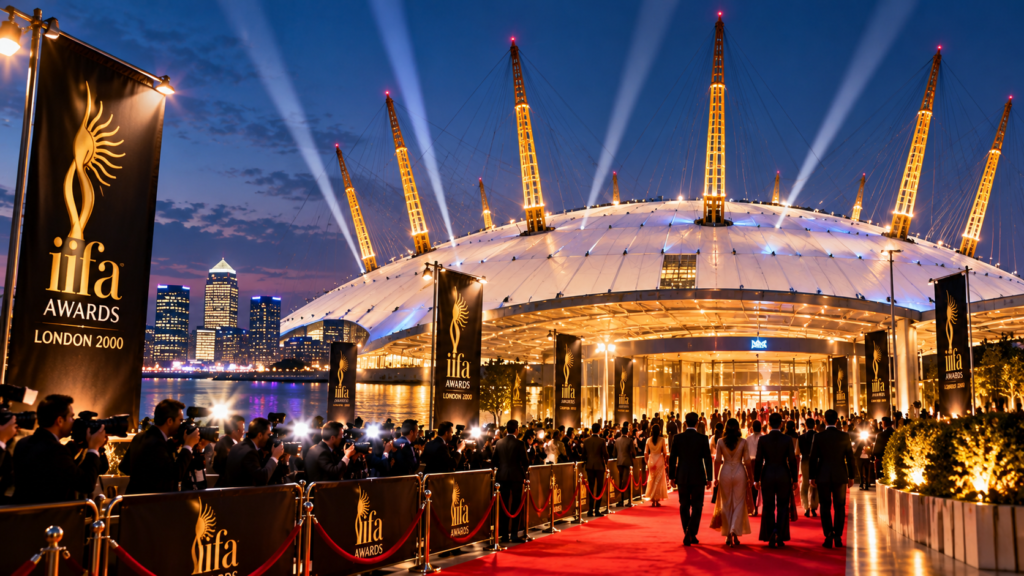
An artistic representation of London’s Millennium Dome, where the inaugural IIFA Awards were held on 24 June 2000.
London was a particularly meaningful choice. With its large South Asian community, established Hindi film audience, and position as an international cultural centre, the British capital provided a prominent setting for introducing IIFA to audiences beyond India.
Hosted by Anupam Kher and Yukta Mookhey, the inaugural ceremony brought together leading figures from the Hindi film industry for an evening of awards, celebrity appearances, and live entertainment. Its combination of cinematic recognition and large-scale performances established a format that would become a defining feature of future IIFA celebrations.
Among the major winners were:
- Best Picture: Hum Dil De Chuke Sanam
- Best Director: Sanjay Leela Bhansali — Hum Dil De Chuke Sanam
- Best Actor: Sanjay Dutt — Vaastav
- Best Actress: Aishwarya Rai — Hum Dil De Chuke Sanam
- Best Music Director: A. R. Rahman — Taal
Recognizing achievements in Hindi films released during 1999, these awards marked IIFA’s entry into India’s established film awards landscape.
The inaugural event also attracted international entertainment personalities, reflecting an ambition that extended beyond presenting trophies. IIFA sought to create a meeting point between Hindi cinema, overseas audiences, and the wider entertainment world.
The London ceremony established the foundation for IIFA’s defining identity: a travelling celebration of Indian cinema that would bring films, stars, music, and audiences together across international borders.
Historical reference: IIFA’s official archive of the 2000 ceremony.
–– ✦ ✦ ––
🌍 The 2000s: Taking Bollywood Across Continents
The first decade of IIFA established its identity as a travelling international awards event. As the ceremonies moved across continents, their format expanded to include broader entertainment, industry engagement, and cultural exchange.
From London to Africa and Asia
Following its successful debut in London in 2000, IIFA began its journey across international destinations, establishing the travelling format that would become one of its defining characteristics.
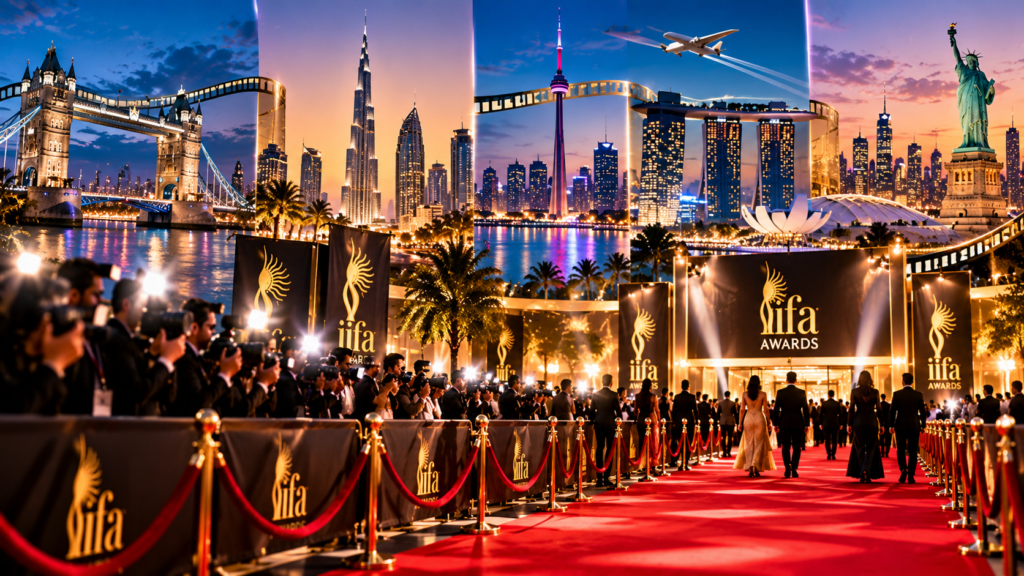
From London to destinations across Asia, Africa, and beyond, IIFA’s travelling ceremonies helped bring Hindi cinema to international audiences.
The early ceremonies took place in
Sun City, South Africa (2001); Genting Highlands, Malaysia (2002); Johannesburg, South Africa (2003); and Singapore (2004). Subsequent editions expanded the awards’ international footprint, reaching Amsterdam (2005), Dubai (2006), Yorkshire (2007), Bangkok (2008), and Macau (2009).
These destinations reflected the diverse international audiences and markets connected to Hindi cinema. Some were home to established Indian diaspora communities, while others offered opportunities to introduce Bollywood’s films, music, and stars to wider audiences.
IIFA’s international journey represented more than a change of venue each year. By combining film awards with live entertainment, media attention, tourism promotion, and cultural engagement, the event gradually developed into a broader celebration of Indian popular culture.
This travelling model also helped strengthen the relationship between the Hindi film industry and its overseas audiences, reinforcing Bollywood’s growing international presence during the decade.
The Development of IIFA Weekend
As IIFA expanded geographically, its format also evolved beyond a single awards ceremony.
The broader IIFA Weekend brought together film recognition, live performances, industry gatherings, media interactions, and promotional activities. These events created opportunities for filmmakers, performers, entertainment professionals, and international guests to connect beyond the awards stage.
This expanded format distinguished IIFA from conventional film awards ceremonies. Rather than focusing exclusively on competitive recognition, IIFA increasingly positioned itself as an international entertainment and cultural event.
For host destinations, IIFA Weekend offered opportunities for tourism promotion, international media exposure, and engagement with India’s entertainment industry. For filmmakers and performers, it provided a platform where professional recognition, networking, and global visibility could intersect.
The growth of IIFA Weekend also reflected the increasing commercial significance of overseas audiences for Hindi cinema. As Bollywood strengthened its international distribution and cultural reach, IIFA helped bring the industry’s achievements and public personalities into the international spotlight.
–– ✦ ✦ ––
🎥 The 2010s: A Wider International Stage
During the 2010s, IIFA continued to expand its international presence, with major North American editions highlighting different dimensions of its global appeal. Toronto and Tampa Bay became notable milestones in this evolving journey.
Toronto 2011: A Landmark Canadian Edition
The 2011 IIFA Awards marked the event’s first visit to Canada, bringing one of Hindi cinema’s most prominent international celebrations to Toronto.
The IIFA Weekend celebrations took place in Toronto from 23 to 25 June 2011, culminating in the main awards ceremony at the Rogers Centre on 25 June 2011. The event attracted widespread attention from Bollywood enthusiasts, particularly within Canada’s substantial South Asian community, highlighting the strong cultural connections between Hindi cinema and its North American audiences.
The ceremony recognized major Hindi films of 2010, including Dabangg and My Name Is Khan. Beyond the awards themselves, live performances, celebrity appearances, and associated events brought leading Indian film personalities closer to audiences who had long followed their work from overseas.
The Toronto edition illustrated how IIFA had evolved beyond a traditional film awards ceremony into a major international cultural gathering. It provided a platform for celebrating Hindi cinema while reinforcing connections among filmmakers, performers, fans, and Indian diaspora communities.
The event also demonstrated the growing importance of North America within Bollywood’s international audience and entertainment landscape.
Historical reference: IIFA Awards 2011 — Official Archive.

Toronto in 2011 and Tampa Bay in 2014 marked significant milestones in IIFA’s expansion into North America.
Tampa Bay 2014: Bollywood Meets Hollywood
Another significant milestone came in 2014, when IIFA travelled to Tampa Bay, Florida, marking the awards’ first edition in the United States.
The event brought leading Hindi film personalities together with American entertainment figures, including John Travolta and Kevin Spacey, highlighting IIFA’s efforts to encourage interaction between Indian and international entertainment industries.
The presence of Hollywood personalities added a cross-cultural dimension to the celebrations. Alongside the awards presentations, musical performances and celebrity appearances introduced wider audiences to the distinctive entertainment traditions associated with Bollywood.
For Hindi cinema, the Tampa Bay edition offered an opportunity to strengthen its visibility within the American entertainment market. For international audiences, it provided a prominent showcase of Indian films, music, dance, and star culture.
Although Hollywood and Hindi cinema continued to operate within distinct filmmaking traditions and industry structures, the event reflected their increasing interaction in an era of expanding international distribution and global entertainment.
Together, the Toronto and Tampa Bay editions demonstrated IIFA’s growing North American presence and its ability to connect Hindi cinema with audiences and entertainment communities beyond India.
Historical reference: IIFA Awards 2014 — Official Archive.
–– ✦ ✦ ––
🎭 Celebrating More Than Stars: IIFA’s Award Categories
Although the IIFA Awards are widely associated with celebrity appearances, elaborate performances, and international celebrations, their central purpose remains the recognition of cinematic achievement. Across different categories, IIFA honours the creative, artistic, and technical contributions that bring Hindi films to the screen.
Popular Awards
IIFA’s popular award categories traditionally recognize achievements in several major areas of filmmaking, including:
- Best Picture and Best Direction
- Leading and Supporting Performances
- Music Direction and Playback Singing
- Lyrics and Storytelling
These categories highlight the importance of acting, direction, narrative, and music in shaping the identity of Hindi cinema.
Music holds a particularly significant place in Indian popular filmmaking. Film songs often become cultural landmarks in their own right, making recognition for composers, lyricists, and playback singers an important part of IIFA’s awards tradition.

Beyond acting and direction, the IIFA Awards recognize filmmaking crafts such as cinematography, editing, sound, and choreography.
Technical Awards
Beyond the more visible achievements of actors and directors, IIFA also recognizes the specialized crafts that contribute to a film’s artistic and technical excellence.
Technical categories have included cinematography, editing, sound recording and design, choreography, and visual effects, among other filmmaking disciplines.
These awards acknowledge the work of cinematographers, editors, sound professionals, choreographers, and visual effects artists whose contributions shape a film’s visual style, narrative rhythm, atmosphere, and overall cinematic experience.
By recognizing these behind-the-scenes achievements, IIFA highlights the collaborative nature of filmmaking and the importance of technical innovation within Hindi cinema.
Special Recognition
Alongside its competitive categories, IIFA has presented special honours celebrating distinguished careers, outstanding contributions, and achievements of broader significance to Indian cinema.
Depending on the edition, these recognitions have acknowledged influential film personalities, exceptional professional accomplishments, and contributions extending beyond a single year’s releases.
Notable examples include filmmaker Shyam Benegal, honoured for his Outstanding Contribution to Indian Cinema in 2008; legendary actor Dharmendra, who received the Lifetime Achievement Award (Male) in 2011; director Ramesh Sippy, recognized for his Outstanding Contribution to Indian Cinema in 2012; and filmmaker Rakesh Roshan, honoured for Outstanding Achievement in Indian Cinema during IIFA’s 2025 silver-jubilee celebrations.
Such honours allow IIFA to recognize the wider legacy of Indian filmmaking while celebrating individuals whose work has helped shape the industry’s artistic and cultural development.
How Are IIFA Winners Selected?
The IIFA Awards selection process combines participation from the film industry with audience involvement, although eligibility requirements, voting procedures, and category-specific rules may vary between editions.
Under IIFA’s published eligibility framework, the process generally involves industry participation in identifying nominees, followed by public online voting for designated popular award categories.
Technical awards follow separate evaluation procedures, while special recognitions are not necessarily determined through the same competitive voting system.
The distinction is important: not every IIFA Award is selected through public voting, and the procedures used for the main film awards should not automatically be applied to regional or digital entertainment categories.
For the most accurate information, the eligibility and voting rules published for the relevant edition should be consulted.
Official reference: IIFA Eligibility and Voting Criteria — 2027.
–– ✦ ✦ ––
🎞️ IIFA Utsavam: Recognizing South Indian Cinema
An important milestone in IIFA’s evolution was the introduction of IIFA Utsavam, a dedicated awards platform celebrating the achievements and creative traditions of South Indian cinema.
First held on 24–25 January 2016 at Gachibowli Outdoor Stadium in Hyderabad, India, IIFA Utsavam was established to recognize excellence across four major South Indian film industries:
- Telugu cinema
- Tamil cinema
- Malayalam cinema
- Kannada cinema

IIFA Utsavam expanded the awards platform’s recognition of Telugu, Tamil, Malayalam, and Kannada cinema.
The initiative represented a significant expansion of IIFA’s awards framework. Although the main IIFA Awards had historically focused on Hindi-language films, the broader landscape of Indian cinema encompasses numerous regional industries, each with its own history, storytelling traditions, cultural identity, and audience.
South Indian cinema, in particular, has long contributed to India’s cinematic heritage through distinctive filmmaking styles, influential directors, celebrated performers, and technically ambitious productions. Its expanding national and international visibility has also encouraged a broader understanding of Indian cinema beyond Bollywood.
By creating a dedicated platform for these four industries, IIFA Utsavam provided additional recognition for regional filmmaking achievements within IIFA’s wider international framework.
The initiative also reflected the increasingly interconnected nature of Indian cinema, as filmmakers, actors, technicians, and storytelling influences moved across linguistic and regional boundaries.
This evolution forms part of a larger transformation in Indian filmmaking, explored in the rise of South Indian cinema and its growing influence on national and international audiences.
–– ✦ ✦ ––
🌐 The Global Cultural Impact of IIFA
Beyond recognizing cinematic achievements, IIFA has contributed to the international visibility of Hindi cinema and popular culture. Its travelling celebrations illustrate the connections among overseas audiences, cultural exchange, tourism, and live entertainment.
Connecting Indian Cinema With Overseas Audiences
One of IIFA’s most distinctive contributions has been its role in strengthening the connections between Hindi cinema and audiences beyond India.
Through its travelling ceremonies, the awards have offered overseas film enthusiasts opportunities to experience performances and appearances by leading Indian film personalities in international settings. These events have brought Bollywood’s stars, music, dance, and popular culture into public spaces beyond traditional cinema halls.
For Indian diaspora communities, IIFA has provided a platform for celebrating familiar cinematic traditions while reinforcing cultural connections with India. Its international events have also created opportunities for shared experiences among audiences across generations and geographical boundaries.
IIFA’s cultural reach, however, has extended beyond overseas Indian communities. International media coverage, promotional partnerships, and appearances by non-Indian entertainment personalities have helped introduce elements of Hindi cinema to wider audiences.
In this way, IIFA has contributed to the international visibility of Indian popular culture, complementing the global circulation of Hindi films through theatrical distribution, television, and digital platforms.
Cinema, Tourism, and Cultural Exchange
IIFA’s travelling format has encouraged collaboration among entertainment organizers, tourism authorities, sponsors, and host destinations.
By bringing prominent film personalities and large-scale entertainment events to different cities, IIFA has provided host destinations with opportunities for international publicity and cultural engagement. At the same time, the ceremonies have presented Indian cinema as an attraction capable of bringing together film, music, performance, and tourism.
This relationship between cinema, tourism, and cultural exchange has become an important element of IIFA’s international identity. The awards function not only as a platform for cinematic recognition but also as an occasion for interaction between the Indian entertainment industry and its international hosts.
However, international visibility should not automatically be equated with measurable economic benefits. While IIFA events can generate publicity and tourism-related activity, their long-term effects on visitor numbers, film viewership, and local economies depend on the circumstances of individual host destinations and require independent evidence.
The Role of Film Music and Performance
Music and live performance have remained central to IIFA’s identity and international appeal.

Music, dance, and large-scale stage performances have become defining features of IIFA’s international celebrations.
The combination of film awards, musical performances, choreography, and celebrity appearances reflects the close relationship between storytelling, music, and spectacle in popular Hindi cinema.
While many major film awards ceremonies incorporate entertainment into their presentations, IIFA has made large-scale musical and dance performances a particularly prominent feature of its international celebrations.
Other awards institutions have developed their own traditions of combining cinematic recognition with public entertainment. The history of the Golden Globe Awards offers a useful comparison, tracing how a Hollywood journalists’ initiative evolved into a major celebration of film, television, and popular culture.
At IIFA, live performances serve a cultural purpose beyond entertainment. They showcase the musical and choreographic traditions associated with Bollywood, allowing international audiences to experience elements of Indian popular cinema in a live setting.
Through this combination of cinematic recognition and cultural performance, IIFA has developed an international identity that extends beyond the presentation of film awards.
–– ✦ ✦ ––
📺 The 2020s: New Platforms and Changing Entertainment Habits
The 2020s marked another phase in IIFA’s evolution, shaped by the return of large-scale international events and the growing importance of digital entertainment. These developments influenced both its celebrations and its approach to recognizing screen achievements.
Abu Dhabi and the Return of Large-Scale Celebrations
The early 2020s brought significant disruptions to international entertainment events, as the COVID-19 pandemic affected film production, theatrical exhibition, travel, and large public gatherings.
As international events resumed, IIFA returned to large-scale celebrations and strengthened its association with Abu Dhabi in the United Arab Emirates.
The awards were hosted on Yas Island in 2022, 2023, and 2024, establishing Abu Dhabi as a recurring destination in IIFA’s international journey.
These editions combined film awards, live performances, celebrity appearances, and related entertainment programming, reflecting IIFA’s established identity as both an awards institution and a global entertainment event.
The 2024 celebrations also featured IIFA Utsavam, the South Indian cinema awards platform first launched in Hyderabad in 2016. By bringing the established regional awards initiative alongside the main IIFA celebrations in Abu Dhabi, the event highlighted achievements across different Indian film industries while maintaining their distinct awards identities.
Abu Dhabi’s recurring role reflected IIFA’s continuing emphasis on international partnerships, large-scale event production, and engagement with overseas audiences.
The Emergence of IIFA Digital Awards
Alongside changes in international event programming, the 2020s witnessed a transformation in how audiences accessed and experienced Indian screen entertainment.
The expansion of streaming platforms brought web series, digital films, and other online productions into greater prominence. These formats attracted established film personalities, emerging performers, and creative professionals, creating new opportunities for storytelling beyond traditional theatrical releases.
Recognizing this changing entertainment landscape, IIFA introduced a dedicated IIFA Digital Awards segment during its 2025 silver-jubilee celebrations in Jaipur, Rajasthan.
The initiative acknowledged achievements in digital entertainment and reflected the growing significance of streaming productions within India’s screen industries.
Its introduction also marked an expansion of IIFA’s recognition framework. While the main IIFA Awards continued to celebrate Hindi cinema and IIFA Utsavam recognized South Indian film industries, the digital awards provided a separate platform for achievements associated with streaming entertainment.
Together, these developments illustrated IIFA’s adaptation to a changing entertainment environment—one shaped by international audiences, evolving distribution platforms, and increasingly diverse forms of Indian screen storytelling.
–– ✦ ✦ ––
🏆 IIFA 2025: Celebrating 25 Years in Jaipur
The year 2025 marked the 25th anniversary of the IIFA Awards, celebrating a journey that began with the inaugural ceremony in London in 2000.
The silver-jubilee celebrations took place on 8–9 March 2025 in Jaipur, Rajasthan, bringing the international awards event to one of India’s most historically and culturally distinctive cities.
By choosing Jaipur for this milestone, IIFA brought its travelling celebration back to India, connecting its international legacy with the country’s rich cultural heritage.
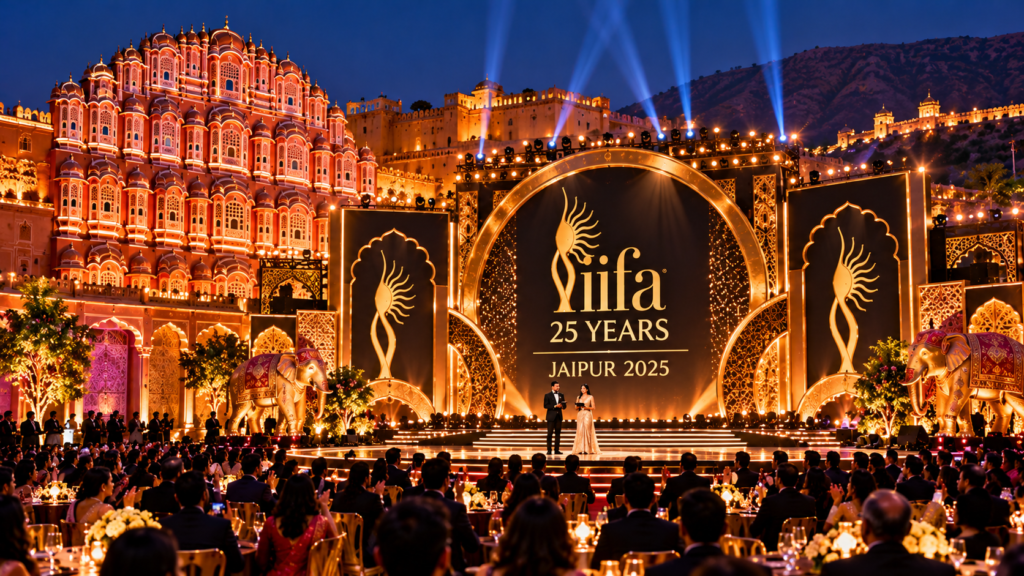
An artistic representation of IIFA’s 25th-anniversary celebrations in Jaipur, Rajasthan, held on 8–9 March 2025.
The two-day event combined the traditional IIFA Awards with a dedicated IIFA Digital Awards showcase, reflecting the growing importance of streaming films and series alongside theatrical cinema.
At the main awards ceremony, Laapataa Ladies emerged as a major winner, receiving Best Picture, while Kiran Rao won Best Direction for the film.
Nitanshi Goel received the award for Performance in a Leading Role (Female) for Laapataa Ladies, while Kartik Aaryan won Performance in a Leading Role (Male) for Bhool Bhulaiyaa 3.
These results highlighted the diversity of Hindi-language filmmaking recognized at the anniversary edition, from socially conscious storytelling and character-driven narratives to mainstream commercial entertainment.
Beyond the awards themselves, the Jaipur celebrations offered an opportunity to reflect on IIFA’s evolution over a quarter-century. What began as a travelling international ceremony primarily celebrating Hindi films had developed into a broader entertainment platform encompassing cinematic recognition, live performances, regional film initiatives, and digital storytelling.
The 2025 silver jubilee thus represented both a celebration of IIFA’s past and a reflection of its changing role within Indian screen entertainment.
Historical reference: IIFA Awards 2025 — Official Archive and Winners.
–– ✦ ✦ ––
🏅 IIFA Awards 2026: Recognition Without a Traditional Ceremony
The 2026 IIFA Awards marked an unusual chapter in the institution’s history. Unlike its established tradition of travelling international celebrations, IIFA announced the year’s winners without staging a physical awards ceremony.
The results, announced on 30 October 2026, continued the recognition of achievements in Hindi cinema and digital entertainment, even in the absence of the familiar live event.
Among the major winners, Dhurandhar received Best Picture, with Aditya Dhar winning Best Direction and Ranveer Singh receiving the award for Performance in a Leading Role (Male).
Aneet Padda won Performance in a Leading Role (Female) for Saiyaara.
The IIFA Digital Awards 2026 also recognized streaming productions, including Baramulla in the digital film category and The Ba***ds of Bollywood in the series category.
The absence of a conventional ceremony distinguished the 2026 edition from IIFA’s longstanding international event format. Nevertheless, the announcement of winners demonstrated the continuation of its awards recognition programme.
This unusual edition also created a contrast with the planned return to a large-scale international celebration in Abu Dhabi in January 2027.
Official references: IIFA Awards 2026 — Winners List
🌟 IIFA Awards vs Filmfare Awards vs National Film Awards
Although the IIFA Awards, Filmfare Awards, and National Film Awards all recognize achievements in Indian filmmaking, they differ in their origins, institutional structures, geographical reach, and approaches to cinematic recognition.
| Feature | IIFA Awards | Filmfare Awards | National Film Awards |
|---|---|---|---|
| First presented | 2000 | 1954 | 1954 |
| Historical identity | International travelling film awards | Established Hindi film awards tradition | Government-administered national film honours |
| Principal scope | Primarily Hindi cinema, with separate regional and digital initiatives | Primarily Hindi cinema in its main awards | Indian cinema across languages and regions |
| Ceremony locations | India and international destinations | Traditionally held in India | Held in India |
| Recognition categories | Popular, technical, and special awards | Popular, critics’, and technical awards | Feature films, non-feature films, and other national honours |
| Distinctive character | International celebrations and overseas audience engagement | Longstanding association with Hindi film culture | National recognition across diverse filmmaking traditions |
These differences reflect the distinct roles each institution has played in the history and development of Indian cinema.
The Filmfare Awards, first presented in 1954, have become closely associated with Hindi cinema’s popular awards tradition, recognizing acting, direction, music, and other filmmaking achievements across generations.
The National Film Awards, first presented in 1954, operate within a government-administered framework and recognize cinematic achievements across India’s diverse languages, regions, and filmmaking traditions.
This broader national recognition is reflected in the 72nd National Film Awards, which celebrated achievements across Hindi, Tamil, Telugu, Malayalam, and other Indian-language films, highlighting the diversity of the country’s cinematic landscape.
The IIFA Awards, established in 2000, distinguish themselves through their travelling international format, combining recognition of Hindi cinema with overseas audience engagement, cultural exchange, and large-scale entertainment events.
Rather than serving identical purposes, these three awards institutions represent different dimensions of Indian film recognition: popular industry traditions, national cinematic achievement, and international cultural visibility.
–– ✦ ✦ ––
🎯 Recognition, Commercial Interests, and the Debate Around Film Awards
The IIFA Awards have gained considerable international visibility, but their combination of cinematic recognition and large-scale entertainment also raises broader questions about the purpose and influence of film awards.
Like many prominent awards ceremonies, IIFA operates at the intersection of artistic achievement, audience engagement, media attention, and commercial sponsorship. Celebrity appearances, live performances, promotional partnerships, and international host destinations contribute to its public appeal, while the awards themselves seek to recognize excellence in filmmaking.
These functions can complement one another, but they serve different purposes. A highly publicized awards ceremony can increase the visibility of films and performers without necessarily applying the same evaluation criteria as a critics’ association, film festival jury, or government-administered awards institution.
International awards institutions also differ in their approaches to cinematic recognition. The history of the Academy Awards (Oscars) illustrates how an industry-based voting institution developed its own traditions of recognizing filmmaking achievements, offering a useful comparison with IIFA’s entertainment-oriented international format.
A similar distinction emerges when comparing IIFA with India’s National Film Awards. Although both recognize cinematic achievements, their institutional structures, selection processes, and objectives differ.
Another important consideration is the diversity of Indian cinema. International visibility does not automatically translate into equal representation of every Indian film industry, particularly when an awards platform has historically concentrated on Hindi-language filmmaking.
The introduction of IIFA Utsavam broadened the organization’s recognition framework by creating a dedicated platform for Telugu, Tamil, Malayalam, and Kannada cinema. Nevertheless, the main IIFA Awards and IIFA Utsavam remain distinct initiatives, each with its own focus.
Understanding these differences allows IIFA’s international cultural contribution to be appreciated without treating any single awards institution as the definitive measure of cinematic excellence.
Ultimately, IIFA’s historical significance lies not only in the awards it presents but also in how it has brought Indian cinema, entertainment, and audiences together on an international stage.
–– ✦ ✦ ––
🚀 The Future of IIFA: International Reach and New Audiences
More than a quarter-century after its establishment in 2000, the IIFA Awards continue to evolve as an international platform for Indian cinema and entertainment.
The organization has announced that the 27th IIFA Weekend & Awards is scheduled for 22–23 January 2027 at Etihad Arena on Yas Island, Abu Dhabi, marking another chapter in its longstanding association with the United Arab Emirates.
The planned return to Abu Dhabi reflects the continuing importance of established international partnerships and major entertainment destinations within IIFA’s travelling awards model.
At the same time, the development of IIFA Utsavam and IIFA Digital Awards illustrates how the organization has broadened its recognition framework beyond its original focus on Hindi-language films.
As streaming platforms, multilingual productions, and collaborations across film industries reshape Indian screen entertainment, IIFA faces the challenge of remaining relevant to changing audiences and creative practices.
Its future significance will depend not only on the scale and international appeal of its celebrations but also on how effectively its awards recognize achievements across an increasingly diverse entertainment landscape.
The next phase of IIFA’s journey will therefore involve balancing its established identity as a global entertainment event with the changing ways Indian stories are created, distributed, and experienced.
Official reference: IIFA’s Announcement for Abu Dhabi 2027.
–– ✦ ✦ ––
🎬 Legacy and Conclusion: From London to the World
The history of the IIFA Awards reflects an important chapter in the globalization of Hindi cinema and the growing international visibility of Indian popular culture.
What began at London’s Millennium Dome in 2000 evolved into a travelling international celebration, bringing Indian films, stars, music, and cinematic traditions to audiences across continents.
Through its international ceremonies, IIFA helped strengthen connections between the Hindi film industry and its overseas audiences while creating opportunities for cultural exchange, media exposure, and engagement with global entertainment communities.
The introduction of IIFA Utsavam and IIFA Digital Awards further reflected the organization’s evolving identity, extending its recognition framework to South Indian film industries and emerging forms of digital storytelling.
Yet IIFA’s enduring significance lies in its dual identity: both an institution recognizing cinematic achievements and an international platform celebrating Indian entertainment and culture.
Its legacy extends beyond the trophies presented on stage. IIFA’s journey illustrates how film awards can reflect changing relationships among cinema, audiences, technology, and popular culture while contributing to the international visibility of the industries they celebrate.
From its inaugural ceremony in London to the 2025 silver-jubilee celebrations in Jaipur and the announced return to Abu Dhabi in 2027, IIFA’s story reflects the continuing evolution of Indian cinema on the world stage.
–– ✦ ✦ ––
❓ Frequently Asked Questions (FAQs)
1. What is the full form of IIFA Awards?
IIFA stands for International Indian Film Academy. The IIFA Awards recognize achievements in Hindi cinema and celebrate Indian film entertainment through international events.
2. When and where were the first IIFA Awards held?
The inaugural IIFA Awards were held on 24 June 2000 at the Millennium Dome in London, United Kingdom, marking the beginning of the awards’ international journey.
3. Who founded the IIFA Awards?
The IIFA Awards were conceived and produced by Wizcraft International Entertainment, which established the event as a travelling international celebration of Indian cinema in 2000.
4. Are the IIFA Awards only for Bollywood films?
The main IIFA Awards primarily recognize Hindi cinema (Bollywood). However, the wider IIFA platform includes IIFA Utsavam for Telugu, Tamil, Malayalam, and Kannada films, and IIFA Digital Awards for digital entertainment.
5. How are IIFA Award winners selected?
IIFA’s selection process involves industry participation in nominations and public online voting for designated popular categories. Technical awards and other recognition categories may follow different procedures, depending on the edition.
6. What was special about the IIFA Awards in 2025?
The 2025 IIFA Awards celebrated their 25th anniversary in Jaipur, Rajasthan, on 8–9 March. The silver-jubilee event also introduced the IIFA Digital Awards, recognizing the growing importance of streaming films and series.
🌐 Read in Hindi
Prefer reading this article in Hindi?
👉 हिंदी में पढ़ें:
IIFA अवार्ड्स का इतिहास: लंदन 2000 से लेकर भारतीय सिनेमा के वैश्विक उत्सव तक
This version of the article offers the same depth, perspective, and storytelling.
🔖 External sources are referenced for educational and historical context. All content rights and credits belong to their respective owners.