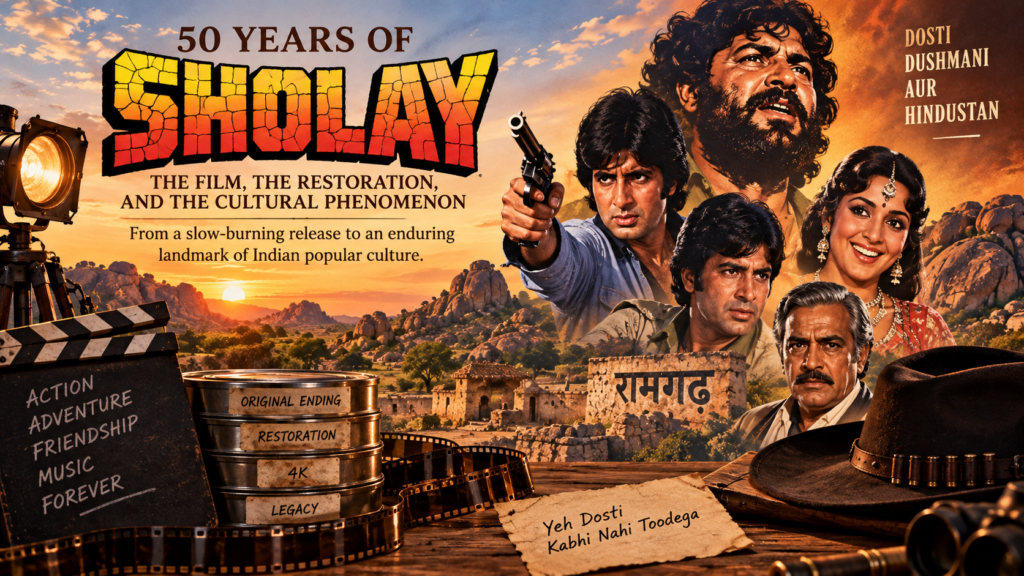

From celebrated performances to regional storytelling, the 72nd National Film Awards brought the many voices of Indian cinema onto one national stage.

72nd National Film Awards — a visual celebration of Indian cinema’s many regions, traditions and storytelling cultures. AI-generated visual for The Reel Retro.
Presented at Ekta Nagar, Gujarat, on September 22, 2026, the 72nd National Film Awards honoured the films and artists of 2024—from Article 370 and Bramayugam to Amaran and Kalki 2898 AD, alongside cinema across India’s many languages.
The 72nd National Film Awards celebrated the breadth of Indian cinema, honouring outstanding performances, filmmaking achievements and stories emerging from different languages and regions across the country.
The awards recognised films certified during 2024, although the winners were announced on July 18, 2026, and formally presented on September 22, 2026, at Ekta Nagar in Gujarat. President Droupadi Murmu presented the honours to filmmakers, actors, technicians and other cinema professionals from across India.
Among the major winners, Article 370 received the award for Best Feature Film, while Rajkumar Periasamy won Best Direction for the Tamil film Amaran. The Best Actor award was shared by Mammootty for the Malayalam film Bramayugam and Kartik Aaryan for Chandu Champion, while Yami Gautam received Best Actress for Article 370.
Another major moment was the presentation of the Dadasaheb Phalke Award to Anant Nag, honouring a career spanning more than five decades and his contribution to Indian cinema, particularly Kannada cinema.
Yet the 72nd National Film Awards were about more than their headline winners. Recognition extended across Hindi, Malayalam, Tamil, Telugu, Kannada and several other language cinemas, alongside documentaries, non-feature films and writing on cinema.
Taken together, the awards offer a revealing snapshot of contemporary Indian filmmaking—not as a single industry centred on one language or region, but as a cinematic landscape shaped by many languages, traditions and storytelling cultures.
📑 In This Article
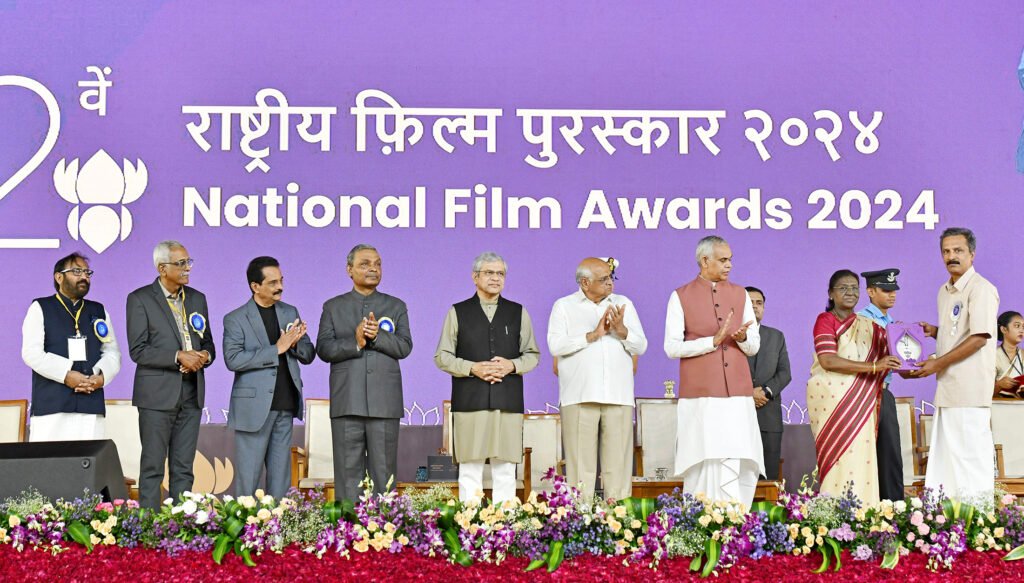
The President of India, Smt Droupadi Murmu confers the 72nd National Film Awards at Ekta Nagar (Kevadia), in Gujarat on September 22, 2026.
Image credit: Press Information Bureau, Government of India.
72nd National Film Awards: Quick Facts
- Edition: 72nd National Film Awards
- Films recognised: Films certified during 2024
- Winners announced: July 18, 2026
- Awards presented: September 22, 2026
- Venue: Ekta Nagar, Gujarat
- Presented by: President Droupadi Murmu
- Best Feature Film: Article 370
- Best Direction: Rajkumar Periasamy — Amaran
- Best Actor: Mammootty — Bramayugam and Kartik Aaryan — Chandu Champion (shared)
- Best Actress: Yami Gautam — Article 370
- Best Popular Film Providing Wholesome Entertainment: Kalki 2898 AD
- Dadasaheb Phalke Award: Anant Nag
–– ✦ ✦ ––
The Major Winners of the 72nd National Film Awards
The major honours at the 72nd National Film Awards spanned feature films, performances, direction and popular cinema, with winners representing several Indian languages and filmmaking traditions. The complete list of awardees was released by the Ministry of Information & Broadcasting when the winners were announced on July 18, 2026.

Major honours at the 72nd National Film Awards included recognition for Article 370, Amaran, Bramayugam and Chandu Champion. AI-generated visual for The Reel Retro.
| Award | Winner / Film |
|---|---|
| Best Feature Film | Article 370 (Hindi) |
| Best Direction | Rajkumar Periasamy — Amaran (Tamil) |
| Best Actor in a Leading Role | Mammootty — Bramayugam (Malayalam) and Kartik Aaryan — Chandu Champion (Hindi), shared |
| Best Actress in a Leading Role | Yami Gautam — Article 370 (Hindi) |
| Best Actor in a Supporting Role | Sanjay Mishra — Bhakshak (Hindi) |
| Best Actress in a Supporting Role | Sachana Namidass — Maharaja (Tamil) and Ropashree Varkady — Mithya (Kannada), shared |
| Best Debut Film of a Director | Randeep Hooda — Swatantrya Veer Savarkar (Hindi) |
| Best Popular Film Providing Wholesome Entertainment | Kalki 2898 AD (Telugu) |
| Best Feature Film Promoting National, Social and Environmental Values | Captain Miller (Tamil) |
| Best Children’s Film | 35 – Chinna Katha Kaadu (Telugu) |
| Best Non-Feature Film | Bhangaar (Marathi and English) |
| Best Documentary | Ram-Nami (Hindi) |
Together, these winners show the range represented at the 72nd edition. Hindi cinema claimed several headline honours, while Malayalam, Tamil, Telugu, Kannada and Marathi works appeared across acting, direction, popular cinema, children’s film and non-feature categories.
The full awards extended even further across India’s linguistic landscape, with Bengali, Garhwali, Tulu and Santhali works among those recognised in other categories.
–– ✦ ✦ ––
Article 370 Takes Best Feature Film
Article 370 received the Best Feature Film award, securing the principal feature-film honour at the 72nd National Film Awards. Directed by Aditya Suhas Jambhale and produced by Jio Studios and B62 Studios, the Hindi-language film was recognised among Indian films certified during 2024.
Its success extended beyond the top film category. Yami Gautam received Best Actress in a Leading Role, while Shashwat Sachdev won Best Music Direction (Songs), giving Article 370 recognition across film, performance and music.
While Article 370 claimed the central feature-film honour, the wider awards reflected a far broader cinematic landscape, with major recognition extending across Malayalam, Tamil, Telugu, Kannada and other Indian-language films.
–– ✦ ✦ ––
Mammootty and Kartik Aaryan Share the Best Actor Honour
The Best Actor in a Leading Role award was shared by two performers from different cinematic traditions: Mammootty for the Malayalam film Bramayugam and Kartik Aaryan for the Hindi film Chandu Champion.
Mammootty’s recognition brought Malayalam cinema into one of the 72nd National Film Awards’ headline categories. His performance in Bramayugam also reflects the continuing national visibility of an industry known for distinctive storytelling, strong regional identity and a long tradition of filmmaker-driven cinema.
That contemporary visibility has deeper historical roots. From the New Wave and parallel-cinema movements to a new generation of films reaching audiences beyond Kerala, the evolution of Malayalam cinema has been shaped by artistic experimentation, literary influence and changing approaches to storytelling.
Sharing the honour was Kartik Aaryan for Chandu Champion, a Hindi biographical sports drama directed by Kabir Khan. The joint award placed performances from two very different films—and two different language industries—within the same leading-actor category.
Their shared recognition also reflected a recurring feature of the 72nd edition: major national honours were distributed across films emerging from different parts of India’s cinematic landscape.
–– ✦ ✦ ––
Yami Gautam Wins Best Actress for Article 370
Yami Gautam received the Best Actress in a Leading Role award for her performance in Article 370, adding a major acting honour to the film’s Best Feature Film recognition.
The award marked a significant national recognition for Gautam’s performance and placed her alongside Mammootty and Kartik Aaryan among the leading acting honourees of the 72nd National Film Awards.
–– ✦ ✦ ––
Amaran and Rajkumar Periasamy: Tamil Cinema in the Spotlight
Tamil cinema secured one of the 72nd National Film Awards’ major filmmaking honours when Rajkumar Periasamy won Best Direction for Amaran.
The film received further recognition through G. V. Prakash Kumar, who won Best Music Direction (Background Music), giving Amaran honours for both direction and musical score.
The recognition also forms part of a much longer history of Tamil cinema. From early studio traditions and influential stars to changing narrative styles and contemporary filmmaking, Tamil cinema has continually evolved while retaining a strong linguistic and cultural identity.
Tamil-language films appeared elsewhere among the major winners as well. Captain Miller received Best Feature Film Promoting National, Social and Environmental Values, while Sachana Namidass shared the Best Actress in a Supporting Role award for her performance in Maharaja. Together with Amaran, these honours placed Tamil cinema across direction, music, performance and feature-film categories.
–– ✦ ✦ ––
Anant Nag Receives the Dadasaheb Phalke Award
Veteran actor Anant Nag received the Dadasaheb Phalke Award for 2024, Indian cinema’s highest honour, at the 72nd National Film Awards ceremony. Presented by President Droupadi Murmu, the award recognised his outstanding contribution to Indian cinema across a career spanning more than five decades.

The President, Smt. Droupadi Murmu confers the Dadasaheb Phalke Award to Actor Shri Anant Nag at the 72nd National Film Awards ceremony at Ekta Nagar (Kevadia) in Gujarat on September 22, 2026.
Image credit: Press Information Bureau, Government of India.
Nag’s journey has extended across theatre, cinema and television. After beginning his acting career on stage, he moved into films in the 1970s and went on to appear in more than 300 films across six Indian languages. His work ranged from early collaborations associated with parallel cinema to an extensive career in Kannada films, where he became one of the industry’s most recognisable performers.
His career also intersects with an important period in the history of Kannada cinema, particularly its engagement with literary traditions, realistic storytelling and parallel cinema. Working across changing eras of Kannada filmmaking, Nag maintained a strong connection with the industry even as his performances reached audiences in other Indian languages.
After receiving the honour, Nag acknowledged the colleagues and audiences who had accompanied his journey and described Karnataka as his Karmabhoomi. His remarks reflected the close relationship between his wider career in Indian cinema and his long-standing association with Kannada culture and filmmaking.
Instituted in 1969 and named after pioneering filmmaker Dadasaheb Phalke, the award recognises a sustained contribution to the growth and development of Indian cinema. Unlike honours given for an individual film or performance, the Dadasaheb Phalke Award celebrates a body of work built across a career—placing Anant Nag’s recognition within the continuing history of Indian filmmaking.
–– ✦ ✦ ––
Regional Cinema at the 72nd National Film Awards
The 72nd National Film Awards reflected the multilingual character of Indian cinema, with major honours extending across Malayalam, Tamil, Telugu and Kannada filmmaking. Rather than appearing only in language-specific categories, films and artists from these industries were recognised across acting, direction, music, popular cinema and other national categories.

Malayalam, Tamil, Telugu and Kannada cinema were represented across major categories at the 72nd National Film Awards. AI-generated visual for The Reel Retro.
Malayalam and Tamil cinema featured prominently through honours already seen in Bramayugam, Amaran, Captain Miller and Maharaja. Their recognition placed regional-language films within some of the edition’s most visible performance and filmmaking categories.
Telugu cinema added another dimension to this range. Kalki 2898 AD received Best Popular Film Providing Wholesome Entertainment, while 35 – Chinna Katha Kaadu was named Best Children’s Film—recognising two productions with very different scales and storytelling approaches.
Kannada cinema was represented through Ropashree Varkady, who shared the Best Actress in a Supporting Role award for Mithya. Kannada-language writing on film also received recognition, with Naaniruvude Nimagaagi Naadiruvude Nanagaagi: Kannada Cinemada Thathva matthu Rajakeeya winning Best Book on Cinema.
Taken together, these honours show that the regional diversity of Indian cinema extended well beyond separate language-film categories. Different filmmaking traditions appeared across performance, direction, music, popular entertainment, children’s cinema and writing on film—giving the 72nd edition a distinctly multilingual character.
That linguistic range extended further still. Recognition for Garhwali, Tulu and Santhali cinema widened the awards’ geographical and cultural reach beyond India’s larger film industries.
–– ✦ ✦ ––
Beyond the Major Languages: Garhwali, Tulu and Santhali Cinema
The reach of the 72nd National Film Awards extended beyond India’s larger film industries, bringing Garhwali, Tulu and Santhali filmmaking into the national spotlight.

India’s many regional and linguistic filmmaking traditions contribute to a diverse national cinematic landscape. AI-generated visual for The Reel Retro.
Dholi, directed by Dinesh P. Bhonsle, received the Best Garhwali Film award, while IMBU, directed by Shivadhwaj Shetty, was named Best Tulu Film. Their recognition highlighted filmmaking traditions that receive comparatively less visibility in mainstream national coverage.
Santhali cinema reached a notable milestone through Angen, directed by Ravi Raj Murmu, which won Best Debut Film of a Director in the Non-Feature Film section. According to the official National Film Awards factsheet, this marked the first time a Santhali film received recognition in the Non-Feature Film section.
Together, these honours broadened the cultural and linguistic range represented at the 72nd National Film Awards. Alongside films from more established industries, they reinforced a wider picture of Indian cinema as a collection of storytelling traditions shaped by different languages, communities and regions.
–– ✦ ✦ ––
Non-Feature Films, Documentary and Writing on Cinema
The 72nd National Film Awards extended beyond feature films to recognise documentaries, non-feature filmmaking and writing that contributes to a deeper understanding of cinema. These categories highlighted another dimension of Indian film culture—one shaped by filmmakers, documentarians, authors and critics working beyond mainstream feature-film production.
In the Non-Feature Film section, Sumira Roy’s Bhangaar, made in Marathi and English, received the Best Non-Feature Film award, while Ram-Nami, directed by Bharatbala Ganapathy, won Best Documentary. The Santhali film Angen, directed by Ravi Raj Murmu, received Best Debut Film of a Director, marking the milestone discussed above.
Recognition also extended to films exploring history, culture and social themes. Kakori received Best Biographical/Historical Reconstruction/Compilation Film, while Piplantri: A Tale of Eco Feminism won Best Non-Feature Film Promoting Social and Environmental Values.
The awards also acknowledged the study and criticism of cinema. Kenchanuru Pradeep Kumar Shetty received Best Book on Cinema for the Kannada-language Naaniruvude Nimagaagi Naadiruvude Nanagaagi: Kannada Cinemada Thathva matthu Rajakeeya, while Sanjeev Shrivastava received Best Film Critic for his work in Hindi.
Together, these categories show that Indian film culture is shaped not only by feature films and performances, but also by documentaries, non-feature works, books and criticism that record, examine and interpret cinema for future audiences.
–– ✦ ✦ ––
Why the 72nd National Film Awards Were Held in Gujarat
The 72nd National Film Awards marked a geographical shift for the ceremony, with the honours presented at Ekta Nagar (Kevadia), Gujarat, on September 22, 2026, near the Statue of Unity.
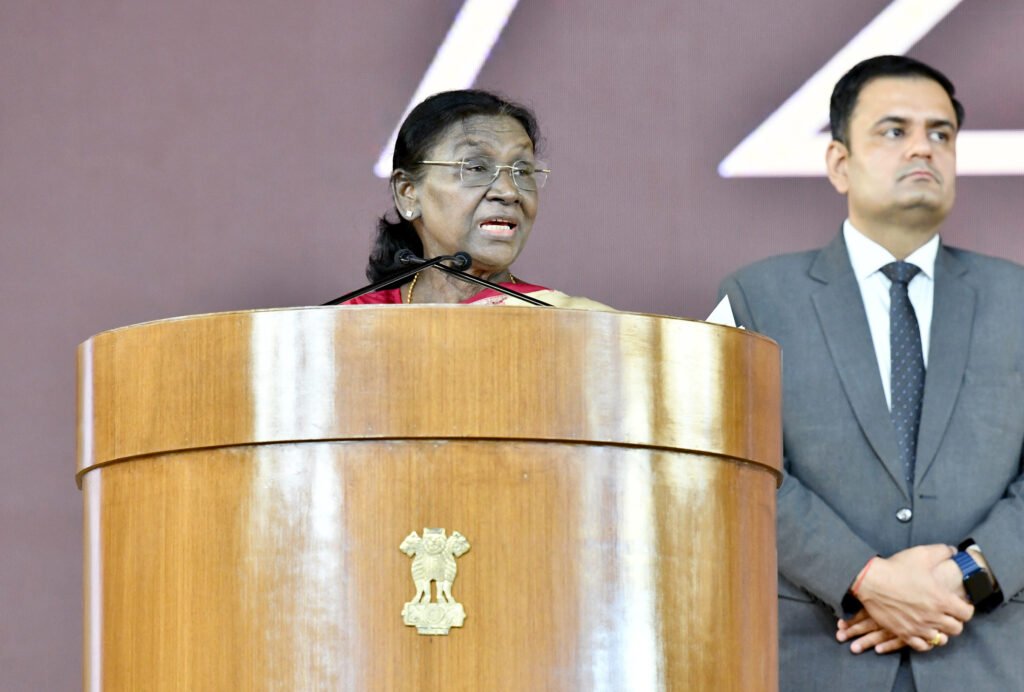
The President, Smt. Droupadi Murmu addressing the 72nd National Film Awards ceremony at Ekta Nagar (Kevadia) in Gujarat on September 22, 2026.
Image credit: Press Information Bureau, Government of India.
The venue reflected a broader initiative announced by the Ministry of Information & Broadcasting to take the National Film Awards beyond the National Capital. Under this approach, future ceremonies are envisaged in different states and cities, giving the event a wider geographical presence across India.
During the ceremony, President Droupadi Murmu connected the setting with the idea of India’s cultural unity, noting that films made across different languages and regions reflect the country’s varied traditions, aspirations and experiences. In that context, Ekta Nagar provided a symbolic setting for an awards ceremony celebrating cinema from across India.
The decision to take the ceremony to different parts of the country also introduces a new dimension to the National Film Awards. If continued in future editions, the changing locations could allow the ceremony itself to reflect more closely the regional and cultural breadth of the cinema it honours.
–– ✦ ✦ ––
What the 72nd National Film Awards Reveal About Indian Cinema
The 72nd National Film Awards offer more than a record of individual winners. Taken together, the entries and honours present a picture of Indian cinema shaped by multiple languages, scales of production and storytelling traditions.
The numbers illustrate that breadth. The 72nd edition received 400 feature-film entries across 34 languages and 161 non-feature-film entries across 24 languages. They ranged from large commercial productions to documentaries, independent works and films rooted in distinct regional and linguistic traditions.
The distribution of major honours reflected that range, highlighting the broader landscape of regional cinema in India. Hindi, Malayalam, Tamil, Telugu and Kannada films appeared across prominent categories, while recognition for Garhwali, Tulu and Santhali works extended the awards beyond the country’s larger film industries.
The results also show how different forms of filmmaking can occupy the same national platform. Popular cinema appeared alongside documentaries, children’s films, socially engaged works and non-feature productions, while awards for books and criticism acknowledged the wider culture that surrounds and interprets cinema.
Seen from this perspective, the 72nd National Film Awards presented Indian cinema not as a single industry centred on one language or region, but as a network of filmmaking cultures developing alongside—and increasingly interacting with—one another.
The edition therefore reinforced a defining characteristic of Indian cinema: its diversity is not peripheral to its identity; it is central to it. From established industries and major productions to emerging filmmakers and less widely represented languages, the awards brought many expressions of Indian filmmaking onto one national stage.
–– ✦ ✦ ––
Key Takeaways
- The 72nd National Film Awards honoured films certified during 2024, with the awards formally presented at Ekta Nagar, Gujarat, on September 22, 2026.
- Article 370 won Best Feature Film, while Yami Gautam received Best Actress in a Leading Role for her performance in the film.
- Mammootty and Kartik Aaryan shared Best Actor in a Leading Role for Bramayugam and Chandu Champion, respectively, while Rajkumar Periasamy won Best Direction for Amaran.
- Veteran actor Anant Nag received the Dadasaheb Phalke Award for 2024, recognising a career spanning more than five decades in Indian cinema.
- The scale of participation reflected Indian cinema’s linguistic breadth, with 400 feature-film entries across 34 languages and 161 non-feature-film entries across 24 languages.
- Recognition extended from major Hindi, Malayalam, Tamil, Telugu and Kannada productions to Garhwali, Tulu and Santhali filmmaking, while documentaries, non-feature films and writing on cinema broadened the scope of the awards beyond mainstream feature films.
–– ✦ ✦ ––
FAQs About the 72nd National Film Awards
Who won Best Feature Film at the 72nd National Film Awards?
Article 370 won Best Feature Film at the 72nd National Film Awards. The Hindi-language film was directed by Aditya Suhas Jambhale.
Who won Best Actor at the 72nd National Film Awards?
Mammootty and Kartik Aaryan shared the Best Actor in a Leading Role award. Mammootty was honoured for the Malayalam film Bramayugam, while Kartik Aaryan received the award for the Hindi film Chandu Champion.
Who won Best Actress at the 72nd National Film Awards?
Yami Gautam won Best Actress in a Leading Role for her performance in Article 370. The film also received the Best Feature Film award.
Who received the Dadasaheb Phalke Award at the 72nd National Film Awards?
Anant Nag received the Dadasaheb Phalke Award for 2024, Indian cinema’s highest honour. The award recognised his contribution to Indian cinema across a career spanning more than five decades.
Why are the 72nd National Film Awards for 2024 if they were presented in 2026?
The 72nd National Film Awards recognise films certified during the 2024 calendar year. The winners were announced on July 18, 2026, and the awards were formally presented on September 22, 2026.
Where were the 72nd National Film Awards held?
The 72nd National Film Awards were presented at Ekta Nagar (Kevadia), Gujarat, on September 22, 2026. President Droupadi Murmu presented the awards.
Which regional-language films received major recognition at the 72nd National Film Awards?
Several regional-language films received major honours. Mammootty won a shared Best Actor award for the Malayalam film Bramayugam, Rajkumar Periasamy won Best Direction for the Tamil film Amaran, and the Telugu film Kalki 2898 AD received Best Popular Film Providing Wholesome Entertainment. Kannada, Garhwali, Tulu and Santhali works also received recognition across different categories.
–– ✦ ✦ ––
Conclusion
The 72nd National Film Awards captured a wide cross-section of Indian filmmaking, bringing together major productions, acclaimed performances, regional-language cinema, documentaries and non-feature works on one national platform.
The presentation of the Dadasaheb Phalke Award to Anant Nag added a historical dimension to the ceremony, linking contemporary achievements with a career spanning more than five decades. At the same time, recognition for established stars, emerging filmmakers and less widely represented languages reflected the changing breadth of Indian cinema.
More than a record of the films and artists honoured for 2024, the 72nd edition became a snapshot of Indian cinema at a particular moment in its continuing evolution—many cinematic traditions, each with its own identity, contributing to a larger and constantly evolving story of Indian filmmaking.
🌐 Read in Hindi
Prefer reading this article in Hindi?
👉 हिंदी में पढ़ें:
72वें राष्ट्रीय फ़िल्म पुरस्कार: विजेता, मुख्य बातें और भारतीय सिनेमा की क्षेत्रीय विविधता (जल्द आ रहा है)
This version of the article offers the same depth, perspective, and storytelling.
🔖 External sources are referenced for educational and historical context. All content rights and credits belong to their respective owners.