
A century of storytelling, innovation, and cultural transformation—from the birth of Indian cinema to the digital age.
ENG | हिंदी
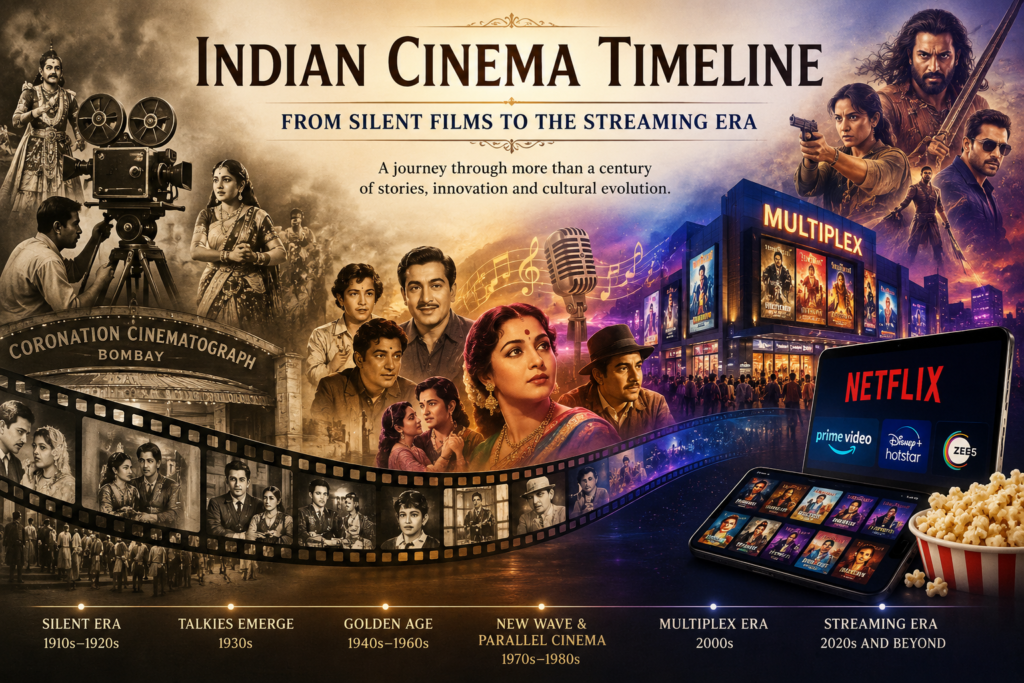
From silent films to OTT platforms, the Indian cinema timeline reflects more than a century of cinematic evolution.
Explore how Indian cinema evolved through silent films, talkies, regional movements, blockbuster eras, and modern streaming platforms.
The Indian cinema timeline spans more than a century of technological innovation, cultural change, and storytelling evolution. From silent films and early studios to pan-India blockbusters and streaming platforms, Indian cinema has continually adapted to changing audiences while remaining deeply rooted in its artistic traditions.
Today, Indian cinema encompasses Bollywood, regional film industries, parallel cinema movements, and global digital productions. Understanding this journey reveals how Indian films evolved from local entertainment into one of the world’s most influential cinematic cultures.
📑 In This Article
🎬 The Silent Era (1910s–1920s)
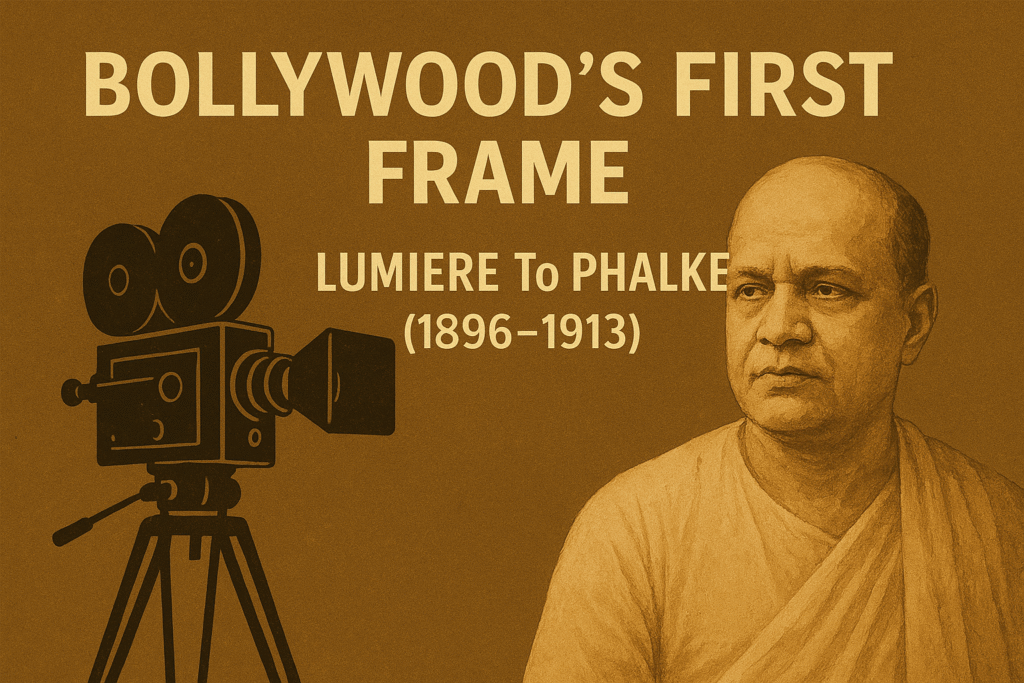
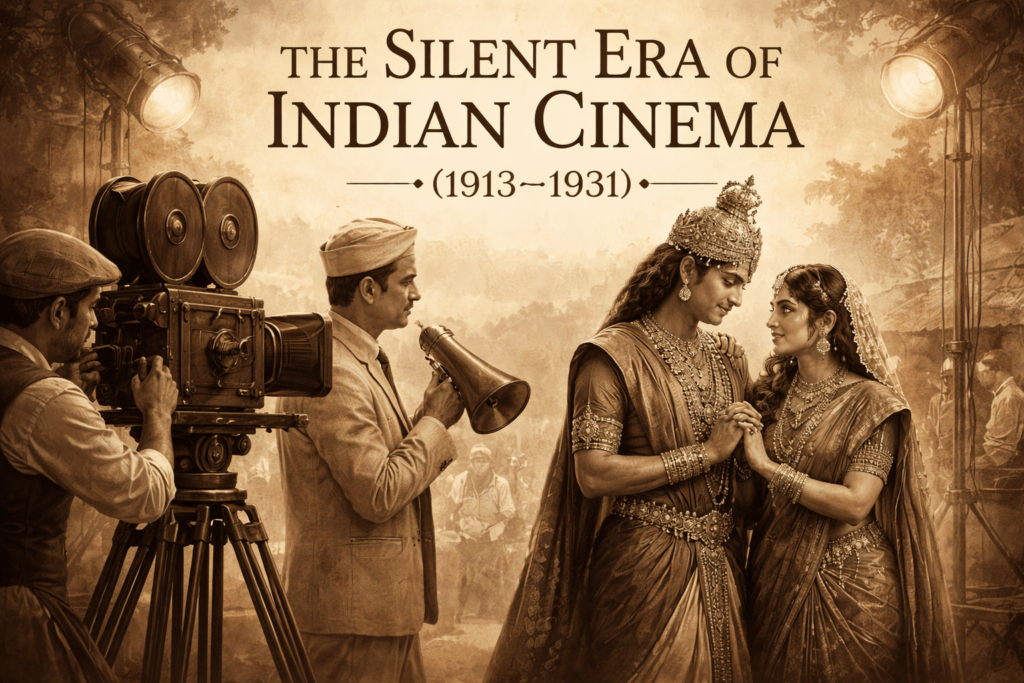
The story of Indian cinema began during the silent film era. Early filmmakers experimented with visual storytelling inspired by theatre, mythology, and traditional performance arts.
The release of Raja Harishchandra (1913) is widely regarded as a landmark moment, establishing the foundation of India’s film industry.
During this period:
- Silent films dominated production
- Mythological themes were popular
- Cinema halls began attracting wider audiences
These early experiments laid the foundation for the Indian film industry. Although silent films relied entirely on visual storytelling, they introduced audiences to the power of cinema and established many of the narrative traditions that would continue to evolve in the decades ahead.
👉 To fully appreciate the beginnings of Indian cinema, it helps to look even further back at the origins of motion pictures and visual storytelling. Explore How Cinema Began: From Shadows to Screens to discover how early experiments eventually led to the birth of filmmaking in India and around the world.
–– ✦ ✦ ––
🔊 The Arrival of Talkies (1930s)
The introduction of sound transformed Indian cinema. Films could now incorporate dialogue, music, and songs, creating a uniquely Indian cinematic experience.
Regional film industries also began emerging more clearly during this era as films were produced in multiple languages.
Key developments included:
- Growth of studio systems
- Expansion of regional cinema
- Increasing popularity of film music
The transition from silent films to talkies marked one of the most significant turning points in the Indian cinema timeline. By combining dialogue, music, and performance, filmmakers gained new creative possibilities that would shape the identity of Indian cinema for generations.
👉 Many early Indian talkies continued drawing inspiration from mythological storytelling traditions that had already become popular during the silent era. This connection can be explored further in Indian Mythological Cinema, where epic tales, legends, and cultural narratives helped shape the foundations of Indian filmmaking.
–– ✦ ✦ ––
🎵 Music Becomes the Heart of Indian Cinema
The arrival of sound in the 1930s transformed Indian cinema in a way that was distinct from many other film industries around the world. Songs quickly became an integral part of storytelling, helping filmmakers express emotions, advance narratives, and connect with audiences across diverse regions and languages.
The rise of playback singing further strengthened the relationship between cinema and music, creating legendary singers whose voices became inseparable from the stars they represented on screen. Over time, film songs evolved beyond the cinema hall to become a defining part of India’s popular culture.
👉 As songs became an essential part of cinematic storytelling, music evolved into one of the defining characteristics of Indian films. Learn more about this transformation in Music in Bollywood: From Playback Singing to Modern Soundtracks.
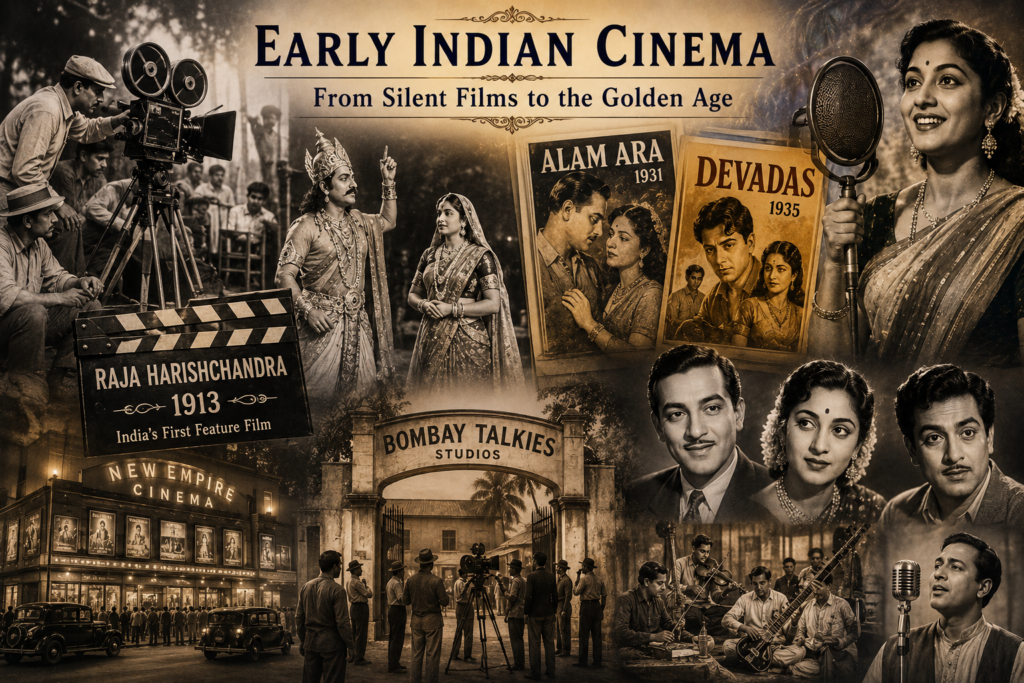
Early Indian cinema evolved from silent films into a celebrated golden age of storytelling, music, and artistic expression.
🌟 The Golden Age of Indian Cinema (1940s–1960s)
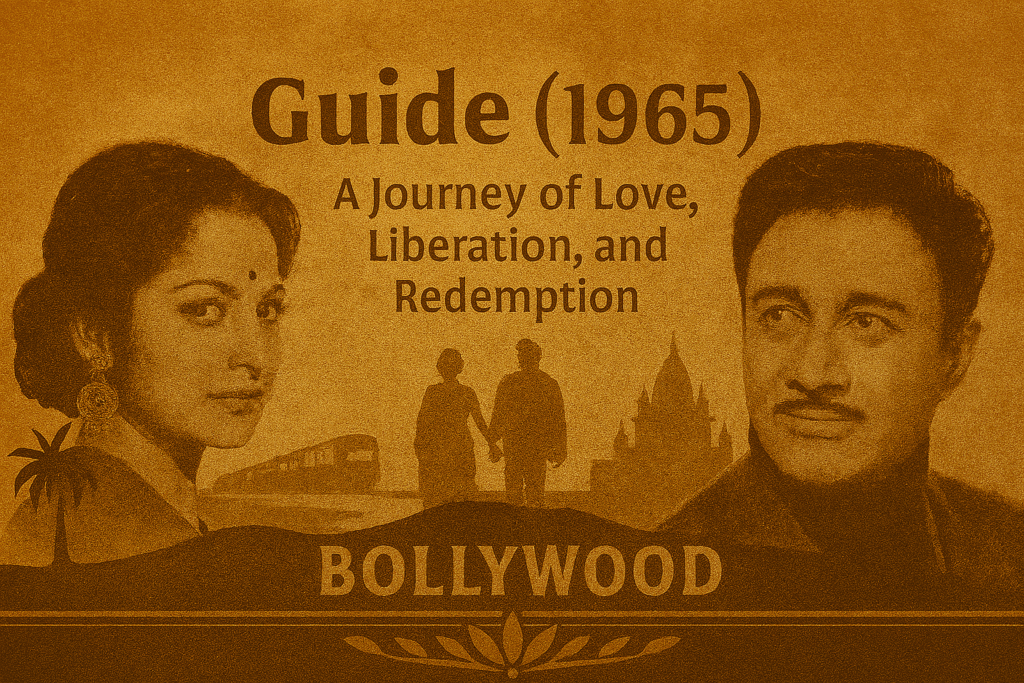
Many historians consider the period between the late 1940s and early 1960s the Golden Age of Indian cinema.
This era witnessed:
- Strong social storytelling
- Literary adaptations
- International recognition
- Memorable music and performances
Films explored themes such as poverty, identity, modernization, and social change.
During this period, Bollywood gained prominence while regional industries continued developing their own artistic identities.
–– ✦ ✦ ––
🎭 Parallel Cinema and Artistic Experimentation (1960s–1980s)
As mainstream cinema expanded, filmmakers also began exploring realistic storytelling and social issues.
The parallel cinema movement emphasized:
- Realistic narratives
- Human relationships
- Social commentary
- Artistic experimentation
This movement influenced audiences across multiple regions and contributed significantly to India’s cinematic diversity.
👉 This movement toward realism and artistic experimentation was closely linked to broader cinematic developments around the world. Discover how filmmakers challenged traditional storytelling conventions in New Wave Cinema and the Rise of Realist Storytelling.
–– ✦ ✦ ––
📺 Television and Changing Viewing Habits
The rapid growth of television during the late twentieth century significantly changed how audiences consumed entertainment. For the first time, cinema faced large-scale competition from content that could be enjoyed at home.
As television became more accessible, filmmakers began experimenting with new storytelling styles, genres, and production techniques to attract audiences back to theatres. These shifts also contributed to the growth of parallel cinema and more realistic narratives that reflected changing social realities.
Over time, evolving audience preferences paved the way for the multiplex era, where filmmakers could cater to both mainstream and niche audiences.
👉 This transition is closely connected to the rise of realistic storytelling explored in New Wave Cinema and the Rise of Realist Storytelling.
–– ✦ ✦ ––
🎥 Regional Cinema Expansion (1970s–1990s)
Regional film industries experienced significant growth during this period.
Industries such as:
- Tamil cinema
- Telugu cinema
- Malayalam cinema
- Kannada cinema
- Bengali cinema
- Punjabi cinema
developed distinctive storytelling traditions while contributing to the broader Indian cinema landscape.
Regional films increasingly gained national recognition for their artistic and commercial success.
👉 To understand the diversity of Indian cinema, it is essential to explore the unique journeys of its regional film industries. Tamil Film Industry, History of Telugu Cinema, Malayalam Film Industry, Kannada Cinema History, Bengali Cinema Legacy, and Punjabi Cinema History demonstrate how different languages, cultures, and storytelling traditions have collectively enriched the evolution of Indian cinema.
–– ✦ ✦ ––
🍿 The Multiplex and Globalization Era (2000s)
The rise of multiplex theatres transformed audience behaviour and film production strategies.
Filmmakers began creating:
- Urban-focused stories
- Niche narratives
- Mid-budget productions
This period marked a significant shift in how Indian films were produced, marketed, and consumed. As multiplex audiences grew and international markets expanded, filmmakers gained greater freedom to experiment with diverse themes, paving the way for a more globally connected Indian cinema.
👉 The multiplex era transformed audience preferences and encouraged filmmakers to experiment with new themes, formats, and storytelling styles. Explore this evolution further in Modern Bollywood Era: Global Cinema, Multiplex Culture, and Streaming Revolution.
–– ✦ ✦ ––
🚀 The Rise of Pan-India Cinema (2010s)
The Indian cinema timeline entered a new phase with the emergence of pan-India films.
Large-scale productions reached audiences across linguistic and regional boundaries.
This period was characterized by:
- High production values
- Nationwide releases
- Growing international recognition
- Increased collaboration across industries
The rise of pan-India cinema demonstrated that compelling stories could transcend linguistic and regional boundaries. By bringing together audiences from different parts of the country, this era redefined the scale, reach, and ambitions of Indian filmmaking.
👉 The success of large-scale regional productions helped redefine the national film landscape and expand the reach of Indian cinema. Learn more in Regional Cinema Revolution: How South Indian Films Reshaped Indian Cinema, which explores the growing influence of South Indian industries on audiences across the country.
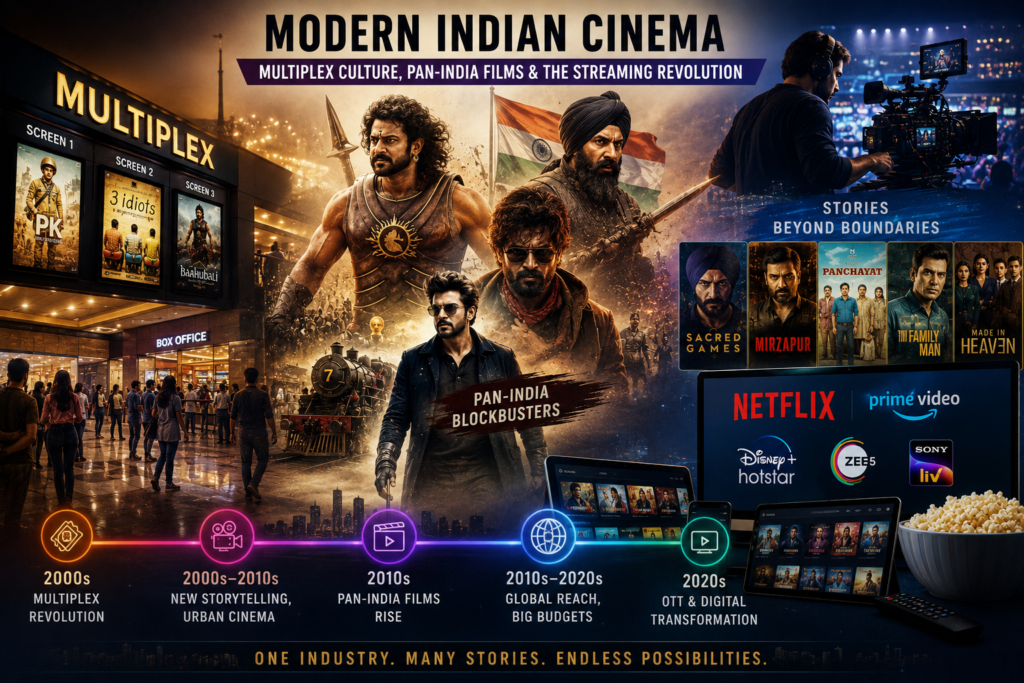
Modern Indian cinema combines theatrical spectacle, pan-India storytelling, and the growing influence of streaming platforms.
📱 Streaming and the Digital Future (2020s–Present)
Streaming platforms have fundamentally changed how audiences consume films and series.
Today’s Indian cinema operates across:
- Theatrical releases
- OTT platforms
- Global streaming services
Filmmakers now have access to wider audiences than ever before, while viewers enjoy greater choice and accessibility.
The streaming era continues to reshape storytelling, distribution, and audience engagement.
–– ✦ ✦ ––
🎬 What Makes Indian Cinema Unique?
One of the most remarkable aspects of Indian cinema is its ability to combine diverse cultural traditions within a single cinematic landscape. Unlike many national film industries, Indian cinema operates across multiple languages, regions, and storytelling traditions while maintaining a shared cultural identity.
From mythological epics and musical dramas to realistic social narratives and large-scale blockbusters, Indian cinema embraces a wide range of genres and artistic approaches. Regional industries such as Tamil, Telugu, Malayalam, Kannada, Bengali, and Punjabi cinema have each contributed distinctive voices to this broader ecosystem.
Today, Indian cinema continues to evolve through technological innovation, global distribution, and streaming platforms while remaining deeply rooted in its storytelling heritage. This balance between tradition and reinvention is one of the key reasons Indian cinema remains one of the world’s most dynamic film cultures.
–– ✦ ✦ ––
❓ Frequently Asked Questions (FAQs)
What is the Indian cinema timeline?
The Indian cinema timeline traces the evolution of Indian filmmaking from silent films in the early 1900s to today’s streaming era.
When did Indian cinema begin?
Indian cinema began with Raja Harishchandra (1913), widely regarded as India’s first full-length feature film.
What is considered the Golden Age of Indian cinema?
The period between the late 1940s and early 1960s is commonly known as the Golden Age of Indian cinema.
How has streaming changed Indian cinema?
Streaming platforms have expanded audience reach, increased content diversity, and transformed film distribution models.
–– ✦ ✦ ––
🎯 Conclusion
The Indian cinema timeline reflects a remarkable journey of innovation, adaptation, and cultural expression. From silent films and studio productions to regional cinema growth, multiplex culture, and streaming platforms, Indian cinema has continually evolved while maintaining its unique storytelling traditions.
As technology and audience preferences continue to change, the next chapter of Indian cinema promises to be just as dynamic as the century-long journey that came before.
🌐 Prefer reading this article in Hindi?
👉 Read:
भारतीय सिनेमा की समयरेखा: मूक फिल्मों से OTT युग तक