
From Punjab’s Cultural Roots to a Cinema That Travels Across Borders.
ENG | हिंदी
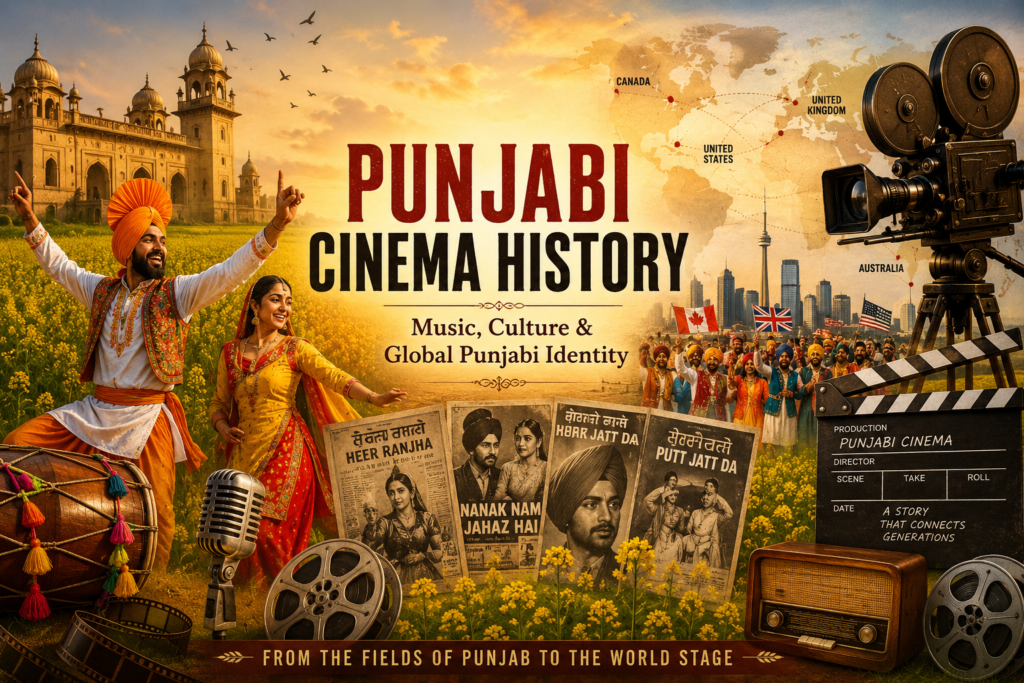
Punjabi cinema history and global Punjabi cultural identity.
Punjabi Cinema History is a journey shaped by music, language, community, and migration—showing how a regional film tradition grew from local cultural roots into a powerful expression of Punjabi identity around the world.
Punjabi cinema occupies a unique and vibrant place in the history of Indian filmmaking.
While Bengali cinema became known for artistic realism and literary storytelling, and South Indian cinema transformed modern commercial filmmaking, Punjabi cinema developed its own identity through music, culture, community, folk traditions, and stories rooted in everyday life.
From its early beginnings before Partition to its modern revival, the Punjabi film industry has reflected the emotions, traditions, social experiences, and aspirations of Punjabi society. Music and cultural identity have remained central to this journey, helping Punjabi films maintain a strong connection with audiences even as the industry evolved across different eras.
Over time, that connection extended far beyond Punjab. Today, Punjabi cinema reaches audiences not only in India but also across Canada, the United Kingdom, the United States, Australia, and other countries with significant Punjabi diaspora communities. This global audience has helped turn Punjabi cinema into an important cultural link between Punjab and Punjabi communities living abroad.
This remarkable journey makes Punjabi Cinema History one of the most fascinating chapters in the broader story of regional cinema in India—a story where music, culture, migration, and identity continue to shape the screen.
📑 In This Article
🌟 Quick Facts About Punjabi Cinema
- 🎥 Punjabi cinema is one of India’s oldest regional film industries.
- 🎶 Music has always been central to Punjabi films.
- 🇮🇳 The industry was deeply affected by the Partition of India in 1947.
- 🌍 Punjabi films have a large international audience.
- 🎬 Modern Punjabi cinema has experienced significant growth since the 2000s.
- 📺 Streaming platforms have expanded global access to Punjabi films.
- 🎭 Cultural identity remains a defining theme.
–– ✦ ✦ ––
🎥 Early Origins of Punjabi Cinema
The history of Punjabi cinema began during the early decades of Indian filmmaking.
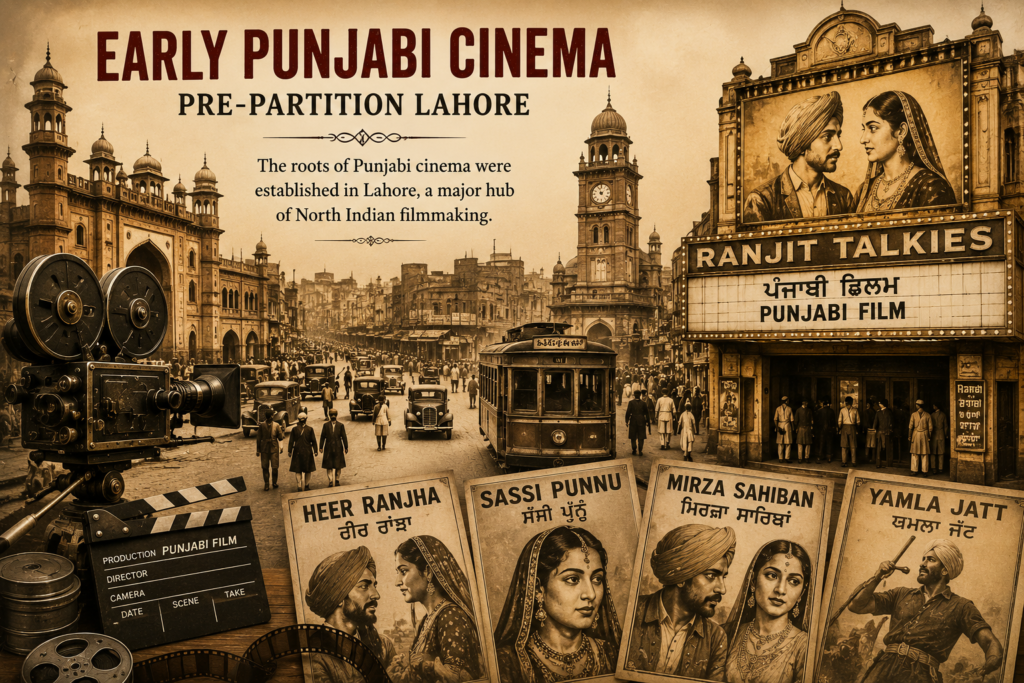
The roots of Punjabi cinema developed in Lahore before the Partition of India.
Before India’s independence, Lahore was one of the most important centers of film production in northern India. Punjabi-language films were produced alongside Hindi and Urdu films, serving audiences across the Punjab region.
These early productions often drew inspiration from:
- folk tales
- local legends
- rural traditions
- social issues
Punjabi cinema quickly became known for its strong connection to regional culture and community life.
–– ✦ ✦ ––
🇮🇳 Partition and the Rebuilding of Punjabi Cinema
The Partition of India in 1947 dramatically changed the future of Punjabi cinema.
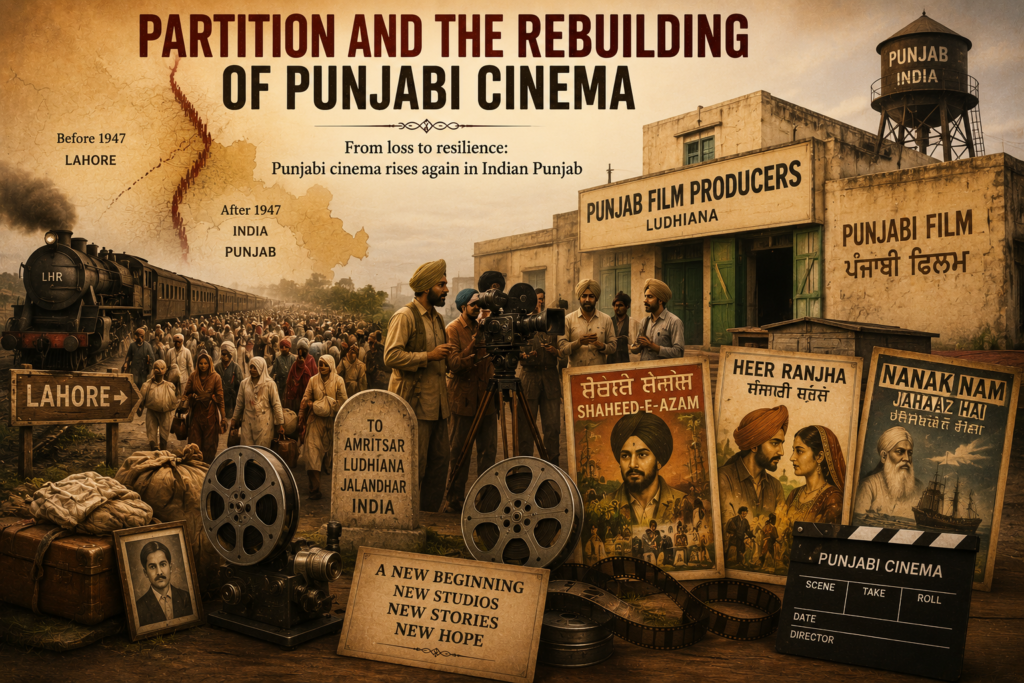
Partition transformed Punjabi cinema and led to the rebuilding of the industry in Indian Punjab.
Lahore, which had been a major filmmaking center, became part of Pakistan. As a result, many filmmakers, actors, and technicians migrated to India.
The industry faced enormous challenges:
- loss of infrastructure
- disruption of production networks
- changing audiences
Despite these difficulties, Punjabi cinema gradually rebuilt itself in Indian Punjab.
The resilience shown during this period became an important part of Punjabi cinema history.
–– ✦ ✦ ––
🎥 Pioneers, Landmark Films, and Modern Icons
The growth of Punjabi cinema was shaped by many filmmakers, actors, singers, and landmark films that helped define the industry across different generations.
Early Punjabi cinema gained recognition through films such as Heer Ranjha and Nanak Naam Jahaz Hai, which demonstrated the commercial and cultural potential of Punjabi-language filmmaking.
In later decades, actors and filmmakers including Dharmendra, Gurdas Maan, Harbhajan Mann, and Diljit Dosanjh helped bring Punjabi cinema to wider audiences in India and abroad.
Their contributions strengthened the industry’s cultural identity and paved the way for the modern revival of Punjabi filmmaking.
–– ✦ ✦ ––
🎶 Music: The Heart of Punjabi Cinema
No discussion of Punjabi cinema history is complete without examining its relationship with music.
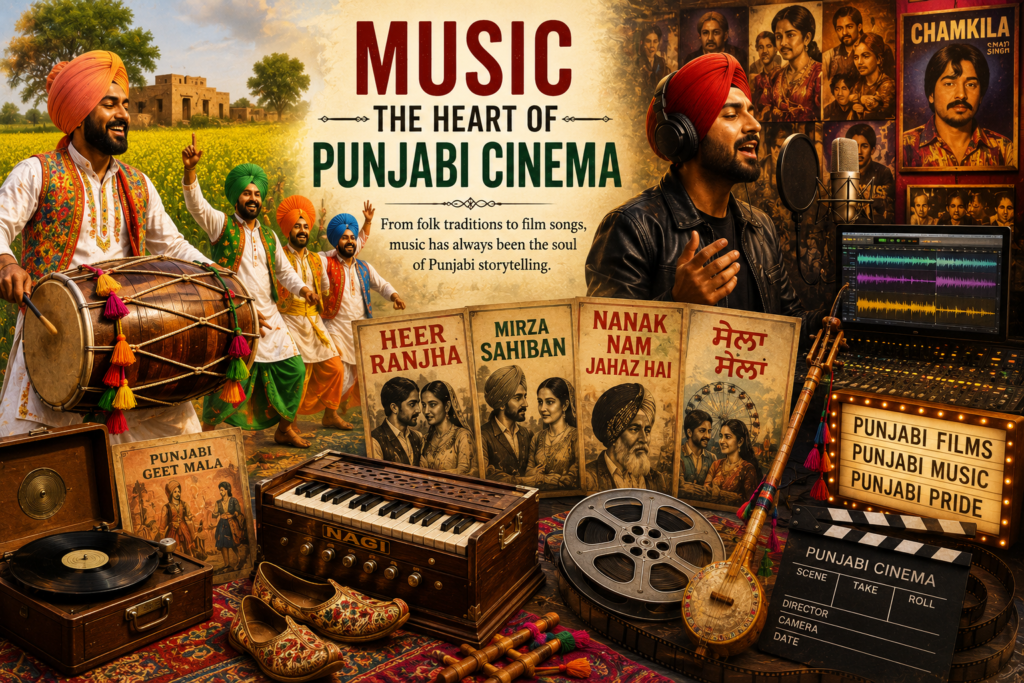
Music remains the defining creative force behind Punjabi cinema and storytelling.
Punjabi films have long celebrated:
- folk music
- bhangra
- traditional dance
- regional singing traditions
Music often serves not merely as entertainment but as a reflection of cultural identity and collective memory.
Many Punjabi singers successfully transitioned into film careers, creating a close relationship between the music industry and Punjabi cinema.
This musical heritage would later influence popular culture throughout India.
–– ✦ ✦ ––
🌾 Rural Life, Family, and Cultural Identity
Punjabi cinema has traditionally focused on themes that resonate deeply with local audiences.
Common subjects include:
- family relationships
- village life
- agriculture
- community values
- generational change
These stories helped preserve cultural traditions while also addressing modern social challenges.
Unlike some forms of commercial cinema, Punjabi films often emphasize authenticity and regional identity.
–– ✦ ✦ ––
🌍 Punjabi Cinema and the Global Diaspora
One of the most distinctive features of modern Punjabi cinema is its international audience.
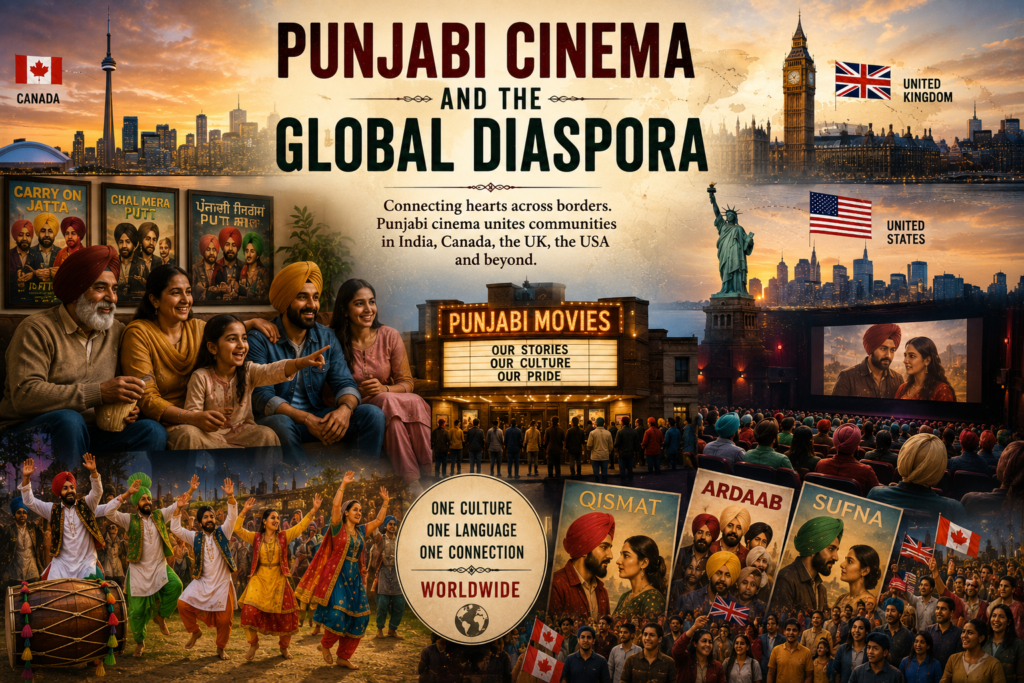
Punjabi cinema connects audiences across India, Canada, the United Kingdom, and beyond.
Large Punjabi communities in:
- Canada
- United Kingdom
- United States
- Australia
have helped create a truly global market for Punjabi films.
These audiences maintain strong cultural connections through cinema, music, and language.
As a result, many modern Punjabi films explore themes of:
- migration
- identity
- belonging
- family across borders
This global dimension has become a defining characteristic of Punjabi cinema evolution.
–– ✦ ✦ ––
🎬 Revival of Modern Punjabi Cinema
Since the early 2000s, Punjabi cinema has experienced significant growth.
Improved production quality, stronger storytelling, and increasing international demand have contributed to a modern revival.
Contemporary Punjabi filmmakers have expanded beyond traditional themes while maintaining strong cultural roots.
Streaming platforms have further increased accessibility, allowing Punjabi films to reach audiences worldwide.
–– ✦ ✦ ––
🎶 Punjabi Music and Its Influence on Bollywood
Punjabi music has become one of the most influential forces in contemporary Bollywood entertainment.
Many popular Hindi film songs incorporate:
- Punjabi lyrics
- bhangra rhythms
- Punjabi folk influences
This cultural exchange has strengthened the relationship between Punjabi cinema and Bollywood while helping regional musical traditions reach audiences across India and around the world.
Today, Punjabi music is one of the defining sounds of modern Hindi cinema, influencing everything from dance numbers and romantic tracks to chart-topping pop collaborations. Its continuing popularity demonstrates how regional culture can shape mainstream entertainment on a national scale.
Explore this musical journey in:
👉 Music in Bollywood: From Playback Singing to Modern Soundtracks
–– ✦ ✦ ––
🌐 Punjabi Cinema and the Rise of Regional Storytelling
The success of Punjabi cinema reflects a broader transformation within Indian entertainment, where audiences increasingly embrace stories rooted in regional cultures, languages, and local identities.
This shift is visible across the country, from the rise of Telugu, Tamil, Kannada, and Malayalam cinema to the growing recognition of Bengali and Punjabi films. Regional filmmaking has become one of the most dynamic forces in contemporary Indian cinema, proving that locally grounded stories can achieve national and even global appeal.
Discover this broader transformation in:
👉 Regional Cinema Revolution: How South Indian Films Reshaped Indian Cinema
–– ✦ ✦ ––
📽️ Legacy of Punjabi Cinema
Punjabi cinema history demonstrates the enduring power of culture, music, and community in filmmaking.
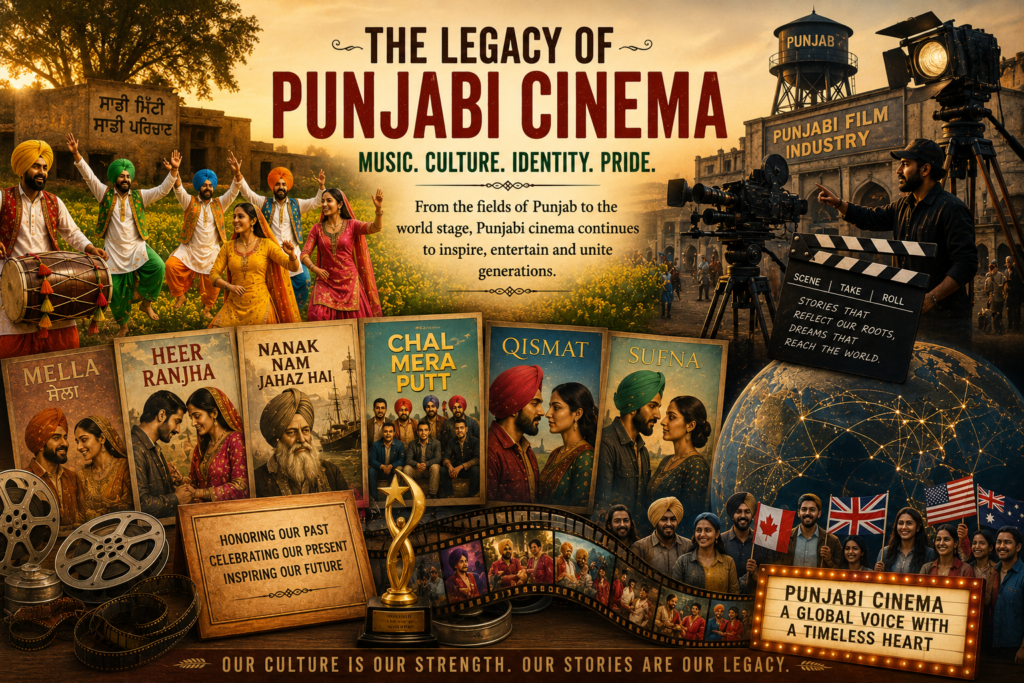
Punjabi cinema continues influencing Indian entertainment through music, culture, and regional storytelling.
From its early roots in pre-Partition Punjab to its modern global presence, Punjabi cinema has preserved regional traditions while adapting to changing audiences.
Its success demonstrates that regional stories can achieve both cultural significance and international appeal while remaining deeply connected to their local roots.
While Punjabi cinema became known for its vibrant music, cultural pride, and global diaspora connections, other regional industries developed their own distinctive cinematic identities. Bengali cinema, for example, earned worldwide recognition through realism, literature, and artistic storytelling. Explore that remarkable tradition in:
👉 Bengali Cinema Legacy: Realism, Literature, and Artistic Revolution
The growing recognition of Punjabi cinema also reflects the broader importance of regional film industries within Indian cinema. Together, these diverse cinematic traditions have enriched India’s film culture and demonstrated that powerful storytelling can emerge from every region, language, and community.
–– ✦ ✦ ––
❓ Frequently Asked Questions (FAQs)
Why is Punjabi cinema important?
Punjabi cinema preserves regional culture, language, music, and traditions while contributing significantly to Indian cinema.
How did Partition affect Punjabi cinema?
Partition disrupted the industry by separating Lahore from India, forcing filmmakers to rebuild the industry in Indian Punjab.
Why is music so important in Punjabi films?
Music is deeply connected to Punjabi culture and has always been a defining feature of Punjabi storytelling and entertainment.
Does Punjabi cinema influence Bollywood?
Yes. Punjabi music, performers, and cultural themes have significantly influenced modern Bollywood films and soundtracks.
🌐 Read in Hindi
Prefer reading this article in Hindi?
👉 हिंदी में पढ़ें:
पंजाबी सिनेमा का इतिहास: संगीत, संस्कृति और वैश्विक पंजाबी पहचान
This version of the article offers the same depth, perspective, and storytelling.
🔖 External sources are referenced for educational and historical context. All rights and credits belong to their respective owners.