
From quiet orange groves to the birthplace of the world’s greatest film industry.
ENG | हिंदी
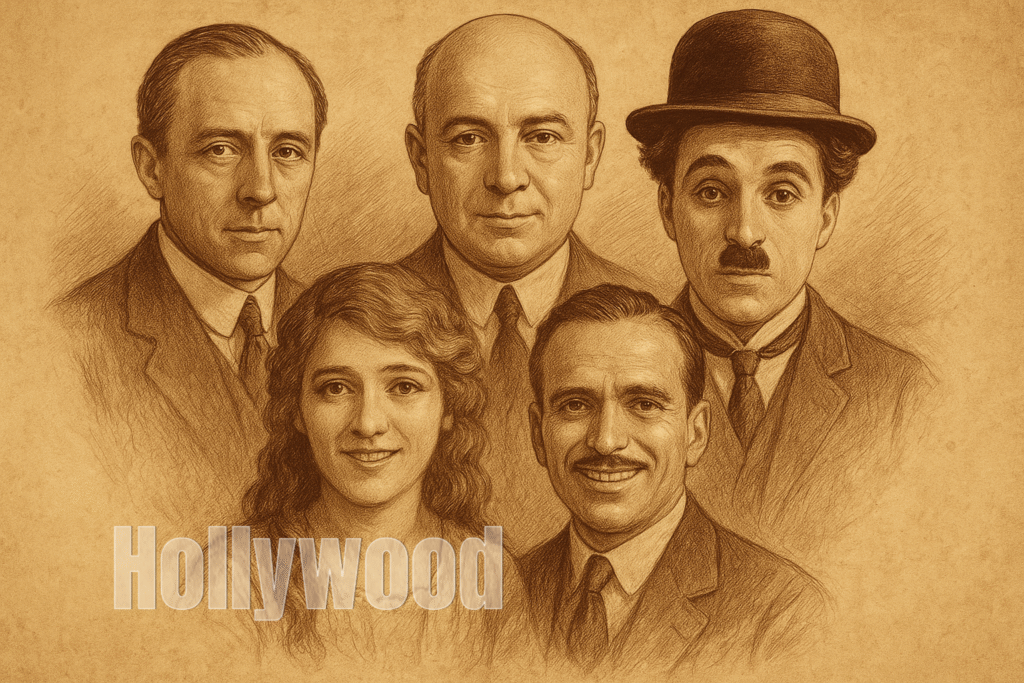
Every legend has a beginning. Discover how a small California community became the global capital of cinema.
Hollywood today is more than just a place—it is the world’s most recognizable symbol of filmmaking, dreams, creativity, and storytelling. Yet long before it became the heart of the global film industry, this corner of California was a quiet landscape of farms and orange groves.
The history of Hollywood origins takes us back to the early 1900s, when visionary filmmakers, favorable weather, and a spirit of innovation transformed a small community into the movie capital of the world. In this article, we’ll explore how Hollywood’s remarkable journey began and why it became synonymous with cinema itself.
📜 Previously on The Reel Retro:
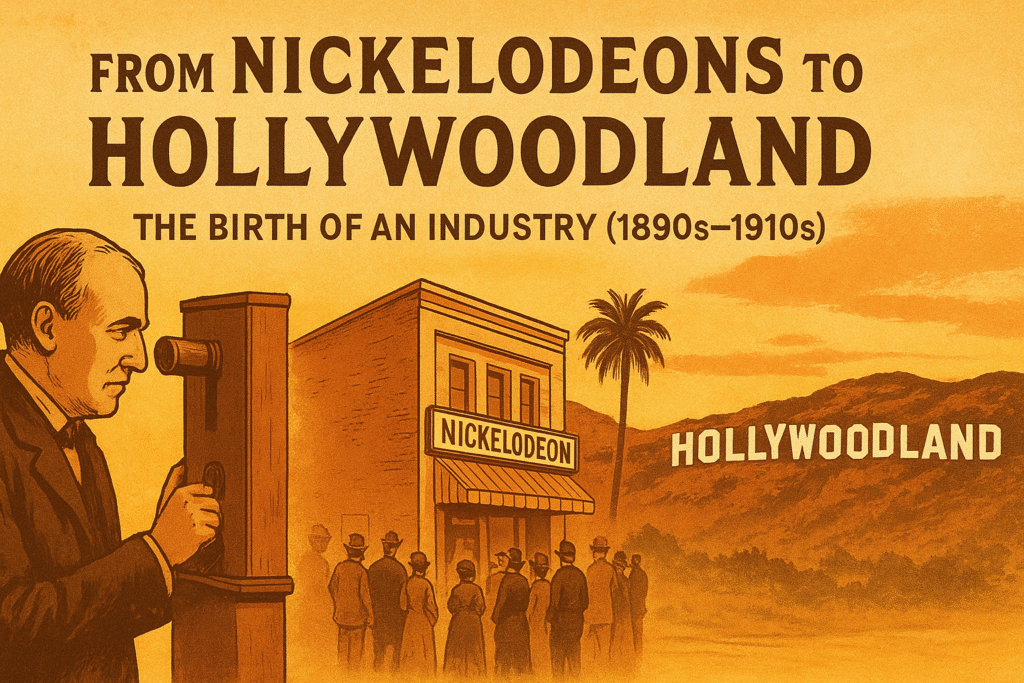
💡Curious how it all began? Explore how America’s film industry rose from nickelodeons and Edison’s labs to the edge of Hollywoodland here.
👉 Read: From Nickelodeons to Hollywoodland – The Birth of an Industry
📑 In This Article
How Did Hollywood Transform From Orange Groves Into a Film Capital?
In the early 1900s, Hollywood was not the glittering symbol of cinema we know today. It was a quiet suburb of Los Angeles, dotted with orange groves and ranch land. But as filmmakers on the East Coast sought more sunlight, fewer restrictions, and cheaper production costs, they looked west.
The move was practical at first. California offered year-round sunshine, diverse landscapes, and distance from Thomas Edison’s strict film patents. Soon, this sleepy town began to echo with the sounds of cameras cranking and stories unfolding.
–– ✦ ✦ ––
Why Was California the Perfect Setting for Early Hollywood?
The early history of Hollywood is tied directly to geography. Los Angeles offered:
- Over 300 days of sunshine per year.
- Beaches, deserts, mountains, and cityscapes within driving distance.
- Affordable land and labor at the time.
These advantages helped turn Los Angeles into the heart of the Hollywood film industry. By the 1910s, studios realized they could shoot Westerns, biblical epics, and urban dramas all without leaving Southern California.
–– ✦ ✦ ––
Who Were the Pioneers Behind Hollywood’s Origins?
The origins of Hollywood cinema are closely tied to ambitious filmmakers who weren’t afraid to break rules. Among them were:
- D.W. Griffith – Known for The Birth of a Nation (1915) and Intolerance (1916), he pushed narrative cinema forward.
- Cecil B. DeMille – His epic style helped define Hollywood spectacle.
- Adolph Zukor and other studio heads – They laid the foundation for what became the studio system.
These figures didn’t just make films—they built an industry. Their bold storytelling and large-scale productions showed why Hollywood was destined to be more than just another town.
–– ✦ ✦ ––
How Did Hollywood Become Synonymous With Global Cinema?
By the 1920s, Hollywood had become the movie capital of the world. Silent films like The Jazz Singer (1927) introduced sound, while the rise of stars like Charlie Chaplin, Mary Pickford, and Douglas Fairbanks made Hollywood a global brand.
The rise of Hollywood film industry wasn’t just about technology. It was about creating a dream factory where stories could travel across oceans. Soon, Hollywood films dominated box offices worldwide, shaping trends in fashion, music, and storytelling.
–– ✦ ✦ ––
What Is the Legacy of Hollywood’s Origins Today?
The roots of Hollywood cinema still influence the industry. The studio system may have changed, but Hollywood remains the epicenter of global film production. Every blockbuster, Oscar ceremony, and red-carpet premiere still echoes the decision made over a century ago to film in Los Angeles.
The history of Hollywood origins reminds us that great industries often grow from unlikely beginnings—just as orange groves once gave way to soundstages and silver screens.
–– ✦ ✦ ––
Conclusion
Hollywood’s journey from orange groves to the movie capital of the world is not just a chapter in film history—it is the story of ambition, imagination, and resilience. The history of Hollywood origins reminds us how ordinary land turned into the heartbeat of global cinema. Even today, as new industries and platforms emerge, Hollywood continues to inspire storytellers and dreamers across the world.
–– ✦ ✦ ––
Quick FAQs on Hollywood’s Origin Story
Before we wrap up, here are a few quick FAQs that summarize Hollywood’s origin story and address common curiosities.
Que: Why is Hollywood’s origin story still relevant today?
Ans: Hollywood’s beginnings highlight how innovation and risk-taking shaped global cinema. These lessons continue to inspire today’s filmmakers.
Que: How did Hollywood transform from fields to film capital?
Ans: With cheap land, sunny weather, and visionary pioneers, Hollywood quickly became the hub where the world’s greatest studios were built.
Que: What can modern filmmakers learn from Hollywood’s journey?
Ans: They can learn that creative courage, adaptability, and storytelling vision are timeless tools for success.
–– ✦ ✦ ––
Frequently Asked Questions About the History of Hollywood Origins
Q1. Why was Hollywood chosen as the centre of the film industry?
Ans: Hollywood’s sunny climate, varied landscapes, and distance from Thomas Edison’s strict East Coast patent rules made it the perfect place for filmmakers to flourish.
Q2. Who were the early pioneers of Hollywood cinema?
Ans: Directors like D.W. Griffith, producers like Carl Laemmle, and independent studios were instrumental in shaping Hollywood’s beginnings during the 1910s.
Q3. How did Hollywood transform from orange groves into a movie capital?
Ans: Land was cheap, the environment was favourable, and the film business grew rapidly with the establishment of studios like Universal, Paramount, and Warner Bros.
Q4. What role did silent films play in Hollywood’s rise?
Ans: Silent films allowed Hollywood to appeal to global audiences beyond language barriers, laying the foundation for international dominance.
Q5. When did Hollywood become recognized worldwide as the movie capital?
Ans: By the 1920s, with landmark films like The Birth of a Nation and the rise of the studio system, Hollywood firmly secured its position as the world’s film hub.
Q6. Is Hollywood still considered the centre of global cinema today?
Ans: Yes, though industries like Bollywood and global streaming platforms have grown, Hollywood remains a major hub for production, distribution, and cinematic influence.
📖 Want to Explore the fascinating origins of cinema?
Step into the Cinema Origins — a journey through early experiments, silent films, and the pioneers who brought moving pictures to life.
🌐 Prefer reading this article in Hindi?
👉 Read:
हॉलीवुड का जन्म: संतरे के बागानों से सिनेमा की राजधानी तक